
113 lines
7.6 KiB
Markdown
113 lines
7.6 KiB
Markdown
ComfyUI-Inpaint-CropAndStitch
|
|
|
|
Copyright (c) 2024, Luis Quesada Torres - https://github.com/lquesada | www.luisquesada.com
|
|
|
|
Check ComfyUI here: https://github.com/comfyanonymous/ComfyUI
|
|
|
|
# Overview
|
|
|
|
"✂️ Inpaint Crop" is a node that crops an image before sampling. The context area can be specified via the mask, expand pixels and expand factor or via a separate (optional) mask.
|
|
|
|
"✂️ Inpaint Stitch" is a node that stitches the inpainted image back into the original image without altering unmasked areas.
|
|
|
|
"✂️ Extend Image for Outpainting" is a node that extends an image and masks in order to use the power of Inpaint Crop and Stich (rescaling, blur, blend, restitching) for outpainting.
|
|
|
|
"✂️ Resize Image Before Inpainting" is a node that resizes an image before inpainting, for example to upscale it to keep more detail than in the original image.
|
|
|
|
The main advantages of inpainting only in a masked area with these nodes are:
|
|
- It's much faster than sampling the whole image.
|
|
- It enables setting the right amount of context from the image for the prompt to be more accurately represented in the generated picture.
|
|
- It enables upscaling before sampling in order to generate more detail, then stitching back in the original picture.
|
|
- It enables downscaling before sampling if the area is too large, in order to avoid artifacts such as double heads or double bodies.
|
|
- It enables forcing a specific resolution (e.g. 1024x1024 for SDXL models).
|
|
- It doesn't modify the unmasked part of the image, not even passing it through VAE encode and decode.
|
|
- The nodes take care of good blending.
|
|
|
|
# Video Tutorial
|
|
|
|
[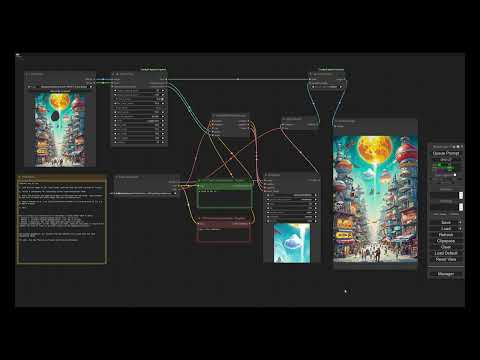](https://www.youtube.com/watch?v=mI0UWm7BNtQ)
|
|
|
|
[(click to open in YouTube)](https://www.youtube.com/watch?v=mI0UWm7BNtQ)
|
|
|
|
## Parameters
|
|
- `context_expand_pixels`: how much to grow the context area (i.e. the area for the sampling) around the original mask, in pixels. This provides more context for the sampling.
|
|
- `context_expand_factor`: how much to grow the context area (i.e. the area for the sampling) around the original mask, as a factor, e.g. 1.1 is grow 10% of the size of the mask.
|
|
- `fill_mask_holes`: Whether to fully fill any holes (small or large) in the mask, that is, mark fully enclosed areas as part of the mask.
|
|
- `blur_mask_pixels`: Grows the mask and blurs it by the specified amount of pixels.
|
|
- `invert_mask`: Whether to fully invert the mask, that is, only keep what was marked, instead of removing what was marked.
|
|
- `blend_pixels`: Grows the stitch mask and blurs it by the specified amount of pixels, so that the stitch is slowly blended and there are no seams.
|
|
- `rescale_algorithm`: Rescale algorithm to use. bislerp is for super high quality but very slow, recommended for stich. bicubic is high quality and faster, recommended for crop.
|
|
- `mode`: Free size, Forced size, or Ranged size.
|
|
- Ranged size upscales the area as much as possible to make it fit the larger size between `min_width`, `max_width`, `min_height`, and `max_height`, with a `padding` to align to standard sizes, then rescales before stitching back.
|
|
- Forced size uses `force_width` and `force_height` and upscales the content to take that size before sampling, then downscales before stitching back. Use forced size e.g. for SDXL.
|
|
- Free size uses `rescale_factor` to optionally rescale the content before sampling and eventually scale back before stitching, and `padding` to align to standard sizes.
|
|
|
|
## Example (Stable Diffusion)
|
|
This example inpaints by sampling on a small section of the larger image, upscaling to fit 512x512-768x768, then stitching and blending back in the original image.
|
|
|
|
Download the following example workflow from [here](inpaint-cropandstitch_example_workflow.json) or drag and drop the screenshot into ComfyUI.
|
|
|
|

|
|
|
|
## Example (Flux)
|
|
This example uses Flux. Requires the GGUF nodes.
|
|
|
|
Models used:
|
|
|
|
- Flux Dev Q5 GGUF from [here](https://civitai.com/models/711483/flux-dev-q5km-gguf-quantization-a-nice-balance-of-speed-and-quality-in-under-9-gigabytes?modelVersionId=795785). Put it in models/unet/. This model works with 4 steps.
|
|
- `t5 GGUF Q3_K_L` from [here](https://huggingface.co/city96/t5-v1_1-xxl-encoder-gguf/tree/main). Put it in models/clip/.
|
|
- `clip_l` from [here](https://huggingface.co/comfyanonymous/flux_text_encoders/blob/main/clip_l.safetensors). Put it in models/clip/.
|
|
- ae VAE from [here](https://huggingface.co/black-forest-labs/FLUX.1-schnell/blob/main/ae.safetensors). Put it in models/vae/
|
|
|
|
Download the following example workflow from [here](inpaint-cropandstitch_flux_example_workflow.json) or drag and drop the screenshot into ComfyUI.
|
|
|
|

|
|
|
|
# Installation Instructions
|
|
|
|
Install via ComfyUI-Manager or go to the custom_nodes/ directory and run ```$ git clone https://github.com/lquesada/ComfyUI-Inpaint-CropAndStitch.git```
|
|
|
|
## Best Practices
|
|
Use an inpainting model e.g. lazymixRealAmateur_v40Inpainting.
|
|
|
|
Use "InpaintModelConditioning" instead of "VAE Encode (for Inpainting)" to be able to set denoise values lower than 1.
|
|
|
|
If you want to inpaint fast with SD 1.5, use ranged size with min width and height 512 and max width and height 768 with padding 32. Set high rescale_factor (e.g. 10), it will be adapted to the right resolution.
|
|
|
|
If you want to inpaint with SDXL, use forced size = 1024.
|
|
|
|
# Changelog
|
|
## 2024-10-28
|
|
- Added a new example workflow for inpainting with flux.
|
|
## 2024-06-10
|
|
- Added a new node: "Resize Image Before Inpainting", which allows increasing the resolution of the input image by a factor or to a minimum width or height to obtain higher resolution inpaintings.
|
|
## 2024-06-08
|
|
- Added a new node: "Extend Image for Outpainting", which allows leveraging the power of Inpaint Crop and Stitch (rescaling, blur, blend, restitching) for outpainting.
|
|
## 2024-06-07
|
|
- Added a blending radius for seamless inpainting.
|
|
- Added a blur mask setting that grows and blurs the mask, providing better support.
|
|
- Updated default to ranged size.
|
|
## 2024-06-01
|
|
- Force_size is now specified as separate force_width and force_height, to match any desired sampling resolution.
|
|
- Added a new mode: ranged size, similar to free size but also takes min_width, min_height, max_width, and max_height, in order to avoid over scaling or under scaling beyond desirable limits.
|
|
## 2024-05-15
|
|
- Depending on the selected mode ("free size" or "forced size") some fields are hidden.
|
|
## 2024-05-14
|
|
- Added batch support.
|
|
- Enabled selecting rescaling algorithm and made bicubic the default for crop, which significantly speeds up the process.
|
|
## 2024-05-13
|
|
- Switched from adjust_to_preferred_sizes to modes: free size and forced size. Forced scales the section rather than growing the context area to fit preferred_sizes, to be used to e.g. force 1024x1024 for inpainting.
|
|
- Enabled internal_upscale_factor to be lower than 1 (that is, downscale), which can be used to avoid the double head issue in some models.
|
|
- Added padding on the croppedp image to avoid artifacts when the cropped image is not multiple of (default) 32
|
|
## 2024-05-12
|
|
- Added internal_upscale_factor to upscale the image before sampling and then downsizes to stitch it back.
|
|
## 2024-05-11
|
|
- Initial commit.
|
|
|
|
# Acknowledgements
|
|
|
|
This repository uses some code from comfy_extras (https://github.com/comfyanonymous/ComfyUI), KJNodes (https://github.com/kijai/ComfyUI-KJNodes), and Efficiency Nodes (https://github.com/LucianoCirino/efficiency-nodes-comfyui), all of them licensed under GNU GENERAL PUBLIC LICENSE Version 3.
|
|
|
|
# License
|
|
GNU GENERAL PUBLIC LICENSE Version 3, see [LICENSE](LICENSE)
|