Compare commits
| Author | SHA1 | Date | |
|---|---|---|---|
 Zhen Han Zhen Han
|
8076aae7da | ||
|
靖渊
|
79e4910ce4 | ||
|
靖渊
|
6be496d5ac | ||
|
jiangzeyinzi
|
b5b2fd9974 | ||
|
靖渊
|
f502f8063d | ||
|
mcj
|
a3711e1d1d | ||
|
靖渊
|
8ba0b4c673 | ||
|
mcj
|
4f4e516164 | ||
|
Jingfeng727
|
88f0244516 | ||
|
hanzhn
|
5733918aec | ||
|
mcj
|
da88802b68 | ||
|
Jingfeng727
|
16d99a268f | ||
|
Jingfeng727
|
fc46a63ac8 | ||
|
mcj
|
0010d4282a | ||
|
LouieStark
|
8a9b791e3f | ||
|
LouieStark
|
ee7fe888f2 | ||
|
LouieStark
|
36b259b4b4 | ||
|
LouieStark
|
92c849412e | ||
|
LouieStark
|
2a7e026f84 | ||
|
LouieStark
|
cdba82baf8 | ||
|
LouieStark
|
565c7957d8 | ||
|
LouieStark
|
e00c23d09a | ||
|
LouieStark
|
bf53829530 | ||
|
zeyinzi.jzyz
|
35aada8ce8 |
@@ -1 +1,2 @@
|
||||
recursive-include scepter *.yaml
|
||||
recursive-include scepter *.md
|
||||
|
||||

|
After Width: | Height: | Size: 121 KiB |

|
After Width: | Height: | Size: 16 KiB |

|
After Width: | Height: | Size: 19 KiB |

|
After Width: | Height: | Size: 120 KiB |

|
After Width: | Height: | Size: 117 KiB |

|
After Width: | Height: | Size: 121 KiB |

|
After Width: | Height: | Size: 22 KiB |

|
After Width: | Height: | Size: 39 KiB |

|
After Width: | Height: | Size: 17 KiB |

|
After Width: | Height: | Size: 109 KiB |

|
After Width: | Height: | Size: 247 KiB |

|
After Width: | Height: | Size: 301 KiB |

|
After Width: | Height: | Size: 230 KiB |

|
After Width: | Height: | Size: 353 KiB |

|
After Width: | Height: | Size: 32 KiB |

|
After Width: | Height: | Size: 144 KiB |

|
After Width: | Height: | Size: 126 KiB |

|
After Width: | Height: | Size: 138 KiB |

|
After Width: | Height: | Size: 170 KiB |

|
After Width: | Height: | Size: 273 KiB |

|
After Width: | Height: | Size: 243 KiB |

|
After Width: | Height: | Size: 134 KiB |

|
After Width: | Height: | Size: 119 KiB |

|
After Width: | Height: | Size: 433 KiB |

|
After Width: | Height: | Size: 265 KiB |

|
After Width: | Height: | Size: 300 KiB |

|
After Width: | Height: | Size: 155 KiB |

|
After Width: | Height: | Size: 15 KiB |

|
After Width: | Height: | Size: 20 KiB |

|
After Width: | Height: | Size: 49 KiB |

|
After Width: | Height: | Size: 45 KiB |

|
After Width: | Height: | Size: 34 KiB |

|
After Width: | Height: | Size: 129 KiB |

|
After Width: | Height: | Size: 101 KiB |

|
After Width: | Height: | Size: 100 KiB |

|
After Width: | Height: | Size: 104 KiB |

|
After Width: | Height: | Size: 103 KiB |
@@ -14,8 +14,8 @@ Model modules are divided into backbones, necks, heads, loss, metrics, networks,
|
||||
Subclass registration:
|
||||
|
||||
```python
|
||||
from scepter.model.registry import BACKBONES
|
||||
from scepter.model.base_model import BaseModel
|
||||
from scepter.modules.model.registry import BACKBONES
|
||||
from scepter.modules.model.base_model import BaseModel
|
||||
|
||||
|
||||
@BACKBONES.register_class("ResNet")
|
||||
@@ -25,8 +25,8 @@ class ResNet(BaseModel):
|
||||
```
|
||||
|
||||
```python
|
||||
from scepter.model.registry import NECKS
|
||||
from scepter.model.base_model import BaseModel
|
||||
from scepter.modules.model.registry import NECKS
|
||||
from scepter.modules.model.base_model import BaseModel
|
||||
|
||||
|
||||
@NECKS.register_class()
|
||||
@@ -36,8 +36,8 @@ class GlobalAveragePooling(BaseModel):
|
||||
```
|
||||
|
||||
```python
|
||||
from scepter.model.registry import HEADS
|
||||
from scepter.model.base_model import BaseModel
|
||||
from scepter.modules.model.registry import HEADS
|
||||
from scepter.modules.model.base_model import BaseModel
|
||||
|
||||
|
||||
@HEADS.register_class()
|
||||
@@ -47,7 +47,7 @@ class ClassifierHead(BaseModel):
|
||||
```
|
||||
|
||||
```python
|
||||
from scepter.model.registry import LOSSES
|
||||
from scepter.modules.model.registry import LOSSES
|
||||
import torch.nn as nn
|
||||
|
||||
|
||||
@@ -59,7 +59,7 @@ class CrossEntropy(nn.Module):
|
||||
Actual usage:
|
||||
|
||||
```python
|
||||
from scepter.model.registry import BACKBONES, NECKS, HEADS, LOSSES
|
||||
from scepter.modules.model.registry import BACKBONES, NECKS, HEADS, LOSSES
|
||||
|
||||
backbone = BACKBONES.build(cfg.BACKBONE, logger=logger)
|
||||
neck = NECKS.build(cfg.NECK, logger=logger)
|
||||
@@ -83,8 +83,8 @@ To be implemented specifically as needed;
|
||||
Basic Usage Subclass registration:
|
||||
|
||||
```python
|
||||
from scepter.model.metrics.registry import METRICS
|
||||
from scepter.model.metrics.base_metric import BaseMetric
|
||||
from scepter.modules.model.metrics.registry import METRICS
|
||||
from scepter.modules.model.metrics.base_metric import BaseMetric
|
||||
|
||||
|
||||
@METRICS.register_class("AccuracyMetric")
|
||||
@@ -95,7 +95,7 @@ class AccuracyMetric(BaseMetric):
|
||||
Actual usage:
|
||||
|
||||
```python
|
||||
from scepter.model.metrics.registry import METRICS
|
||||
from scepter.modules.model.metrics.registry import METRICS
|
||||
|
||||
metric = METRICS.build(cfgs, logger)
|
||||
```
|
||||
@@ -117,8 +117,8 @@ Typically takes logits and labels as well as other necessary variables as inputs
|
||||
Subclass registration:
|
||||
|
||||
```python
|
||||
from scepter.model.registry import TOKENIZERS
|
||||
from scepter.model.tokenizers import BaseTokenizer
|
||||
from scepter.modules.model.registry import TOKENIZERS
|
||||
from scepter.modules.model.tokenizers import BaseTokenizer
|
||||
|
||||
|
||||
@TOKENIZERS.register_class()
|
||||
@@ -129,7 +129,7 @@ class BaseBertTokenizer(BaseTokenizer):
|
||||
Actual usage:
|
||||
|
||||
```python
|
||||
from scepter.model.registry import TOKENIZERS
|
||||
from scepter.modules.model.registry import TOKENIZERS
|
||||
|
||||
tokenizer = TOKENIZERS.build(cfgs, logger)
|
||||
```
|
||||
@@ -147,8 +147,8 @@ Takes a list of texts that need tokenization as input and outputs token id seque
|
||||
Subclass registration:
|
||||
|
||||
```python
|
||||
from scepter.model.registry import MODELS
|
||||
from scepter.model.networks.train_module import TrainModule
|
||||
from scepter.modules.model.registry import MODELS
|
||||
from scepter.modules.model.networks.train_module import TrainModule
|
||||
|
||||
|
||||
@MODELS.register_class()
|
||||
@@ -159,7 +159,7 @@ class Classifier(TrainModule):
|
||||
Actual usage:
|
||||
|
||||
```python
|
||||
from scepter.model.registry import MODELS
|
||||
from scepter.modules.model.registry import MODELS
|
||||
|
||||
model = MODELS.build(self.cfg.MODEL, logger=self.logger)
|
||||
```
|
||||
|
||||
@@ -9,8 +9,8 @@
|
||||
Usage when subclassing lr_schedulers:
|
||||
|
||||
```python
|
||||
from scepter.opt.lr_schedulers import LR_SCHEDULERS
|
||||
from scepter.opt.lr_schedulers.base_scheduler import BaseScheduler
|
||||
from scepter.modules.opt.lr_schedulers import LR_SCHEDULERS
|
||||
from scepter.modules.opt.lr_schedulers.base_scheduler import BaseScheduler
|
||||
|
||||
|
||||
@LR_SCHEDULERS.register_class()
|
||||
@@ -48,8 +48,8 @@ Sets up the schedule for the passed-in optimizer object;
|
||||
Usage when subclassing optimizers:
|
||||
|
||||
```python
|
||||
from scepter.opt.optimizers.base_optimizer import BaseOptimize
|
||||
from scepter.opt.optimizers.registry import OPTIMIZERS
|
||||
from scepter.modules.opt.optimizers.base_optimizer import BaseOptimize
|
||||
from scepter.modules.opt.optimizers.registry import OPTIMIZERS
|
||||
|
||||
|
||||
@OPTIMIZERS.register_class()
|
||||
|
||||
@@ -6,17 +6,17 @@ This is the File System Module, designed to handle file transfer functionalities
|
||||
|
||||
The component currently supports three types of IO Handler:
|
||||
|
||||
1. scepter.utils.file_clients.AliyunOssFs
|
||||
2. scepter.utils.file_clients.LocalFs
|
||||
3. scepter.utils.file_clients.HttpFs
|
||||
1. scepter.modules.utils.file_clients.AliyunOssFs
|
||||
2. scepter.modules.utils.file_clients.LocalFs
|
||||
3. scepter.modules.utils.file_clients.HttpFs
|
||||
|
||||
<hr/>
|
||||
|
||||
## Basic Usage
|
||||
|
||||
```python
|
||||
from scepter.utils.file_system import FS
|
||||
from scepter.utils.config import Config
|
||||
from scepter.modules.utils.file_system import FS
|
||||
from scepter.modules.utils.config import Config
|
||||
|
||||
fs_cfg = Config(load=False, cfg_dict={
|
||||
"NAME": "AliyunOssFs",
|
||||
|
||||
@@ -4,18 +4,18 @@ Relies on SDKs, which are used to organize modules and SDKs that are frequently
|
||||
|
||||
## Overview
|
||||
|
||||
1. Parameter sdk (scepter.utils.config)
|
||||
2. Path sdk (scepter.utils.directory)
|
||||
3. PyTorch distributed sdk (scepter.utils.distribute)
|
||||
4. Model export sdk (scepter.utils.export_model)
|
||||
5. File system sdk (scepter.utils.file_system)
|
||||
6. Logging sdk (scepter.utils.logger)
|
||||
7. Video processing sdk (scepter.utils.video_reader), see the document (video_reader.md)
|
||||
8. Module registration sdk (scepter.utils.registry)
|
||||
9. Data sdk (scepter.utils.data)
|
||||
10. Model sdk (scepter.utils.model)
|
||||
11. Sampler sdk (scepter.utils.sampler)
|
||||
12. Probing sdk (scepter.utils.probe)
|
||||
1. Parameter sdk (scepter.modules.utils.config)
|
||||
2. Path sdk (scepter.modules.utils.directory)
|
||||
3. PyTorch distributed sdk (scepter.modules.utils.distribute)
|
||||
4. Model export sdk (scepter.modules.utils.export_model)
|
||||
5. File system sdk (scepter.modules.utils.file_system)
|
||||
6. Logging sdk (scepter.modules.utils.logger)
|
||||
7. Video processing sdk (scepter.modules.utils.video_reader), see the document (video_reader.md)
|
||||
8. Module registration sdk (scepter.modules.utils.registry)
|
||||
9. Data sdk (scepter.modules.utils.data)
|
||||
10. Model sdk (scepter.modules.utils.model)
|
||||
11. Sampler sdk (scepter.modules.utils.sampler)
|
||||
12. Probing sdk (scepter.modules.utils.probe)
|
||||
|
||||
<hr/>
|
||||
|
||||
@@ -24,7 +24,7 @@ Relies on SDKs, which are used to organize modules and SDKs that are frequently
|
||||
### Basic Usage
|
||||
|
||||
```python
|
||||
from scepter.utils.config import Config
|
||||
from scepter.modules.utils.config import Config
|
||||
# Initialize Config object from a dict
|
||||
fs_cfg = Config(load=False, cfg_dict={"NAME": "LocalFs"})
|
||||
print(fs_cfg.NAME)
|
||||
@@ -105,7 +105,7 @@ print(fs_cfg.args)
|
||||
Some commonly used path functions
|
||||
### Basic Usage
|
||||
```python
|
||||
from scepter.utils.directory import osp_path
|
||||
from scepter.modules.utils.directory import osp_path
|
||||
# Automatically join paths based on the path prefix
|
||||
prefix = "xxxx"
|
||||
data_file = "example_videos/1.mp4"
|
||||
@@ -114,13 +114,13 @@ print(osp_path(prefix, data_file))
|
||||
# Also outputs as xxxx/example_videos/1.mp4
|
||||
data_file = "xxxx/example_videos/1.mp4"
|
||||
print(osp_path(prefix, data_file))
|
||||
from scepter.utils.directory import get_relative_folder
|
||||
from scepter.modules.utils.directory import get_relative_folder
|
||||
# Get the folder path at a specified level according to the path
|
||||
# By default, the last level xxxx/example_videos/
|
||||
print(get_relative_folder(data_file))
|
||||
# The second last level xxxx/
|
||||
print(get_relative_folder(data_file, keep_index=-2))
|
||||
from scepter.utils.directory import get_md5
|
||||
from scepter.modules.utils.directory import get_md5
|
||||
# Get the md5 code of the text/path 34a447fb46d0b786a3999c9dad01d470
|
||||
print(get_md5(data_file))
|
||||
```
|
||||
@@ -175,8 +175,8 @@ PyTorch distributed initialization SDK. By using this SDK, users can avoid focus
|
||||
### Basic Usage
|
||||
|
||||
```python
|
||||
from scepter.utils.distribute import we
|
||||
from scepter.utils.config import Config
|
||||
from scepter.modules.utils.distribute import we
|
||||
from scepter.modules.utils.config import Config
|
||||
|
||||
cfg = Config(cfg_dict={}, load=False)
|
||||
|
||||
@@ -304,12 +304,12 @@ Since cloning is involved, this may cause additional GPU memory waste.
|
||||
**Returns**
|
||||
- **tensor** —— The output tensor on the CPU for process rank=0.
|
||||
|
||||
## 4. 模型导出sdk(scepter.utils.export_model)
|
||||
## 4. 模型导出sdk(scepter.modules.utils.export_model)
|
||||
APIs for exporting models to TorchScript/ONNX formats.
|
||||
### Basic Usage
|
||||
|
||||
```python
|
||||
from scepter.utils.export_model import save_develop_model_multi_io
|
||||
from scepter.modules.utils.export_model import save_develop_model_multi_io
|
||||
|
||||
save_develop_model_multi_io(
|
||||
model,
|
||||
@@ -345,16 +345,16 @@ Supports importing and exporting models with multiple inputs and outputs
|
||||
**Returns**
|
||||
- **tensor** —— The output tensor on the CPU for process rank=0.
|
||||
|
||||
## 5. 文件系统sdk(scepter.utils.file_system)
|
||||
## 5. 文件系统sdk(scepter.modules.utils.file_system)
|
||||
Refer to [file_clients](file_clients.md)
|
||||
|
||||
## 6. Logging SDK(scepter.utils.logger)
|
||||
## 6. Logging SDK(scepter.modules.utils.logger)
|
||||
Used to instantiate a standard logging instance for printing information.
|
||||
|
||||
### Basic Usage
|
||||
|
||||
```python
|
||||
from scepter.utils.logger import get_logger, init_logger
|
||||
from scepter.modules.utils.logger import get_logger, init_logger
|
||||
|
||||
std_logger = get_logger(name="scepter")
|
||||
init_logger(std_logger, log_file="", dist_launcher="pytorch")
|
||||
@@ -405,14 +405,14 @@ Calculate the time remaining until completion based on the current usage time an
|
||||
**Returns**
|
||||
- **str** —— Formatted output.
|
||||
|
||||
## 7. Video Processing SDK (scepter.utils.video_reader)
|
||||
## 7. Video Processing SDK (scepter.modules.utils.video_reader)
|
||||
APIs for handling video reading.
|
||||
|
||||
### Basic Usage
|
||||
|
||||
```python
|
||||
from scepter.utils.video_reader.frame_sampler import do_frame_sample
|
||||
from scepter.utils.video_reader.video_reader import (
|
||||
from scepter.modules.utils.video_reader.frame_sampler import do_frame_sample
|
||||
from scepter.modules.utils.video_reader.video_reader import (
|
||||
VideoReaderWrapper, EasyVideoReader, FramesReaderWrapper
|
||||
)
|
||||
```
|
||||
@@ -554,14 +554,14 @@ Iterator, with each iteration returning a tensor of a segment.
|
||||
**Returns**
|
||||
- **tensor** —— The tensor of the video segment.
|
||||
|
||||
## 8. Module Registration SDK (scepter.utils.registry)
|
||||
## 8. Module Registration SDK (scepter.modules.utils.registry)
|
||||
Used for managing various registered classes.
|
||||
|
||||
### Basic Usage
|
||||
|
||||
```python
|
||||
from scepter.utils.registry import Registry
|
||||
from scepter.utils.config import Config
|
||||
from scepter.modules.utils.registry import Registry
|
||||
from scepter.modules.utils.config import Config
|
||||
|
||||
MODELS = Registry('MODELS')
|
||||
|
||||
@@ -614,14 +614,14 @@ Register a function
|
||||
**Returns**
|
||||
- **name** —— Registration name.
|
||||
|
||||
## 9. Data SDK(scepter.utils.data)
|
||||
## 9. Data SDK(scepter.modules.utils.data)
|
||||
Used for transferring data between devices
|
||||
|
||||
### Basic Usage
|
||||
|
||||
```python
|
||||
import torch
|
||||
from scepter.utils.data import transfer_data_to_numpy, transfer_data_to_cpu, transfer_data_to_cuda
|
||||
from scepter.modules.utils.data import transfer_data_to_numpy, transfer_data_to_cpu, transfer_data_to_cuda
|
||||
|
||||
data = {"a": torch.Tensor([0])}
|
||||
transfer_data_to_numpy(data)
|
||||
@@ -668,7 +668,7 @@ Used for operations such as loading and evaluating models
|
||||
|
||||
```python
|
||||
import torch
|
||||
from scepter.utils.model import move_model_to_cpu, load_pretrained,
|
||||
from scepter.modules.utils.model import move_model_to_cpu, load_pretrained,
|
||||
count_params, init_weights
|
||||
```
|
||||
<hr/>
|
||||
@@ -716,14 +716,14 @@ Initialize the parameters of the model modules.
|
||||
**Parameters**
|
||||
- **module** —— The torch.nn.Module model instance.
|
||||
|
||||
## 11. Sampler SDK(scepter.utils.sampler)
|
||||
## 11. Sampler SDK(scepter.modules.utils.sampler)
|
||||
Samplers are quite universal, and in most cases, custom development is not required. Here are provided several common types of sampler.
|
||||
|
||||
### Basic Usage
|
||||
|
||||
```python
|
||||
import torch
|
||||
from scepter.utils.sampler import MultiFoldDistributedSampler,
|
||||
from scepter.modules.utils.sampler import MultiFoldDistributedSampler,
|
||||
EvalDistributedSampler, MultiLevelBatchSampler, MixtureOfSamplers
|
||||
```
|
||||
<hr/>
|
||||
@@ -830,17 +830,17 @@ A sampler for multi-level indexing of large-scale data.
|
||||
|
||||
Iterator, each iteration returns an index of a sample.
|
||||
|
||||
## 12. Prober SDK(scepter.utils.probe)
|
||||
## 12. Prober SDK(scepter.modules.utils.probe)
|
||||
Used for probing variable statistics of various components.
|
||||
|
||||
### Basic Usage
|
||||
|
||||
```python
|
||||
import numpy as np
|
||||
from scepter.model.base_model import BaseModel
|
||||
from scepter.utils.config import Config
|
||||
from scepter.utils.file_system import FS
|
||||
from scepter.utils.probe import ProbeData
|
||||
from scepter.modules.model.base_model import BaseModel
|
||||
from scepter.modules.utils.config import Config
|
||||
from scepter.modules.utils.file_system import FS
|
||||
from scepter.modules.utils.probe import ProbeData
|
||||
|
||||
|
||||
class TestModel(BaseModel):
|
||||
|
||||
@@ -0,0 +1,133 @@
|
||||
<h1 align="center"> Locate, Assign, Refine: Taming Customized Image Inpainting with Text-Subject Guidance </h1>
|
||||
|
||||
<p align="center">
|
||||
<strong>Yulin Pan</strong>
|
||||
·
|
||||
<strong>Chaojie Mao</strong>
|
||||
·
|
||||
<strong>Zeyinzi Jiang</strong>
|
||||
·
|
||||
<strong>Zhen Han</strong>
|
||||
·
|
||||
<strong>Jingfeng Zhang</strong>
|
||||
<br>
|
||||
<a href="https://arxiv.org/abs/2403.19534"><img src="https://img.shields.io/static/v1?label=arXiv&message=LARGen&color=red&logo=arxiv"></a>
|
||||
<a href="https://ali-vilab.github.io/largen-page/"><img src="https://img.shields.io/badge/Page-LARGen-Gree"></a>
|
||||
</p>
|
||||
|
||||
LARGen is a unified image inpainting framework that supports text-guided, subject-guided and text-subject-guided inpainting simutaneously.
|
||||
Four LARGen-based fantastic applications are now supported by SCEPTER Studio:
|
||||
1. Zoom Out
|
||||
2. Virtual Try On
|
||||
3. Text-Guided Inpainting
|
||||
4. Text-Subject-Guided Inpainting
|
||||
|
||||
## Basic Usage
|
||||
|
||||
Here's a demo showcasing the use of LARGen-based functions.
|
||||
<p align="left">
|
||||
<img src="https://raw.githubusercontent.com/ali-vilab/largen-page/main/public/images/largen.gif" width="1300">
|
||||
</p>
|
||||
|
||||
## Gallery
|
||||
|
||||
### LAR-Gen: Zoom Out
|
||||
<table>
|
||||
<tr>
|
||||
<td><strong>Origin Image</strong><br>Prompt: a temple on fire</td>
|
||||
<td><strong>Zoom-Out</strong><br>CenterAround:0.75</td>
|
||||
<td><strong>Zoom-Out</strong><br>CenterAround:0.75</td>
|
||||
<td><strong>Zoom-Out</strong><br>CenterAround:0.75</td>
|
||||
<td><strong>Zoom-Out</strong><br>CenterAround:0.75</td>
|
||||
</tr>
|
||||
<tr>
|
||||
<td><img src="../../../asset/images/zoom_out/ex1_scene_im.jpg" width="240"></td>
|
||||
<td><img src="../../../asset/images/zoom_out/ex1_zoom_out1.jpg" width="240"></td>
|
||||
<td><img src="../../../asset/images/zoom_out/ex1_zoom_out2.jpg" width="240"></td>
|
||||
<td><img src="../../../asset/images/zoom_out/ex1_zoom_out3.jpg" width="240"></td>
|
||||
<td><img src="../../../asset/images/zoom_out/ex1_zoom_out4.jpg" width="240"></td>
|
||||
</tr>
|
||||
</table>
|
||||
|
||||
### LAR-Gen: Virtual Try-on
|
||||
<table>
|
||||
<tr>
|
||||
<td><strong>Model Image</strong></td>
|
||||
<td><strong>Model Mask</strong></td>
|
||||
<td><strong>Clothing Image</strong></td>
|
||||
<td><strong>Clothing Mask</strong></td>
|
||||
<td><strong>Try-on Output</strong></td>
|
||||
</tr>
|
||||
<tr>
|
||||
<td><img src="../../../asset/images/virtual_try_on/model.jpg" width="240"></td>
|
||||
<td><img src="../../../asset/images/virtual_try_on/ex2_scene_mask.jpg" width="240"></td>
|
||||
<td><img src="../../../asset/images/virtual_try_on/tshirt.jpg" width="240"></td>
|
||||
<td><img src="../../../asset/images/virtual_try_on/ex2_subject_mask.jpg" width="240"></td>
|
||||
<td><img src="../../../asset/images/virtual_try_on/try_on_out.jpg" width="240"></td>
|
||||
</tr>
|
||||
</table>
|
||||
|
||||
### LAR-Gen: Inpainting (Text guided)
|
||||
<table>
|
||||
<tr>
|
||||
<td><strong>Origin Image</strong><br>Prompt: a blue and white porcelain</td>
|
||||
<td><strong>Inpainting Mask1</strong></td>
|
||||
<td><strong>Inpainting Output1</strong></td>
|
||||
<td><strong>Inpainting Mask2</strong><br>Prompt: a clock</td>
|
||||
<td><strong>Inpainting Output2</strong></td>
|
||||
</tr>
|
||||
<tr>
|
||||
<td><img src="../../../asset/images/inpainting_text/ex3_scene_im.jpg" width="240"></td>
|
||||
<td><img src="../../../asset/images/inpainting_text/ex3_scene_mask.jpg" width="240"></td>
|
||||
<td><img src="../../../asset/images/inpainting_text/inpainting_text.jpg" width="240"></td>
|
||||
<td><img src="../../../asset/images/inpainting_text/ex3_scene_mask2.jpg" width="240"></td>
|
||||
<td><img src="../../../asset/images/inpainting_text/inpainting_text2.jpg" width="240"></td>
|
||||
</tr>
|
||||
</table>
|
||||
|
||||
### LAR-Gen: Inpainting (Text and Subject guided)
|
||||
<table>
|
||||
<tr>
|
||||
<td><strong>Origin Image</strong><br>Prompt: a dog wearing sunglasses</td>
|
||||
<td><strong>Origin Mask</strong></td>
|
||||
<td><strong>Reference Image</strong></td>
|
||||
<td><strong>Reference Mask</strong></td>
|
||||
<td><strong>Inpainting Output</strong></td>
|
||||
</tr>
|
||||
<tr>
|
||||
<td><img src="../../../asset/images/inpainting_text_ref/ex4_scene_im.jpg" width="240"></td>
|
||||
<td><img src="../../../asset/images/inpainting_text_ref/ex4_scene_mask.jpg" width="240"></td>
|
||||
<td><img src="../../../asset/images/inpainting_text_ref/ex4_subject_im.jpg" width="240"></td>
|
||||
<td><img src="../../../asset/images/inpainting_text_ref/ex4_subject_mask.jpg" width="240"></td>
|
||||
<td><img src="../../../asset/images/inpainting_text_ref/inpainting_text_ref.jpg" width="240"></td>
|
||||
</tr>
|
||||
</table>
|
||||
|
||||
## Features
|
||||
|
||||
| **Model** | **Locate** | **Assign** | **Refine** |
|
||||
|:---------:|:----------:|:----------:|:----------:|
|
||||
| SD v1.5 | ⏳ | ⏳ | ⏳ |
|
||||
| SD XL | 🪄 | 🪄 | ⏳ |
|
||||
|
||||
- 🪄 denotes that the feature has been supported.
|
||||
- ⏳ denotes that the feature has not been integrated currently.
|
||||
|
||||
|
||||
## Pretrained Models
|
||||
|
||||
| **Model** | **URL** |
|
||||
|:----------:|:-------:|
|
||||
| largen-sdxl-s22k | [ModelScope](https://www.modelscope.cn/models/iic/LARGEN/summary) |
|
||||
|
||||
|
||||
## BibTeX
|
||||
If our work is useful for your research, please consider citing:
|
||||
```bibtex
|
||||
@article{pan2024locate,
|
||||
title={Locate, Assign, Refine: Taming Customized Image Inpainting with Text-Subject Guidance},
|
||||
author={Pan, Yulin and Mao, Chaojie and Jiang, Zeyinzi and Han, Zhen and Zhang, Jingfeng},
|
||||
journal={arXiv preprint arXiv:2403.19534},
|
||||
year={2024}
|
||||
}
|
||||
```
|
||||
@@ -0,0 +1,125 @@
|
||||
<p align="center">
|
||||
|
||||
<h2 align="center">SCEdit: Efficient and Controllable Image Diffusion Generation via Skip Connection Editing</h2>
|
||||
<h3 align="center">(CVPR 2024 Highlight)</h3>
|
||||
<p align="center">
|
||||
<strong>Zeyinzi Jiang</strong>
|
||||
·
|
||||
<strong>Chaojie Mao</strong>
|
||||
·
|
||||
<strong>Yulin Pan</strong>
|
||||
·
|
||||
<strong>Zhen Han</strong>
|
||||
·
|
||||
<strong>Jingfeng Zhang</strong>
|
||||
<br>
|
||||
<b>Alibaba Group</b>
|
||||
<br>
|
||||
<a href="https://arxiv.org/abs/2312.11392"><img src='https://img.shields.io/badge/arXiv-SCEdit-red' alt='Paper PDF'></a>
|
||||
<a href='https://scedit.github.io/'><img src='https://img.shields.io/badge/Project_Page-SCEdit-green' alt='Project Page'></a>
|
||||
<a href='https://github.com/modelscope/scepter'><img src='https://img.shields.io/badge/scepter-SCEdit-yellow'></a>
|
||||
<a href='https://github.com/modelscope/swift'><img src='https://img.shields.io/badge/swift-SCEdit-blue'></a>
|
||||
<br>
|
||||
</p>
|
||||
|
||||
SCEdit is an efficient generative fine-tuning framework proposed by Alibaba TongYi Vision Intelligence Lab. This framework enhances the fine-tuning capabilities for text-to-image generation downstream tasks and enables quick adaptation to specific generative scenarios, **saving 30%-50% of training memory costs compared to LoRA**. Furthermore, it can be directly extended to controllable image generation tasks, **requiring only 7.9% of the parameters that ControlNet needs for conditional generation and saving 30% of memory usage**. It supports various conditional generation tasks including edge maps, depth maps, segmentation maps, poses, color maps, and image completion.
|
||||
|
||||
## Usage
|
||||
|
||||
### Text-to-Image Generation
|
||||
```shell
|
||||
# SD v1.5
|
||||
python scepter/tools/run_train.py --cfg scepter/methods/scedit/t2i/sd15_512_sce_t2i.yaml
|
||||
# SD v2.1
|
||||
python scepter/tools/run_train.py --cfg scepter/methods/scedit/t2i/sd21_768_sce_t2i.yaml
|
||||
# SD XL
|
||||
python scepter/tools/run_train.py --cfg scepter/methods/scedit/t2i/sdxl_1024_sce_t2i.yaml
|
||||
```
|
||||
|
||||
### Controllable Image Synthesis
|
||||
```shell
|
||||
# SD v1.5 + hed
|
||||
python scepter/tools/run_train.py --cfg scepter/methods/scedit/ctr/sd15_512_sce_ctr_hed.yaml
|
||||
# SD v2.1 + canny
|
||||
python scepter/tools/run_train.py --cfg scepter/methods/scedit/ctr/sd21_768_sce_ctr_canny.yaml
|
||||
# SD XL + depth
|
||||
python scepter/tools/run_train.py --cfg scepter/methods/scedit/ctr/sdxl_1024_sce_ctr_depth.yaml
|
||||
```
|
||||
|
||||
### Gradio
|
||||
```shell
|
||||
python -m scepter.tools.webui # Then click [Use Tuners] or [Use Controller]
|
||||
```
|
||||
|
||||
## Models
|
||||
|
||||
### Model URL
|
||||
|
||||
| Model | URL |
|
||||
|--------|-------------------------------------------------------------------------------------------------------------------------------------------|
|
||||
| SCEdit | [ModelScope](https://modelscope.cn/models/iic/scepter_scedit/summary) [HuggingFace](https://huggingface.co/scepter-studio/scepter_scedit) |
|
||||
|
||||
### Text-to-Image Generation
|
||||
|
||||
| **Model** | **SCEdit** |
|
||||
|:---------:|:----------:|
|
||||
| SD 1.5 | 🪄 |
|
||||
| SD 2.1 | 🪄 |
|
||||
| SD XL | 🪄 |
|
||||
|
||||
### Controllable Image Synthesis
|
||||
|
||||
| **Model** | **Canny** | **HED** | **Depth** | **Pose** | **Color** |
|
||||
|:---------:|:---------:|:-------:|:---------:|:--------:|:---------:|
|
||||
| SD 2.1 | 🪄 | 🪄 | 🪄 | 🪄 | 🪄 |
|
||||
| SD XL | 🪄 | 🪄 | 🪄 | 🪄 | 🪄 |
|
||||
|
||||
|
||||
## Application Gallery
|
||||
|
||||
### Dragon Year Special: Dragon Tuner
|
||||
|
||||
<table>
|
||||
<tr>
|
||||
<td><strong>Gold Dragon Tuner</strong></td>
|
||||
<td><strong>Sloppy Dragon Tuner</strong></td>
|
||||
<td><strong>Red Dragon Tuner</strong><br> + Papercraft Mantra</td>
|
||||
<td><strong>Azure Dragon Tuner</strong><br> + Pose Control</td>
|
||||
</tr>
|
||||
<tr>
|
||||
<td><img src="../../../asset/images/scedit/tuner_gold_dragon.jpeg" width="300"></td>
|
||||
<td><img src="../../../asset/images/scedit/tuner_sloppy_dragon.jpeg" width="300"></td>
|
||||
<td><img src="../../../asset/images/scedit/tuner_mantra_papercraft_dragon.jpeg" width="300"></td>
|
||||
<td><img src="../../../asset/images/scedit/tuner_pose.jpeg" width="300"></td>
|
||||
</tr>
|
||||
</table>
|
||||
|
||||
### Text Effect Image
|
||||
|
||||
<table>
|
||||
<tr>
|
||||
<td><strong>Conditional Image</strong></td>
|
||||
<td><strong>Midas Control</strong><br>"Race track, top view"</td>
|
||||
<td><strong>Midas Control</strong><br> + Watercolor Mantra<br>"white lilies"</td>
|
||||
<td><strong>Midas Control</strong><br> + Dragon Tuner<br>"Spring Festival, Chinese dragon"</td>
|
||||
</tr>
|
||||
<tr>
|
||||
<td><img src="../../../asset/images/scedit/word_condition.png" width="300"></td>
|
||||
<td><img src="../../../asset/images/scedit/word_race.jpeg" width="300"></td>
|
||||
<td><img src="../../../asset/images/scedit/word_lilies.jpeg" width="300"></td>
|
||||
<td><img src="../../../asset/images/scedit/word_festival.jpeg" width="300"></td>
|
||||
</tr>
|
||||
</table>
|
||||
|
||||
|
||||
|
||||
## BibTeX
|
||||
|
||||
```bibtex
|
||||
@article{jiang2023scedit,
|
||||
title = {SCEdit: Efficient and Controllable Image Diffusion Generation via Skip Connection Editing},
|
||||
author = {Jiang, Zeyinzi and Mao, Chaojie and Pan, Yulin and Han, Zhen and Zhang, Jingfeng},
|
||||
year = {2023},
|
||||
journal = {arXiv preprint arXiv:2312.11392}
|
||||
}
|
||||
```
|
||||
@@ -0,0 +1,103 @@
|
||||
|
||||
# StyleBooth: Image Style Editing with Multimodal Instruction
|
||||
|
||||
Zhen Han, Chaojie Mao, Zeyinzi Jiang, Yulin Pan, Jingfeng Zhang
|
||||
|
||||
Alibaba Group
|
||||
|
||||
[[paper](https://arxiv.org/abs/2404.12154)][[Model](https://modelscope.cn/models/iic/stylebooth/summary)] [[Dataset](https://modelscope.cn/models/iic/stylebooth/summary)]
|
||||
|
||||
## Abstract
|
||||
|
||||
Given an original image, image editing aims to generate an image that align with the provided instruction. The challenges are to accept multimodal inputs as instructions and a scarcity of high-quality training data, including crucial triplets of source/target image pairs and multimodal (text and image) instructions. In this paper, we focus on image style editing and present <strong>StyleBooth</strong>, a method that proposes a comprehensive framework for image editing and a feasible strategy for building a high-quality style editing dataset. We integrate encoded textual instruction and image exemplar as a unified condition for diffusion model, enabling the editing of original image following <strong>multimodal instructions</strong>. Furthermore, by <strong>iterative style-destyle tuning and editing</strong> and usability filtering, the StyleBooth dataset provides content-consistent stylized/plain image pairs in various categories of styles. To show the flexibility of StyleBooth, we conduct experiments on diverse tasks, such as textbased style editing, exemplar-based style editing and compositional style editing. The results demonstrate that the quality and variety of training data significantly enhance the ability to preserve content and improve the overall quality of generated images in editing tasks.
|
||||
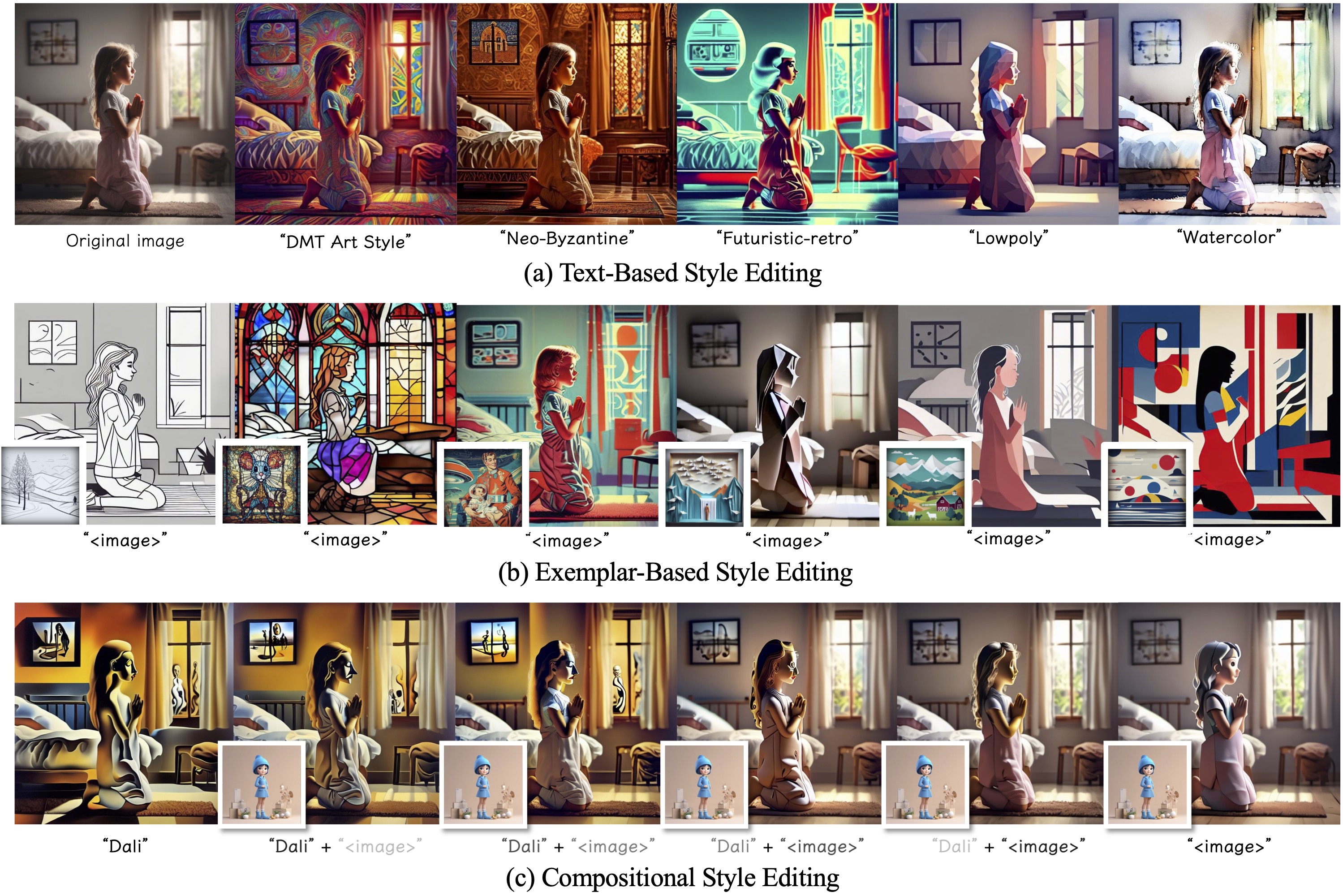
|
||||
|
||||
## Gallery
|
||||
|
||||
<table>
|
||||
<tr>
|
||||
<td><strong>Origin Image</strong><br>Gold Dragon Tuner</td>
|
||||
<td><strong>Graffiti Art</strong></td>
|
||||
<td><strong>Adorable Kawaii</strong></td>
|
||||
<td><strong>game-retro game</strong></td>
|
||||
<td><strong>Vincent van Gogh</strong></td>
|
||||
</tr>
|
||||
<tr>
|
||||
<td><img src="../../../asset/images/scedit/tuner_gold_dragon.jpeg" width="240"></td>
|
||||
<td><img src="../../../asset/images/stylebooth/graffiti.jpeg" width="240"></td>
|
||||
<td><img src="../../../asset/images/stylebooth/kawaii.jpeg" width="240"></td>
|
||||
<td><img src="../../../asset/images/stylebooth/retrogame.jpeg" width="240"></td>
|
||||
<td><img src="../../../asset/images/stylebooth/vangogh.jpeg" width="240"></td>
|
||||
</tr>
|
||||
</table>
|
||||
|
||||
## Features
|
||||
|
||||
| **Text-Based** | **Exemplar-Based** |
|
||||
|:--------------:|:-----------------:|
|
||||
| 🪄 | ⏳ |
|
||||
|
||||
- ✅ indicates support for both training and inference.
|
||||
- 🪄 denotes that the model has been published.
|
||||
- ⏳ denotes that the module has not been integrated currently.
|
||||
- More models will be released in the future.
|
||||
|
||||
## Run StyleBooth
|
||||
- Code implementation: See model configuration and code based on [🪄SCEPTER](https://github.com/modelscope/scepter).
|
||||
|
||||
- Demo: Try [🖥️SCEPTER Studio](https://github.com/modelscope/scepter/tree/main?tab=readme-ov-file#%EF%B8%8F-scepter-studio).
|
||||
|
||||
- Easy run:
|
||||
Try the following example script to run StyleBooth modified from [tests/modules/test_diffusion_inference.py](https://github.com/modelscope/scepter/blob/main/tests/modules/test_diffusion_inference.py):
|
||||
|
||||
```python
|
||||
# `pip install scepter>0.0.4` or
|
||||
# clone newest SCEPTER and run `PYTHONPATH=./ python <this_script>` at the main branch root.
|
||||
import os
|
||||
import unittest
|
||||
|
||||
from PIL import Image
|
||||
from torchvision.utils import save_image
|
||||
|
||||
from scepter.modules.inference.stylebooth_inference import StyleboothInference
|
||||
from scepter.modules.utils.config import Config
|
||||
from scepter.modules.utils.file_system import FS
|
||||
from scepter.modules.utils.logger import get_logger
|
||||
|
||||
|
||||
class DiffusionInferenceTest(unittest.TestCase):
|
||||
def setUp(self):
|
||||
print(('Testing %s.%s' % (type(self).__name__, self._testMethodName)))
|
||||
self.logger = get_logger(name='scepter')
|
||||
config_file = 'scepter/methods/studio/scepter_ui.yaml'
|
||||
cfg = Config(cfg_file=config_file)
|
||||
if 'FILE_SYSTEM' in cfg:
|
||||
for fs_info in cfg['FILE_SYSTEM']:
|
||||
FS.init_fs_client(fs_info)
|
||||
self.tmp_dir = './cache/save_data/diffusion_inference'
|
||||
if not os.path.exists(self.tmp_dir):
|
||||
os.makedirs(self.tmp_dir)
|
||||
|
||||
def tearDown(self):
|
||||
super().tearDown()
|
||||
|
||||
# uncomment this line to skip this module.
|
||||
# @unittest.skip('')
|
||||
def test_stylebooth(self):
|
||||
config_file = 'scepter/methods/studio/inference/edit/stylebooth_tb_pro.yaml'
|
||||
cfg = Config(cfg_file=config_file)
|
||||
diff_infer = StyleboothInference(logger=self.logger)
|
||||
diff_infer.init_from_cfg(cfg)
|
||||
|
||||
output = diff_infer({'prompt': 'Let this image be in the style of sai-lowpoly'},
|
||||
style_edit_image=Image.open('asset/images/inpainting_text_ref/ex4_scene_im.jpg'),
|
||||
style_guide_scale_text=7.5,
|
||||
style_guide_scale_image=0.5)
|
||||
save_path = os.path.join(self.tmp_dir,
|
||||
'stylebooth_test_lowpoly_cute_dog.png')
|
||||
save_image(output['images'], save_path)
|
||||
|
||||
|
||||
if __name__ == '__main__':
|
||||
unittest.main()
|
||||
```
|
||||
@@ -0,0 +1,26 @@
|
||||
<h1 align="center">Dataset Management</h1>
|
||||
|
||||
SCEPTER supports three types of dataset formats: TXT, CSV, and ModelScope.
|
||||
Below are examples for each format, illustrating their details and basic usage.
|
||||
|
||||
## Modelscope Format
|
||||
|
||||
We use a [custom-stylized dataset](https://modelscope.cn/datasets/damo/style_custom_dataset/summary), which included classes 3D, anime, flat illustration, oil painting, sketch, and watercolor, each with 30 image-text pairs.
|
||||
|
||||
```python
|
||||
# pip install modelscope
|
||||
from modelscope.msdatasets import MsDataset
|
||||
ms_train_dataset = MsDataset.load('style_custom_dataset', namespace='damo', subset_name='3D', split='train_short')
|
||||
print(next(iter(ms_train_dataset)))
|
||||
```
|
||||
|
||||
## CSV Format
|
||||
|
||||
For the data format used by SCEPTER Studio, please refer to [3D_example_csv.zip](https://www.modelscope.cn/api/v1/models/iic/scepter/repo?Revision=master&FilePath=datasets/3D_example_csv.zip).
|
||||
|
||||
## TXT Format
|
||||
|
||||
To facilitate starting training in command-line mode, you can use a dataset in text format, please refer to [3D_example_txt.zip](https://www.modelscope.cn/api/v1/models/iic/scepter/repo?Revision=master&FilePath=datasets/3D_example_txt.zip)
|
||||
|
||||
```shell
|
||||
mkdir -p cache/datasets/ && wget 'https://www.modelscope.cn/api/v1/models/iic/scepter/repo?Revision=master&FilePath=datasets/3D_example_txt.zip' -O cache/datasets/3D_example_txt.zip && unzip cache/datasets/3D_example_txt.zip -d cache/datasets/ && rm cache/datasets/3D_example_txt.zip
|
||||
@@ -0,0 +1,45 @@
|
||||
# Inference
|
||||
|
||||
In this tutorial, we'll cover the use of the scepter framework for convenient inference, including inference using the command line or specific method classes, and we'll give examples of inference methods for additional tasks.
|
||||
|
||||
## Command Line
|
||||
Inference of SDXL generation models using the command line.
|
||||
```shell
|
||||
python scepter/tools/run_inference.py --cfg scepter/methods/examples/generation/stable_diffusion_xl_1024.yaml --prompt 'a cute dog' --save_folder 'inference' # generation on SD XL
|
||||
```
|
||||
|
||||
## Class Instantiation
|
||||
Inference of SD2.1 generation models using the class instantiation.
|
||||
```python
|
||||
from torchvision.utils import save_image
|
||||
from scepter.modules.utils.config import Config
|
||||
from scepter.modules.utils.file_system import FS
|
||||
from scepter.modules.utils.logger import get_logger
|
||||
from scepter.modules.inference.diffusion_inference import DiffusionInference
|
||||
# init file system - modelscope
|
||||
FS.init_fs_client(Config(load=False, cfg_dict={'NAME': 'ModelscopeFs', 'TEMP_DIR': 'cache/data'}))
|
||||
# init model config
|
||||
logger = get_logger(name='scepter')
|
||||
cfg = Config(cfg_file='scepter/methods/studio/inference/stable_diffusion/sd21_pro.yaml')
|
||||
diff_infer = DiffusionInference(logger)
|
||||
diff_infer.init_from_cfg(cfg)
|
||||
# start inference
|
||||
output = diff_infer({'prompt': 'a cute dog'})
|
||||
save_image(output['images'], 'sd21_test_prompt_a_cute_dog.png')
|
||||
```
|
||||
|
||||
## Additional Tasks
|
||||
|
||||
### Fine-tuned Model Inference
|
||||
|
||||
```shell
|
||||
python scepter/tools/run_inference.py --cfg scepter/methods/scedit/t2i/sd15_512_sce_t2i_swift.yaml --pretrained_model 'cache/save_data/sd15_512_sce_t2i_swift/checkpoints/ldm_step-100.pth' --prompt 'A close up of a small rabbit wearing a hat and scarf' --save_folder 'trained_test_prompt_rabbit'
|
||||
```
|
||||
|
||||
### Controllable Image Synthesis Inference
|
||||
|
||||
- SCEdit
|
||||
```shell
|
||||
python scepter/tools/run_inference.py --cfg scepter/methods/scedit/ctr/sd21_768_sce_ctr_canny.yaml --num_samples 1 --prompt 'a single flower is shown in front of a tree' --save_folder 'test_flower_canny' --image_size 768 --task control --image 'asset/images/flower.jpg' --control_mode canny --pretrained_model ms://damo/scepter_scedit@controllable_model/SD2.1/canny_control/0_SwiftSCETuning/pytorch_model.bin # canny
|
||||
python scepter/tools/run_inference.py --cfg scepter/methods/scedit/ctr/sd21_768_sce_ctr_pose.yaml --num_samples 1 --prompt 'super mario' --save_folder 'test_mario_pose' --image_size 768 --task control --image 'asset/images/pose_source.png' --control_mode source --pretrained_model ms://damo/scepter_scedit@controllable_model/SD2.1/pose_control/0_SwiftSCETuning/pytorch_model.bin # pose
|
||||
```
|
||||
@@ -0,0 +1,84 @@
|
||||
# Training
|
||||
|
||||
We provide a framework for training and validation.
|
||||
|
||||
The scripts below are just for illustration purposes. To achieve better results, you can modify the corresponding parameters as needed.
|
||||
|
||||
## Start Training
|
||||
There are different ways to start a training:
|
||||
|
||||
- calling scepter/tools/run_train.py:
|
||||
```bash
|
||||
# calling at SCEPTER root:
|
||||
PYTHONPATH=./ python scepter/tools/run_train.py --cfg [path-to-your-yaml]
|
||||
|
||||
# calling scepter library:
|
||||
pip install scepter
|
||||
python -m scepter.tools.run_train --cfg [path-to-your-yaml]
|
||||
```
|
||||
- calling your own script:
|
||||
```bash
|
||||
# calling at SCEPTER root:
|
||||
PYTHONPATH=./ python [path-to-your-script] --cfg [path-to-your-yaml]
|
||||
|
||||
# calling scepter library:
|
||||
pip install scepter
|
||||
python [path-to-your-script] --cfg [path-to-your-yaml]
|
||||
```
|
||||
your scepter should be like:
|
||||
```python
|
||||
from scepter.tools.run_train import run
|
||||
|
||||
if __name__ == '__main__':
|
||||
run()
|
||||
```
|
||||
|
||||
## Popular Tasks
|
||||
### Text-to-Image Generation
|
||||
|
||||
- SCEdit
|
||||
```bash
|
||||
python scepter/tools/run_train.py --cfg scepter/methods/scedit/t2i/sd15_512_sce_t2i.yaml # SD v1.5
|
||||
python scepter/tools/run_train.py --cfg scepter/methods/scedit/t2i/sd21_768_sce_t2i.yaml # SD v2.1
|
||||
python scepter/tools/run_train.py --cfg scepter/methods/scedit/t2i/sdxl_1024_sce_t2i.yaml # SD XL
|
||||
```
|
||||
|
||||
- Existing Tuning Strategies
|
||||
```bash
|
||||
python scepter/tools/run_train.py --cfg scepter/methods/examples/generation/stable_diffusion_1.5_512.yaml # fully-tuning on SD v1.5
|
||||
python scepter/tools/run_train.py --cfg scepter/methods/examples/generation/stable_diffusion_2.1_768_lora.yaml # lora-tuning on SD v2.1
|
||||
```
|
||||
|
||||
- Data Text Format
|
||||
```bash
|
||||
# Download the 3D_example_txt.zip as previously mentioned
|
||||
python scepter/tools/run_train.py --cfg scepter/methods/scedit/t2i/sdxl_1024_sce_t2i_datatxt.yaml
|
||||
```
|
||||
|
||||
### Controllable Image Synthesis
|
||||
|
||||
- SCEdit
|
||||
|
||||
The YAML configuration can be modified to combine different base models and conditions. The following is provided as an example.
|
||||
```bash
|
||||
python scepter/tools/run_train.py --cfg scepter/methods/scedit/ctr/sd15_512_sce_ctr_hed.yaml # SD v1.5 + hed
|
||||
python scepter/tools/run_train.py --cfg scepter/methods/scedit/ctr/sd21_768_sce_ctr_canny.yaml # SD v2.1 + canny
|
||||
python scepter/tools/run_train.py --cfg scepter/methods/scedit/ctr/sd21_768_sce_ctr_pose.yaml # SD v2.1 + pose
|
||||
python scepter/tools/run_train.py --cfg scepter/methods/scedit/ctr/sdxl_1024_sce_ctr_depth.yaml # SD XL + depth
|
||||
python scepter/tools/run_train.py --cfg scepter/methods/scedit/ctr/sdxl_1024_sce_ctr_color.yaml # SD XL + color
|
||||
```
|
||||
|
||||
- Data Text Format
|
||||
```bash
|
||||
# Download the 3D_example_txt.zip as previously mentioned
|
||||
python scepter/tools/run_train.py --cfg scepter/methods/scedit/ctr/sdxl_1024_sce_ctr_color_datatxt.yaml
|
||||
```
|
||||
|
||||
|
||||
## Customize Modules
|
||||
You can register your own Modules like DATASET, SAMPLERS, TRANSFORMS, MODELS, SOVLERS, HOOKS, OPTIMIZERS into SCEPTER.
|
||||
Refer to `example/`, build the modules of your task in `example/{task}`.
|
||||
```bash
|
||||
cd example/classifier
|
||||
python run.py --cfg classifier.yaml
|
||||
```
|
||||
@@ -15,8 +15,8 @@
|
||||
子类注册:
|
||||
|
||||
```python
|
||||
from scepter.model.registry import BACKBONES
|
||||
from scepter.model.base_model import BaseModel
|
||||
from scepter.modules.model.registry import BACKBONES
|
||||
from scepter.modules.model.base_model import BaseModel
|
||||
|
||||
|
||||
@BACKBONES.register_class("ResNet")
|
||||
@@ -26,8 +26,8 @@ class ResNet(BaseModel):
|
||||
```
|
||||
|
||||
```python
|
||||
from scepter.model.registry import NECKS
|
||||
from scepter.model.base_model import BaseModel
|
||||
from scepter.modules.model.registry import NECKS
|
||||
from scepter.modules.model.base_model import BaseModel
|
||||
|
||||
|
||||
@NECKS.register_class()
|
||||
@@ -37,8 +37,8 @@ class GlobalAveragePooling(BaseModel):
|
||||
```
|
||||
|
||||
```python
|
||||
from scepter.model.registry import HEADS
|
||||
from scepter.model.base_model import BaseModel
|
||||
from scepter.modules.model.registry import HEADS
|
||||
from scepter.modules.model.base_model import BaseModel
|
||||
|
||||
|
||||
@HEADS.register_class()
|
||||
@@ -48,7 +48,7 @@ class ClassifierHead(BaseModel):
|
||||
```
|
||||
|
||||
```python
|
||||
from scepter.model.registry import LOSSES
|
||||
from scepter.modules.model.registry import LOSSES
|
||||
import torch.nn as nn
|
||||
|
||||
|
||||
@@ -60,7 +60,7 @@ class CrossEntropy(nn.Module):
|
||||
实际调用:
|
||||
|
||||
```python
|
||||
from scepter.model.registry import BACKBONES, NECKS, HEADS, LOSSES, TUNERS
|
||||
from scepter.modules.model.registry import BACKBONES, NECKS, HEADS, LOSSES, TUNERS
|
||||
|
||||
backbone = BACKBONES.build(cfg.BACKBONE, logger=logger)
|
||||
neck = NECKS.build(cfg.NECK, logger=logger)
|
||||
@@ -85,8 +85,8 @@ tuner = TUNERS.build(cfg.TUNER, logger=logger)
|
||||
子类注册:
|
||||
|
||||
```python
|
||||
from scepter.model.metrics.registry import METRICS
|
||||
from scepter.model.metrics.base_metric import BaseMetric
|
||||
from scepter.modules.model.metrics.registry import METRICS
|
||||
from scepter.modules.model.metrics.base_metric import BaseMetric
|
||||
|
||||
|
||||
@METRICS.register_class("AccuracyMetric")
|
||||
@@ -97,7 +97,7 @@ class AccuracyMetric(BaseMetric):
|
||||
实际用法:
|
||||
|
||||
```python
|
||||
from scepter.model.metrics.registry import METRICS
|
||||
from scepter.modules.model.metrics.registry import METRICS
|
||||
|
||||
metric = METRICS.build(cfgs, logger)
|
||||
```
|
||||
@@ -119,8 +119,8 @@ metric = METRICS.build(cfgs, logger)
|
||||
子类注册:
|
||||
|
||||
```python
|
||||
from scepter.model.registry import TOKENIZERS
|
||||
from scepter.model.tokenizers import BaseTokenizer
|
||||
from scepter.modules.model.registry import TOKENIZERS
|
||||
from scepter.modules.model.tokenizers import BaseTokenizer
|
||||
|
||||
|
||||
@TOKENIZERS.register_class()
|
||||
@@ -131,7 +131,7 @@ class BaseBertTokenizer(BaseTokenizer):
|
||||
实际用法:
|
||||
|
||||
```python
|
||||
from scepter.model.registry import TOKENIZERS
|
||||
from scepter.modules.model.registry import TOKENIZERS
|
||||
|
||||
tokenizer = TOKENIZERS.build(cfgs, logger)
|
||||
```
|
||||
@@ -149,8 +149,8 @@ tokenizer = TOKENIZERS.build(cfgs, logger)
|
||||
子类注册:
|
||||
|
||||
```python
|
||||
from scepter.model.registry import MODELS
|
||||
from scepter.model.networks.train_module import TrainModule
|
||||
from scepter.modules.model.registry import MODELS
|
||||
from scepter.modules.model.networks.train_module import TrainModule
|
||||
|
||||
|
||||
@MODELS.register_class()
|
||||
@@ -161,7 +161,7 @@ class Classifier(TrainModule):
|
||||
实际用法:
|
||||
|
||||
```python
|
||||
from scepter.model.registry import MODELS
|
||||
from scepter.modules.model.registry import MODELS
|
||||
|
||||
model = MODELS.build(self.cfg.MODEL, logger=self.logger)
|
||||
```
|
||||
|
||||
@@ -9,8 +9,8 @@
|
||||
子lr_schedulers继承时用法:
|
||||
|
||||
```python
|
||||
from scepter.opt.lr_schedulers import LR_SCHEDULERS
|
||||
from scepter.opt.lr_schedulers.base_scheduler import BaseScheduler
|
||||
from scepter.modules.opt.lr_schedulers import LR_SCHEDULERS
|
||||
from scepter.modules.opt.lr_schedulers.base_scheduler import BaseScheduler
|
||||
|
||||
|
||||
@LR_SCHEDULERS.register_class()
|
||||
@@ -48,8 +48,8 @@ lr_schedulers的基类,支持注册操作,可根据需要自定义;
|
||||
子optimizers继承时用法:
|
||||
|
||||
```python
|
||||
from scepter.opt.optimizers.base_optimizer import BaseOptimize
|
||||
from scepter.opt.optimizers.registry import OPTIMIZERS
|
||||
from scepter.modules.opt.optimizers.base_optimizer import BaseOptimize
|
||||
from scepter.modules.opt.optimizers.registry import OPTIMIZERS
|
||||
|
||||
|
||||
@OPTIMIZERS.register_class()
|
||||
|
||||
@@ -6,10 +6,10 @@
|
||||
|
||||
支持3类文件IO Handler:
|
||||
|
||||
1. scepter.utils.file_clients.AliyunOssFs
|
||||
2. scepter.utils.file_clients.LocalFs
|
||||
3. scepter.utils.file_clients.HttpFs
|
||||
4. scepter.utils.file_clients.ModelscopeFs
|
||||
1. scepter.modules.utils.file_clients.AliyunOssFs
|
||||
2. scepter.modules.utils.file_clients.LocalFs
|
||||
3. scepter.modules.utils.file_clients.HttpFs
|
||||
4. scepter.modules.utils.file_clients.ModelscopeFs
|
||||
|
||||
|
||||
<hr/>
|
||||
@@ -17,8 +17,8 @@
|
||||
## 基础用法
|
||||
|
||||
```python
|
||||
from scepter.utils.file_system import FS
|
||||
from scepter.utils.config import Config
|
||||
from scepter.modules.utils.file_system import FS
|
||||
from scepter.modules.utils.config import Config
|
||||
|
||||
fs_cfg = Config(load=False, cfg_dict={
|
||||
"NAME": "AliyunOssFs",
|
||||
|
||||
@@ -3,18 +3,18 @@
|
||||
依赖SDK,该部分用于对框架全局经常复用的模块和sdk进行整理,并根据功能相关性进行聚合。
|
||||
|
||||
## 总览
|
||||
1. 参数sdk(scepter.utils.config)
|
||||
2. 路径sdk(scepter.utils.directory)
|
||||
3. torch分布式sdk(scepter.utils.distribute)
|
||||
4. 模型导出sdk(scepter.utils.export_model)
|
||||
5. 文件系统sdk(scepter.utils.file_system)
|
||||
6. 日志sdk(scepter.utils.logger)
|
||||
7. 视频处理sdk(scepter.utils.video_reader),文档参考(video_reader.md)
|
||||
8. 模块注册sdk(scepter.utils.registry)
|
||||
9. 数据sdk(scepter.utils.data)
|
||||
10. 模型sdk(scepter.utils.model)
|
||||
11. 采样器sdk(scepter.utils.sampler)
|
||||
12. 探针器sdk(scepter.utils.probe)
|
||||
1. 参数sdk(scepter.modules.utils.config)
|
||||
2. 路径sdk(scepter.modules.utils.directory)
|
||||
3. torch分布式sdk(scepter.modules.utils.distribute)
|
||||
4. 模型导出sdk(scepter.modules.utils.export_model)
|
||||
5. 文件系统sdk(scepter.modules.utils.file_system)
|
||||
6. 日志sdk(scepter.modules.utils.logger)
|
||||
7. 视频处理sdk(scepter.modules.utils.video_reader),文档参考(video_reader.md)
|
||||
8. 模块注册sdk(scepter.modules.utils.registry)
|
||||
9. 数据sdk(scepter.modules.utils.data)
|
||||
10. 模型sdk(scepter.modules.utils.model)
|
||||
11. 采样器sdk(scepter.modules.utils.sampler)
|
||||
12. 探针器sdk(scepter.modules.utils.probe)
|
||||
|
||||
<hr/>
|
||||
|
||||
@@ -23,7 +23,7 @@
|
||||
### 基础用法
|
||||
|
||||
```python
|
||||
from scepter.utils.config import Config
|
||||
from scepter.modules.utils.config import Config
|
||||
|
||||
# 从一个dict对象 初始化 Config对象
|
||||
fs_cfg = Config(load=False, cfg_dict={"NAME": "LocalFs"})
|
||||
@@ -97,7 +97,7 @@ print(fs_cfg.args)
|
||||
### 基础用法
|
||||
|
||||
```python
|
||||
from scepter.utils.directory import osp_path
|
||||
from scepter.modules.utils.directory import osp_path
|
||||
|
||||
# 根据路径前缀进行自动化路径拼接
|
||||
prefix = "xxxx"
|
||||
@@ -108,7 +108,7 @@ print(osp_path(prefix, data_file))
|
||||
data_file = "xxxx/example_videos/1.mp4"
|
||||
print(osp_path(prefix, data_file))
|
||||
|
||||
from scepter.utils.directory import get_relative_folder
|
||||
from scepter.modules.utils.directory import get_relative_folder
|
||||
|
||||
# 根据路径获取指定层级的文件夹路径
|
||||
# 默认最后一级 xxxx/example_videos/
|
||||
@@ -116,7 +116,7 @@ print(get_relative_folder(data_file))
|
||||
# 倒数第二级 xxxx/
|
||||
print(get_relative_folder(data_file, keep_index=-2))
|
||||
|
||||
from scepter.utils.directory import get_md5
|
||||
from scepter.modules.utils.directory import get_md5
|
||||
|
||||
# 获取文本/路径的md5码 34a447fb46d0b786a3999c9dad01d470
|
||||
print(get_md5(data_file))
|
||||
@@ -172,8 +172,8 @@ torch分布式初始化sdk,使用该sdk,可以让用户不要关注torch的
|
||||
### 基础用法
|
||||
|
||||
```python
|
||||
from scepter.utils.distribute import we
|
||||
from scepter.utils.config import Config
|
||||
from scepter.modules.utils.distribute import we
|
||||
from scepter.modules.utils.config import Config
|
||||
|
||||
cfg = Config(cfg_dict={}, load=False)
|
||||
|
||||
@@ -304,12 +304,12 @@ we.init_env(cfg, fn, logger=None)
|
||||
**Returns**
|
||||
- **tensor** —— 输出的在进程rank=0上的cpu的tensor。
|
||||
|
||||
## 4. 模型导出sdk(scepter.utils.export_model)
|
||||
## 4. 模型导出sdk(scepter.modules.utils.export_model)
|
||||
用于模型导出为torchscript/Onnx格式的api。
|
||||
### 基础用法
|
||||
|
||||
```python
|
||||
from scepter.utils.export_model import save_develop_model_multi_io
|
||||
from scepter.modules.utils.export_model import save_develop_model_multi_io
|
||||
|
||||
save_develop_model_multi_io(
|
||||
model,
|
||||
@@ -347,16 +347,16 @@ input_type 一一对应。
|
||||
**Returns**
|
||||
- **tensor** —— 输出的在进程rank=0上的cpu的tensor。
|
||||
|
||||
## 5. 文件系统sdk(scepter.utils.file_system)
|
||||
## 5. 文件系统sdk(scepter.modules.utils.file_system)
|
||||
参考[file_clients](file_clients.md)
|
||||
|
||||
## 6. 日志sdk(scepter.utils.logger)
|
||||
## 6. 日志sdk(scepter.modules.utils.logger)
|
||||
用于实例化一个标准的日志实例,用于打印信息。
|
||||
|
||||
### 基础用法
|
||||
|
||||
```python
|
||||
from scepter.utils.logger import get_logger, init_logger
|
||||
from scepter.modules.utils.logger import get_logger, init_logger
|
||||
|
||||
std_logger = get_logger(name="scepter")
|
||||
init_logger(std_logger, log_file="", dist_launcher="pytorch")
|
||||
@@ -407,14 +407,14 @@ init_logger(std_logger, log_file="", dist_launcher="pytorch")
|
||||
**Returns**
|
||||
- **str** —— 格式化的输出。
|
||||
|
||||
## 7. 视频处理sdk(scepter.utils.video_reader)
|
||||
## 7. 视频处理sdk(scepter.modules.utils.video_reader)
|
||||
用于处理视频读取的api。
|
||||
|
||||
### 基础用法
|
||||
|
||||
```python
|
||||
from scepter.utils.video_reader.frame_sampler import do_frame_sample
|
||||
from scepter.utils.video_reader.video_reader import (
|
||||
from scepter.modules.utils.video_reader.frame_sampler import do_frame_sample
|
||||
from scepter.modules.utils.video_reader.video_reader import (
|
||||
VideoReaderWrapper, EasyVideoReader, FramesReaderWrapper
|
||||
)
|
||||
```
|
||||
@@ -556,14 +556,14 @@ overlap: Union[float, Fraction, str] = Fraction(0), transforms: Optional[Callabl
|
||||
**Returns**
|
||||
- **tensor** —— 视频片段的tensor。
|
||||
|
||||
## 8. 模块注册sdk(scepter.utils.registry)
|
||||
## 8. 模块注册sdk(scepter.modules.utils.registry)
|
||||
用于管理各种注册的类。
|
||||
|
||||
### 基础用法
|
||||
|
||||
```python
|
||||
from scepter.utils.registry import Registry
|
||||
from scepter.utils.config import Config
|
||||
from scepter.modules.utils.registry import Registry
|
||||
from scepter.modules.utils.config import Config
|
||||
|
||||
MODELS = Registry('MODELS')
|
||||
|
||||
@@ -616,14 +616,14 @@ build目标类的实例
|
||||
**Returns**
|
||||
- **name** —— 注册名称。
|
||||
|
||||
## 9. 数据sdk(scepter.utils.data)
|
||||
## 9. 数据sdk(scepter.modules.utils.data)
|
||||
用于数据在设备间转移
|
||||
|
||||
### 基础用法
|
||||
|
||||
```python
|
||||
import torch
|
||||
from scepter.utils.data import transfer_data_to_numpy, transfer_data_to_cpu, transfer_data_to_cuda
|
||||
from scepter.modules.utils.data import transfer_data_to_numpy, transfer_data_to_cpu, transfer_data_to_cuda
|
||||
|
||||
data = {"a": torch.Tensor([0])}
|
||||
transfer_data_to_numpy(data)
|
||||
@@ -670,7 +670,7 @@ transfer_data_to_cuda(data)
|
||||
|
||||
```python
|
||||
import torch
|
||||
from scepter.utils.model import move_model_to_cpu, load_pretrained,
|
||||
from scepter.modules.utils.model import move_model_to_cpu, load_pretrained,
|
||||
count_params, init_weights
|
||||
```
|
||||
<hr/>
|
||||
@@ -718,14 +718,14 @@ from scepter.utils.model import move_model_to_cpu, load_pretrained,
|
||||
**Parameters**
|
||||
- **module** —— torch.nn.Module模型实例。
|
||||
|
||||
## 11. 采样器sdk(scepter.utils.sampler)
|
||||
## 11. 采样器sdk(scepter.modules.utils.sampler)
|
||||
采样器比较具有通用性,大多数情况下不会进行定制开发,这里提供了几类常用的sampler采样器。
|
||||
|
||||
### 基础用法
|
||||
|
||||
```python
|
||||
import torch
|
||||
from scepter.utils.sampler import MultiFoldDistributedSampler,
|
||||
from scepter.modules.utils.sampler import MultiFoldDistributedSampler,
|
||||
EvalDistributedSampler, MultiLevelBatchSampler, MixtureOfSamplers
|
||||
```
|
||||
<hr/>
|
||||
@@ -832,17 +832,17 @@ from scepter.utils.sampler import MultiFoldDistributedSampler,
|
||||
|
||||
迭代器,每迭代一次得到一个样本的index
|
||||
|
||||
## 12. 探针器sdk(scepter.utils.probe)
|
||||
## 12. 探针器sdk(scepter.modules.utils.probe)
|
||||
用于探针各个组件的变量统计
|
||||
|
||||
### 基础用法
|
||||
|
||||
```python
|
||||
import numpy as np
|
||||
from scepter.model.base_model import BaseModel
|
||||
from scepter.utils.config import Config
|
||||
from scepter.utils.file_system import FS
|
||||
from scepter.utils.probe import ProbeData
|
||||
from scepter.modules.model.base_model import BaseModel
|
||||
from scepter.modules.utils.config import Config
|
||||
from scepter.modules.utils.file_system import FS
|
||||
from scepter.modules.utils.probe import ProbeData
|
||||
|
||||
|
||||
class TestModel(BaseModel):
|
||||
|
||||
@@ -0,0 +1,2 @@
|
||||
# -*- coding: utf-8 -*-
|
||||
# Copyright (c) Alibaba, Inc. and its affiliates.
|
||||
@@ -0,0 +1,3 @@
|
||||
# -*- coding: utf-8 -*-
|
||||
# Copyright (c) Alibaba, Inc. and its affiliates.
|
||||
from .classifier_dataset import ImageClassifyExampleDataset
|
||||
@@ -0,0 +1,260 @@
|
||||
ENV:
|
||||
USE_PL: False
|
||||
# SET GLOBAL SYSTEM
|
||||
SOLVER:
|
||||
# NAME DESCRIPTION: TYPE: default: 'TrainValSolver'
|
||||
NAME: TrainValSolver
|
||||
# RESUME_FROM DESCRIPTION: Resume from some state of training! TYPE: str default: ''
|
||||
RESUME_FROM:
|
||||
# MAX_EPOCHS DESCRIPTION: Max epochs for training. TYPE: int default: 10
|
||||
MAX_EPOCHS: 200
|
||||
# NUM_FOLDS DESCRIPTION: Num folds for training. TYPE: int default: 0
|
||||
NUM_FOLDS: 1
|
||||
# WORK_DIR DESCRIPTION: Save dir of the training log or model. TYPE: str default: ''
|
||||
WORK_DIR: ./exp12/
|
||||
LOG_FILE: std_log.txt
|
||||
# EVAL_INTERVAL DESCRIPTION: Eval the model interval. TYPE: int default: 1
|
||||
EVAL_INTERVAL: 1
|
||||
ACCU_STEP: 1
|
||||
# DO_FINAL_EVAL DESCRIPTION: If do final evaluation or not. TYPE: bool default: False
|
||||
DO_FINAL_EVAL: True
|
||||
# SAVE_EVAL_DATA DESCRIPTION: If save the evaluation data or not. TYPE: bool default: False
|
||||
SAVE_EVAL_DATA: True
|
||||
# EXTRA_KEYS DESCRIPTION: The extra keys for metric. TYPE: list default: []
|
||||
EXTRA_KEYS: []
|
||||
# TRAIN_DATA DESCRIPTION: Train data config. TYPE: default: ''
|
||||
TRAIN_DATA:
|
||||
# NAME DESCRIPTION: TYPE: default: 'ImageClassifyPublicDataset'
|
||||
NAME: ImageClassifyExampleDataset
|
||||
# DATASET DESCRIPTION: the public dataset name TYPE: str default: 'cifar10'
|
||||
DATASET: cifar10
|
||||
# DATA_ROOT DESCRIPTION: the download data save path TYPE: str default: ''
|
||||
DATA_ROOT: cifar10
|
||||
# MODE DESCRIPTION: test TYPE: str default: test
|
||||
MODE: train
|
||||
# PIN_MEMORY DESCRIPTION: pin_memory for data loader TYPE: bool default: False
|
||||
PIN_MEMORY: True
|
||||
# BATCH_SIZE DESCRIPTION: batch size for data TYPE: int default: 4
|
||||
BATCH_SIZE: 96
|
||||
# NUM_WORKERS DESCRIPTION: num workers for fetching data! TYPE: int default: 1
|
||||
NUM_WORKERS: 4
|
||||
# TRANSFORMS DESCRIPTION: TYPE: default:
|
||||
TRANSFORMS:
|
||||
# - DESCRIPTION: TYPE: default:
|
||||
- # NAME DESCRIPTION: TYPE: default: 'RandomResizedCrop'
|
||||
NAME: RandomResizedCrop
|
||||
SIZE: 32
|
||||
# RATIO DESCRIPTION: ratio TYPE: list default: [0.75, 1.3333333333333333]
|
||||
RATIO: [0.75, 1.33]
|
||||
# SCALE DESCRIPTION: scale TYPE: list default: [0.08, 1.0]
|
||||
SCALE: [0.8, 1.0]
|
||||
# INTERPOLATION DESCRIPTION: interpolation TYPE: str default: 'blilinear'
|
||||
INTERPOLATION: bilinear
|
||||
# INPUT_KEY DESCRIPTION: input key TYPE: str default: 'img'
|
||||
INPUT_KEY: img
|
||||
# OUTPUT_KEY DESCRIPTION: input key TYPE: str default: 'img'
|
||||
OUTPUT_KEY: img
|
||||
# BACKEND DESCRIPTION: backend, choose from pillow, cv2, torchvision TYPE: str default: 'pillow'
|
||||
BACKEND: pillow
|
||||
- # NAME DESCRIPTION: TYPE: default: 'RandomHorizontalFlip'
|
||||
NAME: RandomHorizontalFlip
|
||||
# P DESCRIPTION: P TYPE: float default: 0.5
|
||||
P: 0.5
|
||||
# INPUT_KEY DESCRIPTION: input key TYPE: str default: 'img'
|
||||
INPUT_KEY: img
|
||||
# OUTPUT_KEY DESCRIPTION: input key TYPE: str default: 'img'
|
||||
OUTPUT_KEY: img
|
||||
# BACKEND DESCRIPTION: backend, choose from pillow, cv2, torchvision TYPE: str default: 'pillow'
|
||||
BACKEND: pillow
|
||||
- # NAME DESCRIPTION: TYPE: default: 'ImageToTensor'
|
||||
NAME: ImageToTensor
|
||||
# INPUT_KEY DESCRIPTION: input key TYPE: str default: 'img'
|
||||
INPUT_KEY: img
|
||||
# OUTPUT_KEY DESCRIPTION: input key TYPE: str default: 'img'
|
||||
OUTPUT_KEY: img
|
||||
# BACKEND DESCRIPTION: backend, choose from pillow, cv2, torchvision TYPE: str default: 'pillow'
|
||||
BACKEND: pillow
|
||||
- # NAME DESCRIPTION: TYPE: default: 'Normalize'
|
||||
NAME: Normalize
|
||||
# MEAN DESCRIPTION: mean TYPE: list default: []
|
||||
MEAN: [0.4914, 0.4822, 0.4465]
|
||||
# STD DESCRIPTION: std TYPE: list default: []
|
||||
STD: [0.2023, 0.1994, 0.2010]
|
||||
# INPUT_KEY DESCRIPTION: input key TYPE: str default: 'img'
|
||||
INPUT_KEY: img
|
||||
# OUTPUT_KEY DESCRIPTION: input key TYPE: str default: 'img'
|
||||
OUTPUT_KEY: img
|
||||
# BACKEND DESCRIPTION: backend, choose from pillow, cv2, torchvision TYPE: str default: 'pillow'
|
||||
BACKEND: pillow
|
||||
- NAME: ToTensor
|
||||
# KEYS DESCRIPTION: keys TYPE: list default: []
|
||||
KEYS: ["img", "label"]
|
||||
- # NAME DESCRIPTION: TYPE: default: 'Select'
|
||||
NAME: Select
|
||||
# KEYS DESCRIPTION: keys TYPE: list default: []
|
||||
KEYS: ["img", "label"]
|
||||
# META_KEYS DESCRIPTION: meta keys TYPE: list default: []
|
||||
META_KEYS: []
|
||||
# EVAL_DATA DESCRIPTION: Eval data config. TYPE: default: ''
|
||||
EVAL_DATA:
|
||||
# NAME DESCRIPTION: TYPE: default: 'ImageClassifyPublicDataset'
|
||||
NAME: ImageClassifyPublicDataset
|
||||
# DATASET DESCRIPTION: the public dataset name TYPE: str default: 'cifar10'
|
||||
DATASET: cifar10
|
||||
# DATA_ROOT DESCRIPTION: the download data save path TYPE: str default: ''
|
||||
DATA_ROOT: ./local_data/cifar10
|
||||
# MODE DESCRIPTION: test TYPE: str default: test
|
||||
MODE: test
|
||||
# PIN_MEMORY DESCRIPTION: pin_memory for data loader TYPE: bool default: False
|
||||
PIN_MEMORY: True
|
||||
# BATCH_SIZE DESCRIPTION: batch size for data TYPE: int default: 4
|
||||
BATCH_SIZE: 96
|
||||
# NUM_WORKERS DESCRIPTION: num workers for fetching data! TYPE: int default: 1
|
||||
NUM_WORKERS: 4
|
||||
# TRANSFORMS DESCRIPTION: TYPE: default:
|
||||
TRANSFORMS:
|
||||
# - DESCRIPTION: TYPE: default:
|
||||
- # NAME DESCRIPTION: TYPE: default: 'Resize'
|
||||
NAME: Resize
|
||||
SIZE: 32
|
||||
# INTERPOLATION DESCRIPTION: interpolation TYPE: str default: 'blilinear'
|
||||
INTERPOLATION: bilinear
|
||||
# INPUT_KEY DESCRIPTION: input key TYPE: str default: 'img'
|
||||
INPUT_KEY: img
|
||||
# OUTPUT_KEY DESCRIPTION: input key TYPE: str default: 'img'
|
||||
OUTPUT_KEY: img
|
||||
# BACKEND DESCRIPTION: backend, choose from pillow, cv2, torchvision TYPE: str default: 'pillow'
|
||||
BACKEND: pillow
|
||||
- # NAME DESCRIPTION: TYPE: default: 'ImageToTensor'
|
||||
NAME: ImageToTensor
|
||||
# INPUT_KEY DESCRIPTION: input key TYPE: str default: 'img'
|
||||
INPUT_KEY: img
|
||||
# OUTPUT_KEY DESCRIPTION: input key TYPE: str default: 'img'
|
||||
OUTPUT_KEY: img
|
||||
# BACKEND DESCRIPTION: backend, choose from pillow, cv2, torchvision TYPE: str default: 'pillow'
|
||||
BACKEND: pillow
|
||||
- # NAME DESCRIPTION: TYPE: default: 'Normalize'
|
||||
NAME: Normalize
|
||||
# MEAN DESCRIPTION: mean TYPE: list default: []
|
||||
MEAN: [0.4914, 0.4822, 0.4465]
|
||||
# STD DESCRIPTION: std TYPE: list default: []
|
||||
STD: [0.2023, 0.1994, 0.2010]
|
||||
# INPUT_KEY DESCRIPTION: input key TYPE: str default: 'img'
|
||||
INPUT_KEY: img
|
||||
# OUTPUT_KEY DESCRIPTION: input key TYPE: str default: 'img'
|
||||
OUTPUT_KEY: img
|
||||
# BACKEND DESCRIPTION: backend, choose from pillow, cv2, torchvision TYPE: str default: 'pillow'
|
||||
BACKEND: pillow
|
||||
- NAME: ToTensor
|
||||
# KEYS DESCRIPTION: keys TYPE: list default: []
|
||||
KEYS: ["img", "label"]
|
||||
- # NAME DESCRIPTION: TYPE: default: 'Select'
|
||||
NAME: Select
|
||||
# KEYS DESCRIPTION: keys TYPE: list default: []
|
||||
KEYS: ["img", "label"]
|
||||
# META_KEYS DESCRIPTION: meta keys TYPE: list default: []
|
||||
META_KEYS: []
|
||||
# TRAIN_HOOKS DESCRIPTION: TYPE: default: ''
|
||||
TRAIN_HOOKS:
|
||||
- # NAME DESCRIPTION: TYPE: default: 'LogHook'
|
||||
NAME: LogHook
|
||||
# LOG_INTERVAL DESCRIPTION: the interval for log print! TYPE: int default: 10
|
||||
LOG_INTERVAL: 10
|
||||
# EVAL_HOOKS DESCRIPTION: TYPE: default: ''
|
||||
EVAL_HOOKS:
|
||||
- # NAME DESCRIPTION: TYPE: default: 'LogHook'
|
||||
NAME: LogHook
|
||||
# LOG_INTERVAL DESCRIPTION: the interval for log print! TYPE: int default: 10
|
||||
LOG_INTERVAL: 10
|
||||
# TEST_HOOKS DESCRIPTION: TYPE: default: ''
|
||||
MODEL:
|
||||
# NAME DESCRIPTION: TYPE: default: 'Classifier'
|
||||
NAME: Classifier
|
||||
# ACT_NAME DESCRIPTION: the activation function for logits, select from [softmax, sigmoid]! TYPE: str default: 'softmax'
|
||||
ACT_NAME: softmax
|
||||
# FREEZE_BN DESCRIPTION: if freeze bn of not TYPE: bool default: False
|
||||
FREEZE_BN: False
|
||||
# BACKBONE DESCRIPTION: TYPE: default: ''
|
||||
BACKBONE:
|
||||
# NAME DESCRIPTION: TYPE: default: 'ResNet'
|
||||
NAME: ResNet
|
||||
# DEPTH DESCRIPTION: the depth of network for resnet! TYPE: int default: 18
|
||||
DEPTH: 18
|
||||
# PRETRAINED DESCRIPTION: if load the official pretrained model or not. TYPE: bool default: False
|
||||
PRETRAINED: false
|
||||
#
|
||||
KERNEL_SIZE: 3
|
||||
# USE_RELU DESCRIPTION: use relu or not! TYPE: bool default: True
|
||||
USE_RELU: True
|
||||
# USE_MAXPOOL DESCRIPTION: use maxpool or not! TYPE: bool default: True
|
||||
USE_MAXPOOL: false
|
||||
# FIRST_CONV_STRIDE DESCRIPTION: first conv stride 1 or 2! TYPE: int default: 1
|
||||
FIRST_CONV_STRIDE: 1
|
||||
# FIRST_MAX_POOL_STRIDE DESCRIPTION: first max pool stride 1 or 2! TYPE: int default: 1
|
||||
FIRST_MAX_POOL_STRIDE: 1
|
||||
# NECK DESCRIPTION: TYPE: default: ''
|
||||
NECK:
|
||||
# NAME DESCRIPTION: TYPE: default: 'GlobalAveragePooling'
|
||||
NAME: GlobalAveragePooling
|
||||
# DIM DESCRIPTION: GlobalAveragePooling dim! TYPE: int default: 2
|
||||
DIM: 2
|
||||
# HEAD DESCRIPTION: TYPE: default: ''
|
||||
HEAD:
|
||||
# NAME DESCRIPTION: TYPE: default: 'ClassifierHead'
|
||||
NAME: ClassifierHead
|
||||
# DIM DESCRIPTION: representation dim! TYPE: int default: 512
|
||||
DIM: 512
|
||||
# NUM_CLASSES DESCRIPTION: number of classes. TYPE: int default: 10
|
||||
NUM_CLASSES: 10
|
||||
# DROPOUT_RATE DESCRIPTION: dropout rate, default 0. TYPE: float default: 0.0
|
||||
DROPOUT_RATE: 0.0
|
||||
METRIC:
|
||||
# NAME DESCRIPTION: TYPE: default: 'AccuracyMetric'
|
||||
NAME: AccuracyMetric
|
||||
# TOPK DESCRIPTION: topk accuracy! TYPE: int default: 1
|
||||
TOPK: 1
|
||||
# LOSS DESCRIPTION: TYPE: default: ''
|
||||
LOSS:
|
||||
# NAME DESCRIPTION: TYPE: default: 'CrossEntropy'
|
||||
NAME: CrossEntropy
|
||||
# REDUCE DESCRIPTION: reduce is False, returns a loss per batch element instead and ignores :attr: size_average. Default: True TYPE: NoneType default: None
|
||||
# REDUCE: None
|
||||
# SIZE_AVERAGE DESCRIPTION: Deprecated (see :attr: reduction). By default,the losses are averaged over each loss element in the batch. Note that forsome losses, there are multiple elements per sample. If the field :attr: size_averageis set to False, the losses are instead summed for each minibatch. Ignoredwhen :attr: reduce is False. Default: True TYPE: NoneType default: None
|
||||
# SIZE_AVERAGE: None
|
||||
# IGNORE_INDEX DESCRIPTION: Specifies a target value that is ignoredand does not contribute to the input gradient. When :attr: size_average isTrue, the loss is averaged over non-ignored targets. Note that:attr: ignore_index is only applicable when the target contains class indices. TYPE: int default: -100
|
||||
# IGNORE_INDEX: -100
|
||||
# REDUCTION DESCRIPTION: Specifies the reduction to apply to the output:'none' | 'mean' | 'sum'. 'none': no reduction willbe applied, 'mean': the weighted mean of the output is taken,'sum': the output will be summed. Note: :attr: size_averageand :attr:`reduce` are in the process of being deprecated, and inthe meantime, specifying either of those two args will override:attr:`reduction`. Default: 'mean' TYPE: str default: 'mean'
|
||||
# REDUCTION: mean
|
||||
# LABEL_SMOOTHING DESCRIPTION: A float in [0.0, 1.0]. Specifies the amountof smoothing when computing the loss, where 0.0 means no smoothing. TYPE: float default: 0.0
|
||||
# LABEL_SMOOTHING: 0.0
|
||||
# OPTIMIZER DESCRIPTION: TYPE: default: ''
|
||||
OPTIMIZER:
|
||||
# NAME DESCRIPTION: TYPE: default: 'SGD'
|
||||
NAME: SGD
|
||||
# LEARNING_RATE DESCRIPTION: the initial learning rate! TYPE: float default: 0.1
|
||||
LEARNING_RATE: 0.01
|
||||
# MOMENTUM DESCRIPTION: the momentum! TYPE: int default: 0
|
||||
MOMENTUM: 0.9
|
||||
# DAMPENING DESCRIPTION: the dampening! TYPE: int default: 0
|
||||
DAMPENING: 0
|
||||
# WEIGHT_DECAY DESCRIPTION: the weight decay! TYPE: int default: 0
|
||||
WEIGHT_DECAY: 5e-4
|
||||
# NESTEROV DESCRIPTION: the nesterov! TYPE: bool default: False
|
||||
NESTEROV: False
|
||||
# LR_SCHEDULER DESCRIPTION: TYPE: default: ''
|
||||
LR_SCHEDULER:
|
||||
# NAME DESCRIPTION: TYPE: default: 'CosineAnnealingLR'
|
||||
NAME: CosineAnnealingLR
|
||||
# T_MAX DESCRIPTION: the T max! TYPE: float default: 1.0
|
||||
T_MAX: 200.0
|
||||
# ETA_MIN DESCRIPTION: the eta min! TYPE: int default: 0
|
||||
ETA_MIN: 0
|
||||
# LAST_EPOCH DESCRIPTION: the last epoch! TYPE: int default: -1
|
||||
LAST_EPOCH: -1
|
||||
# METRICS DESCRIPTION: TYPE: default: ''
|
||||
METRICS:
|
||||
- # NAME DESCRIPTION: TYPE: default: 'AccuracyMetric'
|
||||
NAME: AccuracyMetric
|
||||
# TOPK DESCRIPTION: topk accuracy! TYPE: int default: 1
|
||||
TOPK: 1
|
||||
KEYS: ["logits", "label"]
|
||||
@@ -0,0 +1,80 @@
|
||||
# -*- coding: utf-8 -*-
|
||||
# Copyright (c) Alibaba, Inc. and its affiliates.
|
||||
import numpy as np
|
||||
import torchvision
|
||||
|
||||
from scepter.modules.data.dataset.base_dataset import BaseDataset
|
||||
from scepter.modules.data.dataset.registry import DATASETS
|
||||
from scepter.modules.utils.config import dict_to_yaml
|
||||
|
||||
|
||||
@DATASETS.register_class()
|
||||
class ImageClassifyExampleDataset(BaseDataset):
|
||||
"""
|
||||
Dataset for image classification wrapper
|
||||
|
||||
Args:
|
||||
json_path (str): json file which contains all instances, should be a list of dict
|
||||
which contains img_path and gt_label
|
||||
image_dir (str or None): image directory, if None, img_path in json_path will be considered as absolute path
|
||||
classes (list[str] or None): image class description
|
||||
"""
|
||||
para_dict = {
|
||||
'DATASET': {
|
||||
'value': 'cifar10',
|
||||
'description': 'the public dataset name'
|
||||
},
|
||||
'DATA_ROOT': {
|
||||
'value': '',
|
||||
'description': 'the download data save path'
|
||||
}
|
||||
}
|
||||
|
||||
para_dict.update(BaseDataset.para_dict)
|
||||
|
||||
def __init__(self, cfg, logger=None):
|
||||
|
||||
super(ImageClassifyExampleDataset, self).__init__(cfg, logger=logger)
|
||||
|
||||
self.dataset_name = cfg.DATASET
|
||||
self.data_root = cfg.DATA_ROOT
|
||||
self.phase = cfg.MODE
|
||||
if self.dataset_name == 'cifar10':
|
||||
self.dataset = torchvision.datasets.CIFAR10(
|
||||
root=self.data_root,
|
||||
train=self.phase == 'train',
|
||||
download=True)
|
||||
|
||||
def __len__(self) -> int:
|
||||
return len(self.dataset)
|
||||
|
||||
def _get(self, index: int):
|
||||
img, target = self.dataset.__getitem__(index)
|
||||
ret = {
|
||||
'meta': {},
|
||||
'label': np.asarray(target, dtype=np.int64),
|
||||
'img': img
|
||||
}
|
||||
return ret
|
||||
|
||||
def worker_init_fn(self, worker_id, num_workers=1):
|
||||
super(ImageClassifyExampleDataset,
|
||||
self).worker_init_fn(worker_id, num_workers=num_workers)
|
||||
|
||||
@staticmethod
|
||||
def get_config_template():
|
||||
'''
|
||||
{ "ENV" :
|
||||
{ "description" : "",
|
||||
"A" : {
|
||||
"value": 1.0,
|
||||
"description": ""
|
||||
}
|
||||
}
|
||||
}
|
||||
:return:
|
||||
'''
|
||||
return dict_to_yaml('modename_DATA',
|
||||
__class__.__name__,
|
||||
ImageClassifyExampleDataset.para_dict,
|
||||
set_name=True)
|
||||
@@ -0,0 +1,7 @@
|
||||
# -*- coding: utf-8 -*-
|
||||
# Copyright (c) Alibaba, Inc. and its affiliates.
|
||||
|
||||
from scepter.tools.run_train import run
|
||||
|
||||
if __name__ == '__main__':
|
||||
run()
|
||||
@@ -8,48 +8,63 @@
|
||||
<a href="https://github.com/modelscope/scepter/"><img src="https://img.shields.io/badge/scepter-Build from source-6FEBB9.svg"></a>
|
||||
</p>
|
||||
|
||||
## 📖 Table of Contents
|
||||
- [Introduction](#-introduction)
|
||||
- [News](#-news)
|
||||
- [Installation](#%EF%B8%8F-installation)
|
||||
- [Getting Started](#-getting-started)
|
||||
- [SCEPTER Studio](#%EF%B8%8F-scepter-studio)
|
||||
- [Gallery](#%EF%B8%8F-gallery)
|
||||
- [Features](#-features)
|
||||
- [Learn More](#-learn-more)
|
||||
- [License](#license)
|
||||
🪄SCEPTER is an open-source code repository dedicated to generative training, fine-tuning, and inference, encompassing a suite of downstream tasks such as image generation, transfer, editing.
|
||||
SCEPTER integrates popular community-driven implementations as well as proprietary methods by Tongyi Lab of Alibaba Group, offering a comprehensive toolkit for researchers and practitioners in the field of AIGC. This versatile library is designed to facilitate innovation and accelerate development in the rapidly evolving domain of generative models.
|
||||
|
||||
## 📝 Introduction
|
||||
SCEPTER offers 3 core components:
|
||||
- [Generative training and inference framework](#tutorials)
|
||||
- [Easy implementation of popular approaches](#currently-supported-approaches)
|
||||
- [Interactive user interface: SCEPTER Studio](#launch)
|
||||
|
||||
SCEPTER is an open-source code repository dedicated to generative training, fine-tuning, and inference, encompassing a suite of downstream tasks such as image generation, transfer, editing. It integrates popular community-driven implementations as well as proprietary methods by Tongyi Lab of Alibaba Group, offering a comprehensive toolkit for researchers and practitioners in the field of AIGC. This versatile library is designed to facilitate innovation and accelerate development in the rapidly evolving domain of generative models.
|
||||
|
||||
Main Feature:
|
||||
|
||||
- Task:
|
||||
- Text-to-image generation
|
||||
- Controllable image synthesis
|
||||
- Image editing (TODO)
|
||||
- Training / Inference:
|
||||
- Distribute: DDP / FSDP / FairScale / Xformers
|
||||
- File system: Local / Http / OSS / Modelscope
|
||||
- Deploy:
|
||||
- Data management
|
||||
- Training
|
||||
- Inference
|
||||
|
||||
Currently supported approaches (and counting):
|
||||
|
||||
1. SD Series: [Stable Diffusion v1.5](https://huggingface.co/runwayml/stable-diffusion-v1-5) / [Stable Diffusion v2.1](https://huggingface.co/runwayml/stable-diffusion-v1-5) / [Stable Diffusion XL](https://huggingface.co/stabilityai/stable-diffusion-xl-base-1.0)
|
||||
2. SCEdit: [SCEdit: Efficient and Controllable Image Diffusion Generation via Skip Connection Editing](https://arxiv.org/abs/2312.11392) [](https://arxiv.org/abs/2312.11392) [](https://scedit.github.io/)
|
||||
3. Res-Tuning(TODO): [Res-Tuning: A Flexible and Efficient Tuning Paradigm via Unbinding Tuner from Backbone](https://arxiv.org/abs/2310.19859) [](https://arxiv.org/abs/2310.19859) [](https://res-tuning.github.io/)
|
||||
|
||||
## 🎉 News
|
||||
- [2024.04]: New [StyleBooth](https://ali-vilab.github.io/stylebooth-page/) demo on SCEPTER Studio for`Text-Based Style Editing`.
|
||||
- [2024.03]: We optimize the training UI and checkpoint management. New [LAR-Gen](https://arxiv.org/abs/2403.19534) model has been added on SCEPTER Studio, supporting `zoom-out`, `virtual try on`, `inpainting`.
|
||||
- [2024.02]: We release new SCEdit controllable image synthesis models for SD v2.1 and SD XL. Multiple strategies applied to accelerate inference time for SCEPTER Studio.
|
||||
- [2024.01]: We release **SCEPTER Studio**, an integrated toolkit for data management, model training and inference based on [Gradio](https://www.gradio.app/).
|
||||
- [2024.01]: [SCEdit](https://arxiv.org/abs/2312.11392) support controllable image synthesis for training and inference.
|
||||
- [2023.12]: We propose [SCEdit](https://arxiv.org/abs/2312.11392), an efficient and controllable generation framework.
|
||||
- [2023.12]: We release [🪄SCEPTER](https://github.com/modelscope/scepter/) library.
|
||||
|
||||
|
||||
## 🖼 Gallery for Recent Works
|
||||
|
||||
### StyleBooth
|
||||
<table>
|
||||
<tr>
|
||||
<td><strong>Origin Image</strong><br>Gold Dragon Tuner</td>
|
||||
<td><strong>Graffiti Art</strong></td>
|
||||
<td><strong>Adorable Kawaii</strong></td>
|
||||
<td><strong>game-retro game</strong></td>
|
||||
<td><strong>Vincent van Gogh</strong></td>
|
||||
</tr>
|
||||
<tr>
|
||||
<td><img src="asset/images/scedit/tuner_gold_dragon.jpeg" width="240"></td>
|
||||
<td><img src="asset/images/stylebooth/graffiti.jpeg" width="240"></td>
|
||||
<td><img src="asset/images/stylebooth/kawaii.jpeg" width="240"></td>
|
||||
<td><img src="asset/images/stylebooth/retrogame.jpeg" width="240"></td>
|
||||
<td><img src="asset/images/stylebooth/vangogh.jpeg" width="240"></td>
|
||||
</tr>
|
||||
</table>
|
||||
|
||||
<table>
|
||||
<tr>
|
||||
<td><strong>Origin Image</strong></td>
|
||||
<td><strong>Lowpoly</strong></td>
|
||||
<td><strong>Colored Pencil Art</strong></td>
|
||||
<td><strong>Watercolor</strong></td>
|
||||
<td><strong>misc-disco</strong></td>
|
||||
</tr>
|
||||
<tr>
|
||||
<td><img src="asset/images/stylebooth/mountain.jpg" width="240"></td>
|
||||
<td><img src="asset/images/stylebooth/lowpoly.jpg" width="240"></td>
|
||||
<td><img src="asset/images/stylebooth/colorpencil.jpeg" width="240"></td>
|
||||
<td><img src="asset/images/stylebooth/watercolor.jpeg" width="240"></td>
|
||||
<td><img src="asset/images/stylebooth/disco.jpeg" width="240"></td>
|
||||
</tr>
|
||||
</table>
|
||||
|
||||
|
||||
## 🛠️ Installation
|
||||
|
||||
- Create new environment
|
||||
@@ -70,100 +85,32 @@ pip install -r requirements/recommended.txt
|
||||
pip install scepter
|
||||
```
|
||||
|
||||
## 🚀 Getting Started
|
||||
## 🧩 Generative Framework
|
||||
|
||||
### Dataset
|
||||
### Tutorials
|
||||
|
||||
#### Modelscope Format
|
||||
| Documentation | Key Features |
|
||||
|:---------------------------------------------------|:----------------------------------|
|
||||
| [Train](docs/en/tutorials/train.md) | DDP / FSDP / FairScale / Xformers |
|
||||
| [Inference](docs/en/tutorials/inference.md) | Dynamic load/unload |
|
||||
| [Dataset Management](docs/en/tutorials/dataset.md) | Local / Http / OSS / Modelscope |
|
||||
|
||||
We use a [custom-stylized dataset](https://modelscope.cn/datasets/damo/style_custom_dataset/summary), which included classes 3D, anime, flat illustration, oil painting, sketch, and watercolor, each with 30 image-text pairs.
|
||||
|
||||
```python
|
||||
# pip install modelscope
|
||||
from modelscope.msdatasets import MsDataset
|
||||
ms_train_dataset = MsDataset.load('style_custom_dataset', namespace='damo', subset_name='3D', split='train_short')
|
||||
print(next(iter(ms_train_dataset)))
|
||||
```
|
||||
## 📝 Popular Approaches
|
||||
|
||||
#### CSV Format
|
||||
### Currently supported approaches
|
||||
|
||||
For the data format used by SCEPTER Studio, please refer to [3D_example_csv.zip](https://modelscope.cn/api/v1/models/damo/scepter/repo?Revision=master&FilePath=datasets/3D_example_csv.zip).
|
||||
| Tasks | Methods | Links |
|
||||
|:----------------------------:|:--------------------------------------------:|:------------------------------------------------------------------------------------------------------------------------------------------------------------------------------------------------------------------------------------------------------------|
|
||||
| Text-to-image generation | SD v1.5 | [](https://huggingface.co/runwayml/stable-diffusion-v1-5) |
|
||||
| Text-to-image generation | SD v2.1 | [](https://huggingface.co/runwayml/stable-diffusion-v1-5) |
|
||||
| Text-to-image generation | SD-XL | [](https://huggingface.co/stabilityai/stable-diffusion-xl-base-1.0) |
|
||||
| Efficient Tuning | LoRA | [](https://arxiv.org/abs/2106.09685) |
|
||||
| Efficient Tuning | Res-Tuning(NeurIPS23) | [](https://arxiv.org/abs/2310.19859) [](https://res-tuning.github.io/) |
|
||||
| Controllable image synthesis | [🌟SCEdit(CVPR24)](docs/en/tasks/scedit.md) | [](https://arxiv.org/abs/2312.11392) [](https://scedit.github.io/) |
|
||||
| Image editing | [🌟LAR-Gen](docs/en/tasks/largen.md) | [](https://arxiv.org/abs/2403.19534) [](https://ali-vilab.github.io/largen-page/) |
|
||||
| Image editing | [🌟StyleBooth](docs/en/tasks/stylebooth.md) | [](https://arxiv.org/abs/2404.12154) [](https://ali-vilab.github.io/stylebooth-page/) |
|
||||
|
||||
#### TXT Format
|
||||
|
||||
To facilitate starting training in command-line mode, you can use a dataset in text format, please refer to [3D_example_txt.zip](https://modelscope.cn/api/v1/models/damo/scepter/repo?Revision=master&FilePath=datasets/3D_example_txt.zip)
|
||||
|
||||
```shell
|
||||
mkdir -p cache/dataset/ && wget 'https://modelscope.cn/api/v1/models/damo/scepter_scedit/repo?Revision=master&FilePath=dataset/3D_example_txt.zip' -O cache/dataset/3D_example_txt.zip && unzip cache/dataset/3D_example_txt.zip -d cache/dataset/ && rm cache/dataset/3D_example_txt.zip
|
||||
```
|
||||
|
||||
### Training
|
||||
|
||||
We provide a framework for training and inference, so the script below is just for illustration purposes. To achieve better results, you can modify the corresponding parameters as needed.
|
||||
|
||||
#### Text-to-Image Generation
|
||||
|
||||
- SCEdit
|
||||
```python
|
||||
python scepter/tools/run_train.py --cfg scepter/methods/scedit/t2i/sd15_512_sce_t2i.yaml # SD v1.5
|
||||
python scepter/tools/run_train.py --cfg scepter/methods/scedit/t2i/sd21_768_sce_t2i.yaml # SD v2.1
|
||||
python scepter/tools/run_train.py --cfg scepter/methods/scedit/t2i/sdxl_1024_sce_t2i.yaml # SD XL
|
||||
```
|
||||
|
||||
- Existing Tuning Strategies
|
||||
```python
|
||||
python scepter/tools/run_train.py --cfg scepter/methods/examples/generation/stable_diffusion_1.5_512.yaml # fully-tuning on SD v1.5
|
||||
python scepter/tools/run_train.py --cfg scepter/methods/examples/generation/stable_diffusion_2.1_768_lora.yaml # lora-tuning on SD v2.1
|
||||
```
|
||||
|
||||
- Data Text Format
|
||||
```python
|
||||
# Download the 3D_example_txt.zip as previously mentioned
|
||||
python scepter/tools/run_train.py --cfg scepter/methods/scedit/t2i/sdxl_1024_sce_t2i_datatxt.yaml
|
||||
```
|
||||
|
||||
#### Controllable Image Synthesis
|
||||
|
||||
- SCEdit
|
||||
|
||||
The YAML configuration can be modified to combine different base models and conditions. The following is provided as an example.
|
||||
```python
|
||||
python scepter/tools/run_train.py --cfg scepter/methods/scedit/ctr/sd15_512_sce_ctr_hed.yaml # SD v1.5 + hed
|
||||
python scepter/tools/run_train.py --cfg scepter/methods/scedit/ctr/sd21_768_sce_ctr_canny.yaml # SD v2.1 + canny
|
||||
python scepter/tools/run_train.py --cfg scepter/methods/scedit/ctr/sd21_768_sce_ctr_pose.yaml # SD v2.1 + pose
|
||||
python scepter/tools/run_train.py --cfg scepter/methods/scedit/ctr/sdxl_1024_sce_ctr_depth.yaml # SD XL + depth
|
||||
python scepter/tools/run_train.py --cfg scepter/methods/scedit/ctr/sdxl_1024_sce_ctr_color.yaml # SD XL + color
|
||||
```
|
||||
|
||||
- Data Text Format
|
||||
```python
|
||||
# Download the 3D_example_txt.zip as previously mentioned
|
||||
python scepter/tools/run_train.py --cfg scepter/methods/scedit/ctr/sdxl_1024_sce_ctr_color_datatxt.yaml
|
||||
```
|
||||
|
||||
### Inference
|
||||
|
||||
#### Base Model Inference
|
||||
|
||||
```python
|
||||
python scepter/tools/run_inference.py --cfg scepter/methods/examples/generation/stable_diffusion_1.5_512.yaml --prompt 'a cute dog' --save_folder 'inference' # generation on SD v1.5
|
||||
python scepter/tools/run_inference.py --cfg scepter/methods/examples/generation/stable_diffusion_2.1_768.yaml --prompt 'a cute dog' --save_folder 'inference' # generation on SD v2.1
|
||||
python scepter/tools/run_inference.py --cfg scepter/methods/examples/generation/stable_diffusion_xl_1024.yaml --prompt 'a cute dog' --save_folder 'inference' # generation on SD XL
|
||||
```
|
||||
|
||||
#### Fine-tuned Model Inference
|
||||
|
||||
```python
|
||||
python scepter/tools/run_inference.py --cfg scepter/methods/scedit/t2i/sd15_512_sce_t2i_swift.yaml --pretrained_model 'cache/save_data/sd15_512_sce_t2i_swift/checkpoints/ldm_step-100.pth' --prompt 'A close up of a small rabbit wearing a hat and scarf' --save_folder 'trained_test_prompt_rabbit'
|
||||
```
|
||||
|
||||
#### Controllable Image Synthesis Inference
|
||||
|
||||
- SCEdit
|
||||
```python
|
||||
python scepter/tools/run_inference.py --cfg scepter/methods/scedit/ctr/sd21_768_sce_ctr_canny.yaml --num_samples 1 --prompt 'a single flower is shown in front of a tree' --save_folder 'test_flower_canny' --image_size 768 --task control --image 'asset/images/flower.jpg' --control_mode canny --pretrained_model ms://damo/scepter_scedit@controllable_model/SD2.1/canny_control/0_SwiftSCETuning/pytorch_model.bin # canny
|
||||
python scepter/tools/run_inference.py --cfg scepter/methods/scedit/ctr/sd21_768_sce_ctr_pose.yaml --num_samples 1 --prompt 'super mario' --save_folder 'test_mario_pose' --image_size 768 --task control --image 'asset/images/pose_source.png' --control_mode source --pretrained_model ms://damo/scepter_scedit@controllable_model/SD2.1/pose_control/0_SwiftSCETuning/pytorch_model.bin # pose
|
||||
```
|
||||
|
||||
## 🖥️ SCEPTER Studio
|
||||
|
||||
@@ -181,85 +128,26 @@ git clone https://github.com/modelscope/scepter.git
|
||||
PYTHONPATH=. python scepter/tools/webui.py --cfg scepter/methods/studio/scepter_ui.yaml
|
||||
```
|
||||
|
||||
The startup of **SCEPTER Studio** eliminates the need for manual downloading and organizing of models; it will automatically load the corresponding models and store them in a local directory.
|
||||
Depending on the network and hardware situation, the initial startup usually requires 15-60 minutes, primarily involving the download and processing of SDv1.5, SDv2.1, and SDXL models.
|
||||
The startup of **SCEPTER Studio** eliminates the need for manual downloading and organizing of models; it will automatically load the corresponding models and store them in a local directory.
|
||||
Depending on the network and hardware situation, the initial startup usually requires 15-60 minutes, primarily involving the download and processing of SDv1.5, SDv2.1, and SDXL models.
|
||||
Therefore, subsequent startups will become much faster (about one minute) as downloading is no longer required.
|
||||
|
||||
### Modelscope Studio
|
||||
To support the sharing and downloading of models,
|
||||
please make sure that you have installed **zip** and Git Large File Storage (**git lfs**).
|
||||
### Usage Demo
|
||||
|
||||
We deploy a work studio on Modelscope that includes only the inference tab, please refer to [ms_scepter_studio](https://www.modelscope.cn/studios/damo/scepter_studio/summary)
|
||||
| [Image Editing](https://www.modelscope.cn/api/v1/models/iic/scepter/repo?Revision=master&FilePath=assets%2Fscepter_studio%2Fimage_editing_20240419.webm) | [Training](https://www.modelscope.cn/api/v1/models/iic/scepter/repo?Revision=master&FilePath=assets%2Fscepter_studio%2Ftraining_20240419.webm) | [Model Sharing](https://www.modelscope.cn/api/v1/models/iic/scepter/repo?Revision=master&FilePath=assets%2Fscepter_studio%2Fmodel_sharing_20240419.webm) | [Model Inference](https://www.modelscope.cn/api/v1/models/iic/scepter/repo?Revision=master&FilePath=assets%2Fscepter_studio%2Fmodel_inference_20240419.webm) | [Data Management](https://www.modelscope.cn/api/v1/models/iic/scepter/repo?Revision=master&FilePath=assets%2Fscepter_studio%2Fdata_management_20240419.webm) |
|
||||
|:----------------------------------------------------------------------------------------------------------------------------------------------------------------------------------:|:-----------------------------------------------------------------------------------------------------------------------------------------------------------------------------:|:-----------------------------------------------------------------------------------------------------------------------------------------------------------------------------------:|:-------------------------------------------------------------------------------------------------------------------------------------------------------------------------------------:|:--------------------------------------------:|
|
||||
| <video src="https://www.modelscope.cn/api/v1/models/iic/scepter/repo?Revision=master&FilePath=assets%2Fscepter_studio%2Fimage_editing_20240419.webm" width="240" controls></video> | <video src="https://www.modelscope.cn/api/v1/models/iic/scepter/repo?Revision=master&FilePath=assets%2Fscepter_studio%2Ftraining_20240419.webm" width="240" controls></video> | <video src="https://www.modelscope.cn/api/v1/models/iic/scepter/repo?Revision=master&FilePath=assets%2Fscepter_studio%2Fmodel_sharing_20240419.webm" width="240" controls></video> | <video src="https://www.modelscope.cn/api/v1/models/iic/scepter/repo?Revision=master&FilePath=assets%2Fscepter_studio%2Fmodel_inference_20240419.webm" width="240" controls></video> | <video src="https://www.modelscope.cn/api/v1/models/iic/scepter/repo?Revision=master&FilePath=assets%2Fscepter_studio%2Fdata_management_20240419.webm" width="240" controls></video> |
|
||||
|
||||
## 🖼️ Gallery
|
||||
### Modelscope Studio & Huggingface Space
|
||||
|
||||
### Dragon Year Special: Dragon Tuner
|
||||
|
||||
<table>
|
||||
<tr>
|
||||
<td><strong>Gold Dragon Tuner</strong></td>
|
||||
<td><strong>Sloppy Dragon Tuner</strong></td>
|
||||
<td><strong>Red Dragon Tuner</strong><br> + Papercraft Mantra</td>
|
||||
<td><strong>Azure Dragon Tuner</strong><br> + Pose Control</td>
|
||||
</tr>
|
||||
<tr>
|
||||
<td><img src="https://github.com/hanzhn/datas/blob/main/scepter/readme/tuner_gold_dragon.jpeg?raw=true" width="300"></td>
|
||||
<td><img src="https://github.com/hanzhn/datas/blob/main/scepter/readme/tuner_sloppy_dragon.jpeg?raw=true" width="300"></td>
|
||||
<td><img src="https://github.com/hanzhn/datas/blob/main/scepter/readme/tuner_mantra_papercraft_dragon.jpeg?raw=true" width="300"></td>
|
||||
<td><img src="https://github.com/hanzhn/datas/blob/main/scepter/readme/tuner_pose.jpeg?raw=true" width="300"></td>
|
||||
</tr>
|
||||
</table>
|
||||
|
||||
### Text Effect Image
|
||||
|
||||
<table>
|
||||
<tr>
|
||||
<td><strong>Conditional Image</strong></td>
|
||||
<td><strong>Midas Control</strong><br>"Race track, top view"</td>
|
||||
<td><strong>Midas Control</strong><br> + Watercolor Mantra<br>"white lilies"</td>
|
||||
<td><strong>Midas Control</strong><br> + Dragon Tuner<br>"Spring Festival, Chinese dragon"</td>
|
||||
</tr>
|
||||
<tr>
|
||||
<td><img src="https://github.com/hanzhn/datas/blob/main/scepter/readme/word_condition.png?raw=true" width="300"></td>
|
||||
<td><img src="https://github.com/hanzhn/datas/blob/main/scepter/readme/word_race.jpeg?raw=true" width="300"></td>
|
||||
<td><img src="https://github.com/hanzhn/datas/blob/main/scepter/readme/word_lilies.jpeg?raw=true" width="300"></td>
|
||||
<td><img src="https://github.com/hanzhn/datas/blob/main/scepter/readme/word_festival.jpeg?raw=true" width="300"></td>
|
||||
</tr>
|
||||
</table>
|
||||
|
||||
## ✨ Features
|
||||
|
||||
### Text-to-Image Generation
|
||||
|
||||
| **Model** | **SCEdit** | **Full** | **LoRA** |
|
||||
|:---------:|:----------:|:--------:|:--------:|
|
||||
| SD 1.5 | 🪄 | ✅ | ✅ |
|
||||
| SD 2.1 | 🪄 | ✅ | ✅ |
|
||||
| SD XL | 🪄 | ✅ | ✅ |
|
||||
|
||||
### Controllable Image Synthesis
|
||||
- SCEdit
|
||||
|
||||
| **Model** | **Canny** | **HED** | **Depth** | **Pose** | **Color** |
|
||||
|:---------:|:---------:|:-------:|:---------:|:--------:|:---------:|
|
||||
| SD 1.5 | ✅ | ✅ | ✅ | ✅ | ✅ |
|
||||
| SD 2.1 | 🪄 | 🪄 | 🪄 | 🪄 | 🪄 |
|
||||
| SD XL | 🪄 | 🪄 | 🪄 | 🪄 | 🪄 |
|
||||
|
||||
### Model URL
|
||||
|
||||
- ✅ indicates support for both training and inference.
|
||||
- 🪄 denotes that the model has been published.
|
||||
- More models will be released in the future.
|
||||
|
||||
| Model | URL |
|
||||
|--------|------------------------------------------------------------------------------------------------------------------------------------------------|
|
||||
| SCEdit | [ModelScope](https://modelscope.cn/models/damo/scepter_scedit/summary) [HuggingFace](https://huggingface.co/scepter-studio/scepter_scedit) |
|
||||
|
||||
PS: Scripts running within the SCEPTER framework will automatically fetch and load models based on the required dependency files, eliminating the need for manual downloads.
|
||||
We deploy a work studio on Modelscope that includes only the inference tab, please refer to [ms_scepter_studio](https://www.modelscope.cn/studios/damo/scepter_studio/summary) and [hf_scepter_studio](https://huggingface.co/spaces/modelscope/scepter_studio)
|
||||
|
||||
|
||||
## 🔍 Learn More
|
||||
|
||||
- [Alibaba TongYi Vision Intelligence Lab](https://github.com/damo-vilab)
|
||||
- [Alibaba TongYi Vision Intelligence Lab](https://github.com/ali-vilab)
|
||||
|
||||
Discover more about open-source projects on image generation, video generation, and editing tasks.
|
||||
|
||||
@@ -272,6 +160,21 @@ PS: Scripts running within the SCEPTER framework will automatically fetch and lo
|
||||
SWIFT (Scalable lightWeight Infrastructure for Fine-Tuning) is an extensible framwork designed to faciliate lightweight model fine-tuning and inference.
|
||||
|
||||
|
||||
## BibTeX
|
||||
If our work is useful for your research, please consider citing:
|
||||
```bibtex
|
||||
@misc{scepter,
|
||||
title = {SCEPTER, https://github.com/modelscope/scepter},
|
||||
author = {SCEPTER},
|
||||
year = {2023}
|
||||
}
|
||||
```
|
||||
|
||||
|
||||
## License
|
||||
|
||||
This project is licensed under the [Apache License (Version 2.0)](https://github.com/modelscope/modelscope/blob/master/LICENSE).
|
||||
|
||||
|
||||
## Acknowledgement
|
||||
Thanks to [Stability-AI](https://github.com/Stability-AI), [SWIFT library](https://github.com/modelscope/swift/) and [Fooocus](https://github.com/lllyasviel/Fooocus) for their awesome work.
|
||||
|
||||
@@ -1,11 +1,14 @@
|
||||
albumentations
|
||||
bezier
|
||||
einops
|
||||
modelscope
|
||||
ms-swift>=1.5.2
|
||||
ms-swift>=2.0.1
|
||||
numpy
|
||||
open_clip_torch
|
||||
opencv-python
|
||||
opencv_transforms>=0.0.6
|
||||
oss2>=2.15.0
|
||||
pycocotools
|
||||
pyyaml>=5.3.1
|
||||
scikit-image
|
||||
torchsde
|
||||
|
||||
@@ -1,3 +1,4 @@
|
||||
git+https://github.com/cocodataset/panopticapi.git
|
||||
torch==2.0.1
|
||||
torchvision==0.15.2
|
||||
xformers==0.0.21
|
||||
|
||||
@@ -1,2 +1,6 @@
|
||||
bitsandbytes
|
||||
gradio>=3.47.1,<4.0.0
|
||||
imagehash
|
||||
psutil
|
||||
tiktoken
|
||||
transformers_stream_generator
|
||||
|
||||
@@ -0,0 +1,234 @@
|
||||
ENV:
|
||||
BACKEND: nccl
|
||||
SOLVER:
|
||||
NAME: LatentDiffusionSolver
|
||||
RESUME_FROM:
|
||||
LOAD_MODEL_ONLY: True
|
||||
USE_FSDP: False
|
||||
SHARDING_STRATEGY:
|
||||
USE_AMP: True
|
||||
DTYPE: float16
|
||||
CHANNELS_LAST: True
|
||||
MAX_STEPS: 2000
|
||||
MAX_EPOCHS: -1
|
||||
NUM_FOLDS: 1
|
||||
ACCU_STEP: 1
|
||||
EVAL_INTERVAL: 100
|
||||
#
|
||||
WORK_DIR: ./cache/save_data/sd15_512_textlora
|
||||
LOG_FILE: std_log.txt
|
||||
#
|
||||
FILE_SYSTEM:
|
||||
NAME: "ModelscopeFs"
|
||||
TEMP_DIR: "./cache/data"
|
||||
TUNER:
|
||||
-
|
||||
NAME: SwiftLoRA
|
||||
R: 64
|
||||
LORA_ALPHA: 64
|
||||
LORA_DROPOUT: 0.0
|
||||
BIAS: "none"
|
||||
TARGET_MODULES: "model.*(to_q|to_k|to_v|to_out.0|net.0.proj|net.2)$"
|
||||
-
|
||||
NAME: SwiftLoRA
|
||||
R: 64
|
||||
LORA_ALPHA: 64
|
||||
LORA_DROPOUT: 0.0
|
||||
BIAS: "none"
|
||||
TARGET_MODULES: "cond_stage_model.*(q_proj|k_proj|v_proj|out_proj|mlp.fc1|mlp.fc2)$"
|
||||
#
|
||||
MODEL:
|
||||
NAME: LatentDiffusion
|
||||
PARAMETERIZATION: eps
|
||||
TIMESTEPS: 1000
|
||||
MIN_SNR_GAMMA:
|
||||
ZERO_TERMINAL_SNR: False
|
||||
PRETRAINED_MODEL: ms://AI-ModelScope/stable-diffusion-v1-5@v1-5-pruned-emaonly.safetensors
|
||||
IGNORE_KEYS: [ ]
|
||||
SCALE_FACTOR: 0.18215
|
||||
SIZE_FACTOR: 8
|
||||
# DEFAULT_N_PROMPT: 'lowres, error, worst quality, low quality, jpeg artifacts, ugly, duplicate, morbid, mutilated, out of frame, extra fingers, mutated hands, poorly drawn hands, poorly drawn face, mutation, deformed, blurry, dehydrated, bad anatomy, bad proportions, extra limbs, cloned face, disfigured, gross proportions, malformed limbs, missing arms, missing legs, extra arms, extra legs, fused fingers, too many fingers, long neck, username, watermark, signature'
|
||||
DEFAULT_N_PROMPT:
|
||||
SCHEDULE_ARGS:
|
||||
"NAME": "scaled_linear"
|
||||
"BETA_MIN": 0.00085
|
||||
"BETA_MAX": 0.012
|
||||
USE_EMA: False
|
||||
#
|
||||
DIFFUSION_MODEL:
|
||||
NAME: DiffusionUNet
|
||||
IN_CHANNELS: 4
|
||||
OUT_CHANNELS: 4
|
||||
MODEL_CHANNELS: 320
|
||||
NUM_HEADS: 8
|
||||
NUM_RES_BLOCKS: 2
|
||||
ATTENTION_RESOLUTIONS: [ 4, 2, 1 ]
|
||||
CHANNEL_MULT: [ 1, 2, 4, 4 ]
|
||||
CONV_RESAMPLE: True
|
||||
DIMS: 2
|
||||
USE_CHECKPOINT: False
|
||||
USE_SCALE_SHIFT_NORM: False
|
||||
RESBLOCK_UPDOWN: False
|
||||
USE_SPATIAL_TRANSFORMER: True
|
||||
TRANSFORMER_DEPTH: 1
|
||||
CONTEXT_DIM: 768
|
||||
DISABLE_MIDDLE_SELF_ATTN: False
|
||||
USE_LINEAR_IN_TRANSFORMER: False
|
||||
PRETRAINED_MODEL:
|
||||
IGNORE_KEYS: []
|
||||
#
|
||||
FIRST_STAGE_MODEL:
|
||||
NAME: AutoencoderKL
|
||||
EMBED_DIM: 4
|
||||
PRETRAINED_MODEL:
|
||||
IGNORE_KEYS: []
|
||||
BATCH_SIZE: 4
|
||||
#
|
||||
ENCODER:
|
||||
NAME: Encoder
|
||||
CH: 128
|
||||
OUT_CH: 3
|
||||
NUM_RES_BLOCKS: 2
|
||||
IN_CHANNELS: 3
|
||||
ATTN_RESOLUTIONS: [ ]
|
||||
CH_MULT: [ 1, 2, 4, 4 ]
|
||||
Z_CHANNELS: 4
|
||||
DOUBLE_Z: True
|
||||
DROPOUT: 0.0
|
||||
RESAMP_WITH_CONV: True
|
||||
#
|
||||
DECODER:
|
||||
NAME: Decoder
|
||||
CH: 128
|
||||
OUT_CH: 3
|
||||
NUM_RES_BLOCKS: 2
|
||||
IN_CHANNELS: 3
|
||||
ATTN_RESOLUTIONS: [ ]
|
||||
CH_MULT: [ 1, 2, 4, 4 ]
|
||||
Z_CHANNELS: 4
|
||||
DROPOUT: 0.0
|
||||
RESAMP_WITH_CONV: True
|
||||
GIVE_PRE_END: False
|
||||
TANH_OUT: False
|
||||
#
|
||||
TOKENIZER:
|
||||
NAME: ClipTokenizer
|
||||
PRETRAINED_PATH: ms://AI-ModelScope/clip-vit-large-patch14
|
||||
LENGTH: 77
|
||||
CLEAN: True
|
||||
#
|
||||
COND_STAGE_MODEL:
|
||||
NAME: FrozenCLIPEmbedder
|
||||
FREEZE: True
|
||||
LAYER: last
|
||||
PRETRAINED_MODEL: ms://AI-ModelScope/clip-vit-large-patch14
|
||||
USE_GRAD: True
|
||||
#
|
||||
LOSS:
|
||||
NAME: ReconstructLoss
|
||||
LOSS_TYPE: l2
|
||||
#
|
||||
SAMPLE_ARGS:
|
||||
SAMPLER: ddim
|
||||
SAMPLE_STEPS: 50
|
||||
SEED: 2023
|
||||
GUIDE_SCALE: 7.5
|
||||
GUIDE_RESCALE: 0.5
|
||||
DISCRETIZATION: trailing
|
||||
IMAGE_SIZE: [512, 512]
|
||||
RUN_TRAIN_N: False
|
||||
#
|
||||
OPTIMIZER:
|
||||
NAME: AdamW
|
||||
LEARNING_RATE: 0.064
|
||||
BETAS: [ 0.9, 0.999 ]
|
||||
EPS: 1e-8
|
||||
WEIGHT_DECAY: 1e-2
|
||||
AMSGRAD: False
|
||||
#
|
||||
TRAIN_DATA:
|
||||
NAME: ImageTextPairMSDataset
|
||||
MODE: train
|
||||
MS_DATASET_NAME: style_custom_dataset
|
||||
MS_DATASET_NAMESPACE: damo
|
||||
MS_DATASET_SUBNAME: 3D
|
||||
PROMPT_PREFIX: ""
|
||||
MS_DATASET_SPLIT: train_short
|
||||
MS_REMAP_KEYS: { 'Image:FILE': 'Target:FILE' }
|
||||
REPLACE_STYLE: False
|
||||
PIN_MEMORY: True
|
||||
BATCH_SIZE: 1
|
||||
NUM_WORKERS: 4
|
||||
SAMPLER:
|
||||
NAME: LoopSampler
|
||||
TRANSFORMS:
|
||||
- NAME: LoadImageFromFile
|
||||
RGB_ORDER: RGB
|
||||
BACKEND: pillow
|
||||
- NAME: Resize
|
||||
SIZE: 512
|
||||
INTERPOLATION: bilinear
|
||||
INPUT_KEY: [ 'img' ]
|
||||
OUTPUT_KEY: [ 'img' ]
|
||||
BACKEND: pillow
|
||||
- NAME: CenterCrop
|
||||
SIZE: 512
|
||||
INPUT_KEY: [ 'img' ]
|
||||
OUTPUT_KEY: [ 'img' ]
|
||||
BACKEND: pillow
|
||||
- NAME: ImageToTensor
|
||||
INPUT_KEY: [ 'img' ]
|
||||
OUTPUT_KEY: [ 'img' ]
|
||||
BACKEND: pillow
|
||||
- NAME: Normalize
|
||||
MEAN: [ 0.5, 0.5, 0.5 ]
|
||||
STD: [ 0.5, 0.5, 0.5 ]
|
||||
INPUT_KEY: [ 'img' ]
|
||||
OUTPUT_KEY: [ 'image' ]
|
||||
BACKEND: torchvision
|
||||
- NAME: Select
|
||||
KEYS: [ 'image', 'prompt' ]
|
||||
META_KEYS: [ 'data_key' ]
|
||||
#
|
||||
EVAL_DATA:
|
||||
NAME: ImageTextPairMSDataset
|
||||
MODE: eval
|
||||
MS_DATASET_NAME: style_custom_dataset
|
||||
MS_DATASET_NAMESPACE: damo
|
||||
MS_DATASET_SUBNAME: 3D
|
||||
PROMPT_PREFIX: ""
|
||||
MS_REMAP_KEYS: { 'Image': 'Target:FILE' }
|
||||
MS_DATASET_SPLIT: test_short
|
||||
OUTPUT_SIZE: [512, 512]
|
||||
REPLACE_STYLE: False
|
||||
PIN_MEMORY: True
|
||||
BATCH_SIZE: 4
|
||||
NUM_WORKERS: 4
|
||||
FILE_SYSTEM:
|
||||
NAME: "ModelscopeFs"
|
||||
TEMP_DIR: "./cache/data"
|
||||
#
|
||||
TRANSFORMS:
|
||||
-
|
||||
NAME: Select
|
||||
KEYS: ['prompt']
|
||||
META_KEYS: ['image_size']
|
||||
#
|
||||
TRAIN_HOOKS:
|
||||
-
|
||||
NAME: BackwardHook
|
||||
PRIORITY: 0
|
||||
-
|
||||
NAME: LogHook
|
||||
LOG_INTERVAL: 50
|
||||
-
|
||||
NAME: CheckpointHook
|
||||
INTERVAL: 1000
|
||||
-
|
||||
NAME: ProbeDataHook
|
||||
PROB_INTERVAL: 100
|
||||
#
|
||||
EVAL_HOOKS:
|
||||
-
|
||||
NAME: ProbeDataHook
|
||||
PROB_INTERVAL: 100
|
||||
@@ -0,0 +1,345 @@
|
||||
ENV:
|
||||
BACKEND: nccl
|
||||
SOLVER:
|
||||
NAME: LatentDiffusionSolver
|
||||
RESUME_FROM:
|
||||
LOAD_MODEL_ONLY: True
|
||||
USE_FSDP: False
|
||||
SHARDING_STRATEGY:
|
||||
USE_AMP: True
|
||||
DTYPE: float16
|
||||
CHANNELS_LAST: True
|
||||
MAX_STEPS: 2000
|
||||
MAX_EPOCHS: -1
|
||||
NUM_FOLDS: 1
|
||||
ACCU_STEP: 1
|
||||
EVAL_INTERVAL: 100
|
||||
#
|
||||
WORK_DIR: ./cache/save_data/sdxl_1024_textlora
|
||||
LOG_FILE: std_log.txt
|
||||
#
|
||||
FILE_SYSTEM:
|
||||
NAME: "ModelscopeFs"
|
||||
TEMP_DIR: "./cache/data"
|
||||
#
|
||||
TUNER:
|
||||
-
|
||||
NAME: SwiftLoRA
|
||||
R: 64
|
||||
LORA_ALPHA: 64
|
||||
LORA_DROPOUT: 0.0
|
||||
BIAS: "none"
|
||||
TARGET_MODULES: "model.*(to_q|to_k|to_v|to_out.0|net.0.proj|net.2)$"
|
||||
-
|
||||
NAME: SwiftLoRA
|
||||
R: 64
|
||||
LORA_ALPHA: 64
|
||||
LORA_DROPOUT: 0.0
|
||||
BIAS: "none"
|
||||
TARGET_MODULES: "cond_stage_model.embedders.0.*(q_proj|k_proj|v_proj|out_proj|mlp.fc1|mlp.fc2)$"
|
||||
#
|
||||
MODEL:
|
||||
NAME: LatentDiffusionXL
|
||||
PARAMETERIZATION: eps
|
||||
TIMESTEPS: 1000
|
||||
MIN_SNR_GAMMA:
|
||||
ZERO_TERMINAL_SNR: False
|
||||
PRETRAINED_MODEL: ms://AI-ModelScope/stable-diffusion-xl-base-1.0@sd_xl_base_1.0.safetensors
|
||||
IGNORE_KEYS: [ ]
|
||||
SCALE_FACTOR: 0.13025
|
||||
SIZE_FACTOR: 8
|
||||
# DEFAULT_N_PROMPT: 'lowres, error, worst quality, low quality, jpeg artifacts, ugly, duplicate, morbid, mutilated, out of frame, extra fingers, mutated hands, poorly drawn hands, poorly drawn face, mutation, deformed, blurry, dehydrated, bad anatomy, bad proportions, extra limbs, cloned face, disfigured, gross proportions, malformed limbs, missing arms, missing legs, extra arms, extra legs, fused fingers, too many fingers, long neck, username, watermark, signature'
|
||||
DEFAULT_N_PROMPT:
|
||||
SCHEDULE_ARGS:
|
||||
"NAME": "scaled_linear"
|
||||
"BETA_MIN": 0.00085
|
||||
"BETA_MAX": 0.0120
|
||||
USE_EMA: False
|
||||
LOAD_REFINER: False
|
||||
#
|
||||
DIFFUSION_MODEL:
|
||||
NAME: DiffusionUNetXL
|
||||
PRETRAINED_MODEL:
|
||||
IN_CHANNELS: 4
|
||||
OUT_CHANNELS: 4
|
||||
NUM_RES_BLOCKS: 2
|
||||
MODEL_CHANNELS: 320
|
||||
ATTENTION_RESOLUTIONS: [ 4, 2 ]
|
||||
DROPOUT: 0
|
||||
CHANNEL_MULT: [ 1, 2, 4 ]
|
||||
CONV_RESAMPLE: True
|
||||
DIMS: 2
|
||||
NUM_CLASSES: sequential
|
||||
USE_CHECKPOINT: False
|
||||
NUM_HEADS: -1
|
||||
NUM_HEADS_CHANNELS: 64
|
||||
USE_SCALE_SHIFT_NORM: False
|
||||
RESBLOCK_UPDOWN: False
|
||||
USE_NEW_ATTENTION_ORDER: True
|
||||
USE_SPATIAL_TRANSFORMER: True
|
||||
TRANSFORMER_DEPTH: [ 1, 2, 10 ]
|
||||
CONTEXT_DIM: 2048
|
||||
DISABLE_MIDDLE_SELF_ATTN: False
|
||||
USE_LINEAR_IN_TRANSFORMER: True
|
||||
ADM_IN_CHANNELS: 2816
|
||||
USE_SENTENCE_EMB: False
|
||||
USE_WORD_MAPPING: False
|
||||
#
|
||||
FIRST_STAGE_MODEL:
|
||||
NAME: AutoencoderKL
|
||||
EMBED_DIM: 4
|
||||
PRETRAINED_MODEL:
|
||||
IGNORE_KEYS: []
|
||||
BATCH_SIZE: 1
|
||||
#
|
||||
ENCODER:
|
||||
NAME: Encoder
|
||||
CH: 128
|
||||
OUT_CH: 3
|
||||
NUM_RES_BLOCKS: 2
|
||||
IN_CHANNELS: 3
|
||||
ATTN_RESOLUTIONS: [ ]
|
||||
CH_MULT: [ 1, 2, 4, 4 ]
|
||||
Z_CHANNELS: 4
|
||||
DOUBLE_Z: True
|
||||
DROPOUT: 0.0
|
||||
RESAMP_WITH_CONV: True
|
||||
#
|
||||
DECODER:
|
||||
NAME: Decoder
|
||||
CH: 128
|
||||
OUT_CH: 3
|
||||
NUM_RES_BLOCKS: 2
|
||||
IN_CHANNELS: 3
|
||||
ATTN_RESOLUTIONS: [ ]
|
||||
CH_MULT: [ 1, 2, 4, 4 ]
|
||||
Z_CHANNELS: 4
|
||||
DROPOUT: 0.0
|
||||
RESAMP_WITH_CONV: True
|
||||
GIVE_PRE_END: False
|
||||
TANH_OUT: False
|
||||
#
|
||||
COND_STAGE_MODEL:
|
||||
NAME: GeneralConditioner
|
||||
PRETRAINED_MODEL:
|
||||
USE_GRAD: True
|
||||
EMBEDDERS:
|
||||
-
|
||||
NAME: FrozenCLIPEmbedder
|
||||
PRETRAINED_MODEL: ms://AI-ModelScope/clip-vit-large-patch14
|
||||
TOKENIZER_PATH: ms://AI-ModelScope/clip-vit-large-patch14
|
||||
MAX_LENGTH: 77
|
||||
FREEZE: True
|
||||
LAYER: hidden
|
||||
LAYER_IDX: 11
|
||||
USE_FINAL_LAYER_NORM: False
|
||||
IS_TRAINABLE: False
|
||||
UCG_RATE: 0.0
|
||||
INPUT_KEYS: [ "prompt" ]
|
||||
LEGACY_UCG_VALUE:
|
||||
-
|
||||
NAME: FrozenOpenCLIPEmbedder2
|
||||
ARCH: ViT-bigG-14
|
||||
PRETRAINED_MODEL:
|
||||
MAX_LENGTH: 77
|
||||
FREEZE: True
|
||||
ALWAYS_RETURN_POOLED: True
|
||||
LEGACY: False
|
||||
LAYER: penultimate
|
||||
IS_TRAINABLE: False
|
||||
UCG_RATE: 0.0
|
||||
INPUT_KEYS: [ "prompt" ]
|
||||
LEGACY_UCG_VALUE:
|
||||
-
|
||||
NAME: ConcatTimestepEmbedderND
|
||||
OUT_DIM: 256
|
||||
IS_TRAINABLE: False
|
||||
UCG_RATE: 0.0
|
||||
INPUT_KEYS: [ "original_size_as_tuple" ]
|
||||
LEGACY_UCG_VALUE:
|
||||
-
|
||||
NAME: ConcatTimestepEmbedderND
|
||||
OUT_DIM: 256
|
||||
IS_TRAINABLE: False
|
||||
UCG_RATE: 0.0
|
||||
INPUT_KEYS: [ "crop_coords_top_left" ]
|
||||
LEGACY_UCG_VALUE:
|
||||
-
|
||||
NAME: ConcatTimestepEmbedderND
|
||||
OUT_DIM: 256
|
||||
IS_TRAINABLE: False
|
||||
UCG_RATE: 0.0
|
||||
INPUT_KEYS: [ "target_size_as_tuple" ]
|
||||
LEGACY_UCG_VALUE:
|
||||
#
|
||||
REFINER_MODEL:
|
||||
NAME: DiffusionUNetXL
|
||||
PRETRAINED_MODEL:
|
||||
IN_CHANNELS: 4
|
||||
OUT_CHANNELS: 4
|
||||
NUM_RES_BLOCKS: 2
|
||||
MODEL_CHANNELS: 384
|
||||
ATTENTION_RESOLUTIONS: [ 4, 2 ]
|
||||
DROPOUT: 0
|
||||
CHANNEL_MULT: [ 1, 2, 4, 4 ]
|
||||
CONV_RESAMPLE: True
|
||||
DIMS: 2
|
||||
NUM_CLASSES: sequential
|
||||
USE_CHECKPOINT: False
|
||||
NUM_HEADS: -1
|
||||
NUM_HEADS_CHANNELS: 64
|
||||
USE_SCALE_SHIFT_NORM: False
|
||||
RESBLOCK_UPDOWN: False
|
||||
USE_NEW_ATTENTION_ORDER: True
|
||||
USE_SPATIAL_TRANSFORMER: True
|
||||
TRANSFORMER_DEPTH: 4
|
||||
CONTEXT_DIM: [ 1280, 1280, 1280, 1280 ]
|
||||
DISABLE_MIDDLE_SELF_ATTN: False
|
||||
USE_LINEAR_IN_TRANSFORMER: True
|
||||
ADM_IN_CHANNELS: 2560
|
||||
USE_SENTENCE_EMB: False
|
||||
USE_WORD_MAPPING: False
|
||||
#
|
||||
REFINER_COND_MODEL:
|
||||
NAME: GeneralConditioner
|
||||
PRETRAINED_MODEL:
|
||||
EMBEDDERS:
|
||||
-
|
||||
NAME: FrozenOpenCLIPEmbedder2
|
||||
ARCH: ViT-bigG-14
|
||||
PRETRAINED_MODEL:
|
||||
MAX_LENGTH: 77
|
||||
FREEZE: True
|
||||
ALWAYS_RETURN_POOLED: True
|
||||
LEGACY: False
|
||||
LAYER: penultimate
|
||||
IS_TRAINABLE: False
|
||||
UCG_RATE: 0.0
|
||||
INPUT_KEYS: [ "prompt" ]
|
||||
LEGACY_UCG_VALUE:
|
||||
-
|
||||
NAME: ConcatTimestepEmbedderND
|
||||
OUT_DIM: 256
|
||||
IS_TRAINABLE: False
|
||||
UCG_RATE: 0.0
|
||||
INPUT_KEYS: [ "original_size_as_tuple" ]
|
||||
LEGACY_UCG_VALUE:
|
||||
-
|
||||
NAME: ConcatTimestepEmbedderND
|
||||
OUT_DIM: 256
|
||||
IS_TRAINABLE: False
|
||||
UCG_RATE: 0.0
|
||||
INPUT_KEYS: [ "crop_coords_top_left" ]
|
||||
LEGACY_UCG_VALUE:
|
||||
-
|
||||
NAME: ConcatTimestepEmbedderND
|
||||
OUT_DIM: 256
|
||||
IS_TRAINABLE: False
|
||||
UCG_RATE: 0.0
|
||||
INPUT_KEYS: [ "aesthetic_score" ]
|
||||
LEGACY_UCG_VALUE:
|
||||
#
|
||||
LOSS:
|
||||
NAME: ReconstructLoss
|
||||
LOSS_TYPE: l2
|
||||
#
|
||||
SAMPLE_ARGS:
|
||||
SAMPLER: ddim
|
||||
SAMPLE_STEPS: 50
|
||||
SEED: 2023
|
||||
GUIDE_SCALE: 5.0
|
||||
GUIDE_RESCALE:
|
||||
DISCRETIZATION: trailing
|
||||
IMAGE_SIZE: [1024, 1024]
|
||||
RUN_TRAIN_N: False
|
||||
#
|
||||
OPTIMIZER:
|
||||
NAME: AdamW
|
||||
LEARNING_RATE: 0.064
|
||||
BETAS: [ 0.9, 0.999 ]
|
||||
EPS: 1e-8
|
||||
WEIGHT_DECAY: 1e-2
|
||||
AMSGRAD: False
|
||||
#
|
||||
TRAIN_DATA:
|
||||
NAME: ImageTextPairMSDataset
|
||||
MODE: train
|
||||
MS_DATASET_NAME: style_custom_dataset
|
||||
MS_DATASET_NAMESPACE: damo
|
||||
MS_DATASET_SUBNAME: 3D
|
||||
PROMPT_PREFIX: ""
|
||||
MS_DATASET_SPLIT: train_short
|
||||
MS_REMAP_KEYS: { 'Image:FILE': 'Target:FILE' }
|
||||
REPLACE_STYLE: False
|
||||
PIN_MEMORY: True
|
||||
BATCH_SIZE: 1
|
||||
NUM_WORKERS: 4
|
||||
SAMPLER:
|
||||
NAME: LoopSampler
|
||||
TRANSFORMS:
|
||||
- NAME: LoadImageFromFile
|
||||
RGB_ORDER: RGB
|
||||
BACKEND: pillow
|
||||
- NAME: FlexibleResize
|
||||
INTERPOLATION: bicubic
|
||||
SIZE: 1024
|
||||
INPUT_KEY: [ 'img' ]
|
||||
OUTPUT_KEY: [ 'img' ]
|
||||
BACKEND: pillow
|
||||
- NAME: FlexibleCropXL
|
||||
INPUT_KEY: [ 'img' ]
|
||||
OUTPUT_KEY: [ 'img' ]
|
||||
BACKEND: pillow
|
||||
- NAME: ImageToTensor
|
||||
INPUT_KEY: [ 'img' ]
|
||||
OUTPUT_KEY: [ 'img' ]
|
||||
BACKEND: pillow
|
||||
- NAME: Normalize
|
||||
MEAN: [ 0.5, 0.5, 0.5 ]
|
||||
STD: [ 0.5, 0.5, 0.5 ]
|
||||
INPUT_KEY: [ 'img' ]
|
||||
OUTPUT_KEY: [ 'img' ]
|
||||
BACKEND: torchvision
|
||||
- NAME: Select
|
||||
KEYS: [ 'img', 'prompt', 'img_original_size_as_tuple', 'img_target_size_as_tuple', 'img_crop_coords_top_left' ]
|
||||
META_KEYS: [ 'data_key', 'img_path' ]
|
||||
- NAME: Rename
|
||||
INPUT_KEY: [ 'img', 'img_original_size_as_tuple', 'img_target_size_as_tuple', 'img_crop_coords_top_left' ]
|
||||
OUTPUT_KEY: [ 'image', 'original_size_as_tuple', 'target_size_as_tuple', 'crop_coords_top_left' ]
|
||||
#
|
||||
EVAL_DATA:
|
||||
NAME: ImageTextPairMSDataset
|
||||
MODE: eval
|
||||
MS_DATASET_NAME: style_custom_dataset
|
||||
MS_DATASET_NAMESPACE: damo
|
||||
MS_DATASET_SUBNAME: 3D
|
||||
PROMPT_PREFIX: ""
|
||||
MS_REMAP_KEYS: { 'Image': 'Target:FILE' }
|
||||
MS_DATASET_SPLIT: test_short
|
||||
OUTPUT_SIZE: [ 1024, 1024 ]
|
||||
REPLACE_STYLE: False
|
||||
PIN_MEMORY: True
|
||||
BATCH_SIZE: 4
|
||||
NUM_WORKERS: 4
|
||||
FILE_SYSTEM:
|
||||
NAME: "ModelscopeFs"
|
||||
TEMP_DIR: "./cache/data"
|
||||
#
|
||||
TRANSFORMS:
|
||||
- NAME: Select
|
||||
KEYS: [ 'prompt' ]
|
||||
META_KEYS: [ 'image_size' ]
|
||||
#
|
||||
TRAIN_HOOKS:
|
||||
- NAME: BackwardHook
|
||||
PRIORITY: 0
|
||||
- NAME: LogHook
|
||||
LOG_INTERVAL: 50
|
||||
- NAME: CheckpointHook
|
||||
INTERVAL: 1000
|
||||
- NAME: ProbeDataHook
|
||||
PROB_INTERVAL: 100
|
||||
#
|
||||
EVAL_HOOKS:
|
||||
- NAME: ProbeDataHook
|
||||
PROB_INTERVAL: 100
|
||||
@@ -0,0 +1,234 @@
|
||||
ENV:
|
||||
BACKEND: nccl
|
||||
SOLVER:
|
||||
NAME: LatentDiffusionSolver
|
||||
RESUME_FROM:
|
||||
LOAD_MODEL_ONLY: True
|
||||
USE_FSDP: False
|
||||
SHARDING_STRATEGY:
|
||||
USE_AMP: True
|
||||
DTYPE: float16
|
||||
CHANNELS_LAST: True
|
||||
MAX_STEPS: 2000
|
||||
MAX_EPOCHS: -1
|
||||
NUM_FOLDS: 1
|
||||
ACCU_STEP: 1
|
||||
EVAL_INTERVAL: 100
|
||||
#
|
||||
WORK_DIR: ./cache/save_data/sd15_512_textsce_t2i_swift
|
||||
LOG_FILE: std_log.txt
|
||||
#
|
||||
FILE_SYSTEM:
|
||||
NAME: "ModelscopeFs"
|
||||
TEMP_DIR: "./cache/data"
|
||||
#
|
||||
TUNER:
|
||||
-
|
||||
NAME: SwiftSCETuning
|
||||
DIMS: [1280, 1280, 1280, 1280, 1280, 640, 640, 640, 320, 320, 320, 320]
|
||||
TARGET_MODULES: model.lsc_identity\.\d+$
|
||||
DOWN_RATIO: 1.0
|
||||
TUNER_MODE: identity
|
||||
-
|
||||
NAME: SwiftLoRA
|
||||
R: 64
|
||||
LORA_ALPHA: 64
|
||||
LORA_DROPOUT: 0.0
|
||||
BIAS: "none"
|
||||
TARGET_MODULES: "cond_stage_model.*(q_proj|k_proj|v_proj|out_proj|mlp.fc1|mlp.fc2)$"
|
||||
#
|
||||
MODEL:
|
||||
NAME: LatentDiffusion
|
||||
PARAMETERIZATION: eps
|
||||
TIMESTEPS: 1000
|
||||
MIN_SNR_GAMMA:
|
||||
ZERO_TERMINAL_SNR: False
|
||||
PRETRAINED_MODEL: ms://AI-ModelScope/stable-diffusion-v1-5@v1-5-pruned-emaonly.safetensors
|
||||
IGNORE_KEYS: [ ]
|
||||
SCALE_FACTOR: 0.18215
|
||||
SIZE_FACTOR: 8
|
||||
# DEFAULT_N_PROMPT: 'lowres, error, worst quality, low quality, jpeg artifacts, ugly, duplicate, morbid, mutilated, out of frame, extra fingers, mutated hands, poorly drawn hands, poorly drawn face, mutation, deformed, blurry, dehydrated, bad anatomy, bad proportions, extra limbs, cloned face, disfigured, gross proportions, malformed limbs, missing arms, missing legs, extra arms, extra legs, fused fingers, too many fingers, long neck, username, watermark, signature'
|
||||
DEFAULT_N_PROMPT:
|
||||
SCHEDULE_ARGS:
|
||||
"NAME": "scaled_linear"
|
||||
"BETA_MIN": 0.00085
|
||||
"BETA_MAX": 0.012
|
||||
USE_EMA: False
|
||||
#
|
||||
DIFFUSION_MODEL:
|
||||
NAME: DiffusionUNet
|
||||
IN_CHANNELS: 4
|
||||
OUT_CHANNELS: 4
|
||||
MODEL_CHANNELS: 320
|
||||
NUM_HEADS: 8
|
||||
NUM_RES_BLOCKS: 2
|
||||
ATTENTION_RESOLUTIONS: [ 4, 2, 1 ]
|
||||
CHANNEL_MULT: [ 1, 2, 4, 4 ]
|
||||
CONV_RESAMPLE: True
|
||||
DIMS: 2
|
||||
USE_CHECKPOINT: False
|
||||
USE_SCALE_SHIFT_NORM: False
|
||||
RESBLOCK_UPDOWN: False
|
||||
USE_SPATIAL_TRANSFORMER: True
|
||||
TRANSFORMER_DEPTH: 1
|
||||
CONTEXT_DIM: 768
|
||||
DISABLE_MIDDLE_SELF_ATTN: False
|
||||
USE_LINEAR_IN_TRANSFORMER: False
|
||||
PRETRAINED_MODEL:
|
||||
IGNORE_KEYS: []
|
||||
#
|
||||
FIRST_STAGE_MODEL:
|
||||
NAME: AutoencoderKL
|
||||
EMBED_DIM: 4
|
||||
PRETRAINED_MODEL:
|
||||
IGNORE_KEYS: []
|
||||
BATCH_SIZE: 4
|
||||
#
|
||||
ENCODER:
|
||||
NAME: Encoder
|
||||
CH: 128
|
||||
OUT_CH: 3
|
||||
NUM_RES_BLOCKS: 2
|
||||
IN_CHANNELS: 3
|
||||
ATTN_RESOLUTIONS: [ ]
|
||||
CH_MULT: [ 1, 2, 4, 4 ]
|
||||
Z_CHANNELS: 4
|
||||
DOUBLE_Z: True
|
||||
DROPOUT: 0.0
|
||||
RESAMP_WITH_CONV: True
|
||||
#
|
||||
DECODER:
|
||||
NAME: Decoder
|
||||
CH: 128
|
||||
OUT_CH: 3
|
||||
NUM_RES_BLOCKS: 2
|
||||
IN_CHANNELS: 3
|
||||
ATTN_RESOLUTIONS: [ ]
|
||||
CH_MULT: [ 1, 2, 4, 4 ]
|
||||
Z_CHANNELS: 4
|
||||
DROPOUT: 0.0
|
||||
RESAMP_WITH_CONV: True
|
||||
GIVE_PRE_END: False
|
||||
TANH_OUT: False
|
||||
#
|
||||
TOKENIZER:
|
||||
NAME: ClipTokenizer
|
||||
PRETRAINED_PATH: ms://AI-ModelScope/clip-vit-large-patch14
|
||||
LENGTH: 77
|
||||
CLEAN: True
|
||||
#
|
||||
COND_STAGE_MODEL:
|
||||
NAME: FrozenCLIPEmbedder
|
||||
FREEZE: True
|
||||
LAYER: last
|
||||
PRETRAINED_MODEL: ms://AI-ModelScope/clip-vit-large-patch14
|
||||
USE_GRAD: True
|
||||
#
|
||||
LOSS:
|
||||
NAME: ReconstructLoss
|
||||
LOSS_TYPE: l2
|
||||
#
|
||||
SAMPLE_ARGS:
|
||||
SAMPLER: ddim
|
||||
SAMPLE_STEPS: 50
|
||||
SEED: 2023
|
||||
GUIDE_SCALE: 7.5
|
||||
GUIDE_RESCALE: 0.5
|
||||
DISCRETIZATION: trailing
|
||||
IMAGE_SIZE: [512, 512]
|
||||
RUN_TRAIN_N: False
|
||||
#
|
||||
OPTIMIZER:
|
||||
NAME: AdamW
|
||||
LEARNING_RATE: 0.064
|
||||
BETAS: [ 0.9, 0.999 ]
|
||||
EPS: 1e-8
|
||||
WEIGHT_DECAY: 1e-2
|
||||
AMSGRAD: False
|
||||
#
|
||||
TRAIN_DATA:
|
||||
NAME: ImageTextPairMSDataset
|
||||
MODE: train
|
||||
MS_DATASET_NAME: style_custom_dataset
|
||||
MS_DATASET_NAMESPACE: damo
|
||||
MS_DATASET_SUBNAME: 3D
|
||||
PROMPT_PREFIX: ""
|
||||
MS_DATASET_SPLIT: train_short
|
||||
MS_REMAP_KEYS: { 'Image:FILE': 'Target:FILE' }
|
||||
REPLACE_STYLE: False
|
||||
PIN_MEMORY: True
|
||||
BATCH_SIZE: 1
|
||||
NUM_WORKERS: 4
|
||||
SAMPLER:
|
||||
NAME: LoopSampler
|
||||
TRANSFORMS:
|
||||
- NAME: LoadImageFromFile
|
||||
RGB_ORDER: RGB
|
||||
BACKEND: pillow
|
||||
- NAME: Resize
|
||||
SIZE: 512
|
||||
INTERPOLATION: bilinear
|
||||
INPUT_KEY: [ 'img' ]
|
||||
OUTPUT_KEY: [ 'img' ]
|
||||
BACKEND: pillow
|
||||
- NAME: CenterCrop
|
||||
SIZE: 512
|
||||
INPUT_KEY: [ 'img' ]
|
||||
OUTPUT_KEY: [ 'img' ]
|
||||
BACKEND: pillow
|
||||
- NAME: ImageToTensor
|
||||
INPUT_KEY: [ 'img' ]
|
||||
OUTPUT_KEY: [ 'img' ]
|
||||
BACKEND: pillow
|
||||
- NAME: Normalize
|
||||
MEAN: [ 0.5, 0.5, 0.5 ]
|
||||
STD: [ 0.5, 0.5, 0.5 ]
|
||||
INPUT_KEY: [ 'img' ]
|
||||
OUTPUT_KEY: [ 'image' ]
|
||||
BACKEND: torchvision
|
||||
- NAME: Select
|
||||
KEYS: [ 'image', 'prompt' ]
|
||||
META_KEYS: [ 'data_key' ]
|
||||
#
|
||||
EVAL_DATA:
|
||||
NAME: ImageTextPairMSDataset
|
||||
MODE: eval
|
||||
MS_DATASET_NAME: style_custom_dataset
|
||||
MS_DATASET_NAMESPACE: damo
|
||||
MS_DATASET_SUBNAME: 3D
|
||||
PROMPT_PREFIX: ""
|
||||
MS_REMAP_KEYS: { 'Image': 'Target:FILE' }
|
||||
MS_DATASET_SPLIT: test_short
|
||||
OUTPUT_SIZE: [512, 512]
|
||||
REPLACE_STYLE: False
|
||||
PIN_MEMORY: True
|
||||
BATCH_SIZE: 4
|
||||
NUM_WORKERS: 4
|
||||
FILE_SYSTEM:
|
||||
NAME: "ModelscopeFs"
|
||||
TEMP_DIR: "./cache/data"
|
||||
#
|
||||
TRANSFORMS:
|
||||
-
|
||||
NAME: Select
|
||||
KEYS: ['prompt']
|
||||
META_KEYS: ['image_size']
|
||||
#
|
||||
TRAIN_HOOKS:
|
||||
-
|
||||
NAME: BackwardHook
|
||||
PRIORITY: 0
|
||||
-
|
||||
NAME: LogHook
|
||||
LOG_INTERVAL: 50
|
||||
-
|
||||
NAME: CheckpointHook
|
||||
INTERVAL: 1000
|
||||
-
|
||||
NAME: ProbeDataHook
|
||||
PROB_INTERVAL: 100
|
||||
#
|
||||
EVAL_HOOKS:
|
||||
-
|
||||
NAME: ProbeDataHook
|
||||
PROB_INTERVAL: 100
|
||||
@@ -0,0 +1,348 @@
|
||||
ENV:
|
||||
BACKEND: nccl
|
||||
SOLVER:
|
||||
NAME: LatentDiffusionSolver
|
||||
RESUME_FROM:
|
||||
LOAD_MODEL_ONLY: True
|
||||
USE_FSDP: False
|
||||
SHARDING_STRATEGY:
|
||||
USE_AMP: True
|
||||
DTYPE: float16
|
||||
CHANNELS_LAST: True
|
||||
MAX_STEPS: 2000
|
||||
MAX_EPOCHS: -1
|
||||
NUM_FOLDS: 1
|
||||
ACCU_STEP: 1
|
||||
EVAL_INTERVAL: 100
|
||||
#
|
||||
WORK_DIR: ./cache/save_data/sdxl_1024_textsce_t2i_swift
|
||||
LOG_FILE: std_log.txt
|
||||
#
|
||||
FILE_SYSTEM:
|
||||
NAME: "ModelscopeFs"
|
||||
TEMP_DIR: "./cache/data"
|
||||
#
|
||||
TUNER:
|
||||
-
|
||||
NAME: SwiftSCETuning
|
||||
DIMS: [1280, 1280, 640, 640, 640, 320, 320, 320, 320]
|
||||
TARGET_MODULES: model.lsc_identity\.\d+$
|
||||
DOWN_RATIO: 1.0
|
||||
TUNER_MODE: identity
|
||||
-
|
||||
NAME: SwiftLoRA
|
||||
R: 64
|
||||
LORA_ALPHA: 64
|
||||
LORA_DROPOUT: 0.0
|
||||
BIAS: "none"
|
||||
TARGET_MODULES: "cond_stage_model.embedders.0.*(q_proj|k_proj|v_proj|out_proj|mlp.fc1|mlp.fc2)$"
|
||||
#
|
||||
MODEL:
|
||||
NAME: LatentDiffusionXL
|
||||
PARAMETERIZATION: eps
|
||||
TIMESTEPS: 1000
|
||||
MIN_SNR_GAMMA:
|
||||
ZERO_TERMINAL_SNR: False
|
||||
PRETRAINED_MODEL: ms://AI-ModelScope/stable-diffusion-xl-base-1.0@sd_xl_base_1.0.safetensors
|
||||
IGNORE_KEYS: [ ]
|
||||
SCALE_FACTOR: 0.13025
|
||||
SIZE_FACTOR: 8
|
||||
# DEFAULT_N_PROMPT: 'lowres, error, worst quality, low quality, jpeg artifacts, ugly, duplicate, morbid, mutilated, out of frame, extra fingers, mutated hands, poorly drawn hands, poorly drawn face, mutation, deformed, blurry, dehydrated, bad anatomy, bad proportions, extra limbs, cloned face, disfigured, gross proportions, malformed limbs, missing arms, missing legs, extra arms, extra legs, fused fingers, too many fingers, long neck, username, watermark, signature'
|
||||
DEFAULT_N_PROMPT:
|
||||
SCHEDULE_ARGS:
|
||||
"NAME": "scaled_linear"
|
||||
"BETA_MIN": 0.00085
|
||||
"BETA_MAX": 0.0120
|
||||
USE_EMA: False
|
||||
LOAD_REFINER: False
|
||||
#
|
||||
DIFFUSION_MODEL:
|
||||
NAME: DiffusionUNetXL
|
||||
PRETRAINED_MODEL:
|
||||
IN_CHANNELS: 4
|
||||
OUT_CHANNELS: 4
|
||||
NUM_RES_BLOCKS: 2
|
||||
MODEL_CHANNELS: 320
|
||||
ATTENTION_RESOLUTIONS: [ 4, 2 ]
|
||||
DROPOUT: 0
|
||||
CHANNEL_MULT: [ 1, 2, 4 ]
|
||||
CONV_RESAMPLE: True
|
||||
DIMS: 2
|
||||
NUM_CLASSES: sequential
|
||||
USE_CHECKPOINT: False
|
||||
NUM_HEADS: -1
|
||||
NUM_HEADS_CHANNELS: 64
|
||||
USE_SCALE_SHIFT_NORM: False
|
||||
RESBLOCK_UPDOWN: False
|
||||
USE_NEW_ATTENTION_ORDER: True
|
||||
USE_SPATIAL_TRANSFORMER: True
|
||||
TRANSFORMER_DEPTH: [ 1, 2, 10 ]
|
||||
CONTEXT_DIM: 2048
|
||||
DISABLE_MIDDLE_SELF_ATTN: False
|
||||
USE_LINEAR_IN_TRANSFORMER: True
|
||||
ADM_IN_CHANNELS: 2816
|
||||
USE_SENTENCE_EMB: False
|
||||
USE_WORD_MAPPING: False
|
||||
#
|
||||
FIRST_STAGE_MODEL:
|
||||
NAME: AutoencoderKL
|
||||
EMBED_DIM: 4
|
||||
PRETRAINED_MODEL:
|
||||
IGNORE_KEYS: []
|
||||
BATCH_SIZE: 1
|
||||
#
|
||||
ENCODER:
|
||||
NAME: Encoder
|
||||
CH: 128
|
||||
OUT_CH: 3
|
||||
NUM_RES_BLOCKS: 2
|
||||
IN_CHANNELS: 3
|
||||
ATTN_RESOLUTIONS: [ ]
|
||||
CH_MULT: [ 1, 2, 4, 4 ]
|
||||
Z_CHANNELS: 4
|
||||
DOUBLE_Z: True
|
||||
DROPOUT: 0.0
|
||||
RESAMP_WITH_CONV: True
|
||||
#
|
||||
DECODER:
|
||||
NAME: Decoder
|
||||
CH: 128
|
||||
OUT_CH: 3
|
||||
NUM_RES_BLOCKS: 2
|
||||
IN_CHANNELS: 3
|
||||
ATTN_RESOLUTIONS: [ ]
|
||||
CH_MULT: [ 1, 2, 4, 4 ]
|
||||
Z_CHANNELS: 4
|
||||
DROPOUT: 0.0
|
||||
RESAMP_WITH_CONV: True
|
||||
GIVE_PRE_END: False
|
||||
TANH_OUT: False
|
||||
#
|
||||
COND_STAGE_MODEL:
|
||||
NAME: GeneralConditioner
|
||||
PRETRAINED_MODEL:
|
||||
USE_GRAD: True
|
||||
EMBEDDERS:
|
||||
-
|
||||
NAME: FrozenCLIPEmbedder
|
||||
PRETRAINED_MODEL: ms://AI-ModelScope/clip-vit-large-patch14
|
||||
TOKENIZER_PATH: ms://AI-ModelScope/clip-vit-large-patch14
|
||||
MAX_LENGTH: 77
|
||||
FREEZE: True
|
||||
LAYER: hidden
|
||||
LAYER_IDX: 11
|
||||
USE_FINAL_LAYER_NORM: False
|
||||
IS_TRAINABLE: False
|
||||
UCG_RATE: 0.0
|
||||
INPUT_KEYS: [ "prompt" ]
|
||||
LEGACY_UCG_VALUE:
|
||||
-
|
||||
NAME: FrozenOpenCLIPEmbedder2
|
||||
ARCH: ViT-bigG-14
|
||||
PRETRAINED_MODEL:
|
||||
MAX_LENGTH: 77
|
||||
FREEZE: True
|
||||
ALWAYS_RETURN_POOLED: True
|
||||
LEGACY: False
|
||||
LAYER: penultimate
|
||||
IS_TRAINABLE: False
|
||||
UCG_RATE: 0.0
|
||||
INPUT_KEYS: [ "prompt" ]
|
||||
LEGACY_UCG_VALUE:
|
||||
-
|
||||
NAME: ConcatTimestepEmbedderND
|
||||
OUT_DIM: 256
|
||||
IS_TRAINABLE: False
|
||||
UCG_RATE: 0.0
|
||||
INPUT_KEYS: [ "original_size_as_tuple" ]
|
||||
LEGACY_UCG_VALUE:
|
||||
-
|
||||
NAME: ConcatTimestepEmbedderND
|
||||
OUT_DIM: 256
|
||||
IS_TRAINABLE: False
|
||||
UCG_RATE: 0.0
|
||||
INPUT_KEYS: [ "crop_coords_top_left" ]
|
||||
LEGACY_UCG_VALUE:
|
||||
-
|
||||
NAME: ConcatTimestepEmbedderND
|
||||
OUT_DIM: 256
|
||||
IS_TRAINABLE: False
|
||||
UCG_RATE: 0.0
|
||||
INPUT_KEYS: [ "target_size_as_tuple" ]
|
||||
LEGACY_UCG_VALUE:
|
||||
#
|
||||
REFINER_MODEL:
|
||||
NAME: DiffusionUNetXL
|
||||
PRETRAINED_MODEL:
|
||||
IN_CHANNELS: 4
|
||||
OUT_CHANNELS: 4
|
||||
NUM_RES_BLOCKS: 2
|
||||
MODEL_CHANNELS: 384
|
||||
ATTENTION_RESOLUTIONS: [ 4, 2 ]
|
||||
DROPOUT: 0
|
||||
CHANNEL_MULT: [ 1, 2, 4, 4 ]
|
||||
CONV_RESAMPLE: True
|
||||
DIMS: 2
|
||||
NUM_CLASSES: sequential
|
||||
USE_CHECKPOINT: False
|
||||
NUM_HEADS: -1
|
||||
NUM_HEADS_CHANNELS: 64
|
||||
USE_SCALE_SHIFT_NORM: False
|
||||
RESBLOCK_UPDOWN: False
|
||||
USE_NEW_ATTENTION_ORDER: True
|
||||
USE_SPATIAL_TRANSFORMER: True
|
||||
TRANSFORMER_DEPTH: 4
|
||||
CONTEXT_DIM: [ 1280, 1280, 1280, 1280 ]
|
||||
DISABLE_MIDDLE_SELF_ATTN: False
|
||||
USE_LINEAR_IN_TRANSFORMER: True
|
||||
ADM_IN_CHANNELS: 2560
|
||||
USE_SENTENCE_EMB: False
|
||||
USE_WORD_MAPPING: False
|
||||
REFINER_COND_MODEL:
|
||||
NAME: GeneralConditioner
|
||||
PRETRAINED_MODEL:
|
||||
EMBEDDERS:
|
||||
-
|
||||
NAME: FrozenOpenCLIPEmbedder2
|
||||
ARCH: ViT-bigG-14
|
||||
PRETRAINED_MODEL:
|
||||
MAX_LENGTH: 77
|
||||
FREEZE: True
|
||||
ALWAYS_RETURN_POOLED: True
|
||||
LEGACY: False
|
||||
LAYER: penultimate
|
||||
IS_TRAINABLE: False
|
||||
UCG_RATE: 0.0
|
||||
INPUT_KEYS: [ "prompt" ]
|
||||
LEGACY_UCG_VALUE:
|
||||
-
|
||||
NAME: ConcatTimestepEmbedderND
|
||||
OUT_DIM: 256
|
||||
IS_TRAINABLE: False
|
||||
UCG_RATE: 0.0
|
||||
INPUT_KEYS: [ "original_size_as_tuple" ]
|
||||
LEGACY_UCG_VALUE:
|
||||
-
|
||||
NAME: ConcatTimestepEmbedderND
|
||||
OUT_DIM: 256
|
||||
IS_TRAINABLE: False
|
||||
UCG_RATE: 0.0
|
||||
INPUT_KEYS: [ "crop_coords_top_left" ]
|
||||
LEGACY_UCG_VALUE:
|
||||
-
|
||||
NAME: ConcatTimestepEmbedderND
|
||||
OUT_DIM: 256
|
||||
IS_TRAINABLE: False
|
||||
UCG_RATE: 0.0
|
||||
INPUT_KEYS: [ "aesthetic_score" ]
|
||||
LEGACY_UCG_VALUE:
|
||||
#
|
||||
LOSS:
|
||||
NAME: ReconstructLoss
|
||||
LOSS_TYPE: l2
|
||||
#
|
||||
SAMPLE_ARGS:
|
||||
SAMPLER: ddim
|
||||
SAMPLE_STEPS: 50
|
||||
SEED: 2023
|
||||
GUIDE_SCALE: 7.5
|
||||
GUIDE_RESCALE: 0.5
|
||||
DISCRETIZATION: trailing
|
||||
IMAGE_SIZE: [1024, 1024]
|
||||
RUN_TRAIN_N: False
|
||||
#
|
||||
OPTIMIZER:
|
||||
NAME: AdamW
|
||||
LEARNING_RATE: 0.064
|
||||
BETAS: [ 0.9, 0.999 ]
|
||||
EPS: 1e-8
|
||||
WEIGHT_DECAY: 1e-2
|
||||
AMSGRAD: False
|
||||
#
|
||||
TRAIN_DATA:
|
||||
NAME: ImageTextPairMSDataset
|
||||
MODE: train
|
||||
MS_DATASET_NAME: style_custom_dataset
|
||||
MS_DATASET_NAMESPACE: damo
|
||||
MS_DATASET_SUBNAME: 3D
|
||||
PROMPT_PREFIX: ""
|
||||
MS_DATASET_SPLIT: train_short
|
||||
MS_REMAP_KEYS: { 'Image:FILE': 'Target:FILE' }
|
||||
REPLACE_STYLE: False
|
||||
PIN_MEMORY: True
|
||||
BATCH_SIZE: 1
|
||||
NUM_WORKERS: 4
|
||||
SAMPLER:
|
||||
NAME: LoopSampler
|
||||
TRANSFORMS:
|
||||
- NAME: LoadImageFromFile
|
||||
RGB_ORDER: RGB
|
||||
BACKEND: pillow
|
||||
- NAME: FlexibleResize
|
||||
INTERPOLATION: bicubic
|
||||
SIZE: 1024
|
||||
INPUT_KEY: [ 'img' ]
|
||||
OUTPUT_KEY: [ 'img' ]
|
||||
BACKEND: pillow
|
||||
- NAME: FlexibleCropXL
|
||||
INPUT_KEY: [ 'img' ]
|
||||
OUTPUT_KEY: [ 'img' ]
|
||||
BACKEND: pillow
|
||||
- NAME: ImageToTensor
|
||||
INPUT_KEY: [ 'img' ]
|
||||
OUTPUT_KEY: [ 'img' ]
|
||||
BACKEND: pillow
|
||||
- NAME: Normalize
|
||||
MEAN: [ 0.5, 0.5, 0.5 ]
|
||||
STD: [ 0.5, 0.5, 0.5 ]
|
||||
INPUT_KEY: [ 'img' ]
|
||||
OUTPUT_KEY: [ 'img' ]
|
||||
BACKEND: torchvision
|
||||
- NAME: Select
|
||||
KEYS: [ 'img', 'prompt', 'img_original_size_as_tuple', 'img_target_size_as_tuple', 'img_crop_coords_top_left' ]
|
||||
META_KEYS: [ 'data_key', 'img_path' ]
|
||||
- NAME: Rename
|
||||
INPUT_KEY: [ 'img', 'img_original_size_as_tuple', 'img_target_size_as_tuple', 'img_crop_coords_top_left' ]
|
||||
OUTPUT_KEY: [ 'image', 'original_size_as_tuple', 'target_size_as_tuple', 'crop_coords_top_left' ]
|
||||
#
|
||||
EVAL_DATA:
|
||||
NAME: ImageTextPairMSDataset
|
||||
MODE: eval
|
||||
MS_DATASET_NAME: style_custom_dataset
|
||||
MS_DATASET_NAMESPACE: damo
|
||||
MS_DATASET_SUBNAME: 3D
|
||||
PROMPT_PREFIX: ""
|
||||
MS_REMAP_KEYS: { 'Image': 'Target:FILE' }
|
||||
MS_DATASET_SPLIT: test_short
|
||||
OUTPUT_SIZE: [ 1024, 1024 ]
|
||||
REPLACE_STYLE: False
|
||||
PIN_MEMORY: True
|
||||
BATCH_SIZE: 4
|
||||
NUM_WORKERS: 4
|
||||
FILE_SYSTEM:
|
||||
NAME: "ModelscopeFs"
|
||||
TEMP_DIR: "./cache/data"
|
||||
#
|
||||
TRANSFORMS:
|
||||
- NAME: Select
|
||||
KEYS: [ 'prompt' ]
|
||||
META_KEYS: [ 'image_size' ]
|
||||
#
|
||||
TRAIN_HOOKS:
|
||||
-
|
||||
NAME: BackwardHook
|
||||
PRIORITY: 0
|
||||
-
|
||||
NAME: LogHook
|
||||
LOG_INTERVAL: 50
|
||||
-
|
||||
NAME: CheckpointHook
|
||||
INTERVAL: 1000
|
||||
-
|
||||
NAME: ProbeDataHook
|
||||
PROB_INTERVAL: 100
|
||||
#
|
||||
EVAL_HOOKS:
|
||||
-
|
||||
NAME: ProbeDataHook
|
||||
PROB_INTERVAL: 100
|
||||
@@ -1,7 +1,7 @@
|
||||
TUNERS:
|
||||
- NAME: Azure-Dragon
|
||||
NAME_ZH: 青龙
|
||||
SOURCE: wanx
|
||||
SOURCE: scepter
|
||||
DESCRIPTION: None
|
||||
BASE_MODEL: SD_XL1.0
|
||||
MODEL_PATH: ms://damo/scepter_scedit@tuners_model/SD_XL1.0/azure_dragon/
|
||||
@@ -10,7 +10,7 @@ TUNERS:
|
||||
PROMPT_EXAMPLE: Azure Dragon, 8K, high quality,Ultra High Detail.One of the Four Divine Creatures in Charge of Water.
|
||||
- NAME: Gold-Dragon
|
||||
NAME_ZH: 金龙
|
||||
SOURCE: wanx
|
||||
SOURCE: scepter
|
||||
DESCRIPTION: None
|
||||
BASE_MODEL: SD_XL1.0
|
||||
MODEL_PATH: ms://damo/scepter_scedit@tuners_model/SD_XL1.0/gold_dragon/
|
||||
@@ -19,7 +19,7 @@ TUNERS:
|
||||
PROMPT_EXAMPLE: Chinese Gold Dragon in the clouds. Translucent Texture. Zbrush. Fuzzy Art. Exquisite Craftsmanship. 3D. 8K. Ultra High Detail
|
||||
- NAME: SpringFestival-Dragon
|
||||
NAME_ZH: 春节龙
|
||||
SOURCE: wanx
|
||||
SOURCE: scepter
|
||||
DESCRIPTION: None
|
||||
BASE_MODEL: SD_XL1.0
|
||||
MODEL_PATH: ms://damo/scepter_scedit@tuners_model/SD_XL1.0/spring_festival_dragon/
|
||||
@@ -28,7 +28,7 @@ TUNERS:
|
||||
PROMPT_EXAMPLE: Chinese dragon. Spring Festival.Festive.Street.Lanterns.32K.High quality.expressive, dramatic, dreamlike and mysterious, Surrealism
|
||||
- NAME: Red-Dragon
|
||||
NAME_ZH: 红龙
|
||||
SOURCE: wanx
|
||||
SOURCE: scepter
|
||||
DESCRIPTION: None
|
||||
BASE_MODEL: SD_XL1.0
|
||||
MODEL_PATH: ms://damo/scepter_scedit@tuners_model/SD_XL1.0/red_dragon/
|
||||
@@ -37,7 +37,7 @@ TUNERS:
|
||||
PROMPT_EXAMPLE: Traditional Red Dragon of China. Low Water Level. Studio Ghibli Style. Mural Illustration. White Background. High Detail
|
||||
- NAME: ChinesePunk-Dragon
|
||||
NAME_ZH: 中国朋克龙
|
||||
SOURCE: wanx
|
||||
SOURCE: scepter
|
||||
DESCRIPTION: None
|
||||
BASE_MODEL: SD_XL1.0
|
||||
MODEL_PATH: ms://damo/scepter_scedit@tuners_model/SD_XL1.0/chinese_punk_dragon/
|
||||
@@ -46,7 +46,7 @@ TUNERS:
|
||||
PROMPT_EXAMPLE: uhd Image,Dragon,Chinese Dragon, Dunhuang Mural Style, Traditional Maritime Art Style
|
||||
- NAME: Cute-Dragon
|
||||
NAME_ZH: 喜庆龙
|
||||
SOURCE: wanx
|
||||
SOURCE: scepter
|
||||
DESCRIPTION: None
|
||||
BASE_MODEL: SD_XL1.0
|
||||
MODEL_PATH: ms://damo/scepter_scedit@tuners_model/SD_XL1.0/cute_dragon/
|
||||
@@ -55,7 +55,7 @@ TUNERS:
|
||||
PROMPT_EXAMPLE: China Kawaii Dragon. Contest Winner. Minimalist Illustration. White Background. Flat Style. Digital Painting Style. Red. 32k uhd. Fun Comics. Fuzzy Art. Bold. Comic-Inspired Characters
|
||||
- NAME: Dragon-Baby
|
||||
NAME_ZH: 龙宝宝
|
||||
SOURCE: wanx
|
||||
SOURCE: scepter
|
||||
DESCRIPTION: None
|
||||
BASE_MODEL: SD_XL1.0
|
||||
MODEL_PATH: ms://damo/scepter_scedit@tuners_model/SD_XL1.0/baby_dragon/
|
||||
@@ -64,7 +64,7 @@ TUNERS:
|
||||
PROMPT_EXAMPLE: Warm Colors, Soft,Chinese Dragon Baby, Felt Style,Dragon Baby, Best Quality, 3D Doll, Macaron Tones, Glittering Big Eyes, Winter,Dragon
|
||||
- NAME: Sloppy-Dragon
|
||||
NAME_ZH: 潦草龙
|
||||
SOURCE: wanx
|
||||
SOURCE: scepter
|
||||
DESCRIPTION: None
|
||||
BASE_MODEL: SD_XL1.0
|
||||
MODEL_PATH: ms://damo/scepter_scedit@tuners_model/SD_XL1.0/sloppy_dragon/
|
||||
|
||||
@@ -0,0 +1,129 @@
|
||||
NAME: EDIT
|
||||
IS_DEFAULT: False
|
||||
DEFAULT_PARAS:
|
||||
PARAS:
|
||||
RESOLUTIONS: [[1024, 1024]]
|
||||
INPUT:
|
||||
IMAGE:
|
||||
PROMPT: ""
|
||||
NEGATIVE_PROMPT: ""
|
||||
TARGET_SIZE_AS_TUPLE: [1024, 1024]
|
||||
PROMPT_PREFIX: ""
|
||||
SAMPLE: ddim
|
||||
SAMPLE_STEPS: 50
|
||||
GUIDE_SCALE:
|
||||
text: 7.5
|
||||
image: 1.5
|
||||
GUIDE_RESCALE: 0.5
|
||||
DISCRETIZATION: trailing
|
||||
OUTPUT:
|
||||
LATENT:
|
||||
IMAGES:
|
||||
SEED:
|
||||
MODULES_PARAS:
|
||||
FIRST_STAGE_MODEL:
|
||||
FUNCTION:
|
||||
-
|
||||
NAME: encode
|
||||
DTYPE: float16
|
||||
INPUT: ["IMAGE"]
|
||||
-
|
||||
NAME: decode
|
||||
DTYPE: float16
|
||||
INPUT: ["LATENT"]
|
||||
PARAS:
|
||||
# SCALE_FACTOR DESCRIPTION: The vae embeding scale. TYPE: float default: 0.18215
|
||||
SCALE_FACTOR: 0.18215
|
||||
SIZE_FACTOR: 8
|
||||
DIFFUSION_MODEL:
|
||||
FUNCTION:
|
||||
-
|
||||
NAME: forward
|
||||
DTYPE: float16
|
||||
INPUT: ["SAMPLE_STEPS", "SAMPLE", "GUIDE_SCALE", "GUIDE_RESCALE", "DISCRETIZATION"]
|
||||
COND_STAGE_MODEL:
|
||||
FUNCTION:
|
||||
-
|
||||
NAME: encode_text
|
||||
DTYPE: float16
|
||||
INPUT: ["PROMPT", "NEGATIVE_PROMPT"]
|
||||
|
||||
MODEL:
|
||||
PRETRAINED_MODEL: ms://damo/stylebooth@models/stylebooth-tb-5000-0.bin
|
||||
SCHEDULE:
|
||||
PARAMETERIZATION: "eps"
|
||||
TIMESTEPS: 1000
|
||||
ZERO_TERMINAL_SNR: False
|
||||
SCHEDULE_ARGS:
|
||||
# NAME DESCRIPTION: TYPE: default: ''
|
||||
NAME: "scaled_linear"
|
||||
BETA_MIN: 0.00085
|
||||
BETA_MAX: 0.0120
|
||||
#
|
||||
DIFFUSION_MODEL:
|
||||
NAME: DiffusionUNet
|
||||
PRETRAINED_PATH:
|
||||
IN_CHANNELS: 8
|
||||
OUT_CHANNELS: 4
|
||||
MODEL_CHANNELS: 320
|
||||
NUM_HEADS: 8
|
||||
NUM_RES_BLOCKS: 2
|
||||
ATTENTION_RESOLUTIONS: [ 4, 2, 1 ]
|
||||
CHANNEL_MULT: [ 1, 2, 4, 4 ]
|
||||
CONV_RESAMPLE: True
|
||||
DIMS: 2
|
||||
USE_CHECKPOINT: False
|
||||
USE_SCALE_SHIFT_NORM: False
|
||||
RESBLOCK_UPDOWN: False
|
||||
USE_SPATIAL_TRANSFORMER: True
|
||||
TRANSFORMER_DEPTH: 1
|
||||
CONTEXT_DIM: 768
|
||||
DISABLE_MIDDLE_SELF_ATTN: False
|
||||
USE_LINEAR_IN_TRANSFORMER: False
|
||||
IGNORE_KEYS: []
|
||||
#
|
||||
FIRST_STAGE_MODEL:
|
||||
NAME: AutoencoderKL
|
||||
EMBED_DIM: 4
|
||||
IGNORE_KEYS: []
|
||||
BATCH_SIZE: 4
|
||||
#
|
||||
ENCODER:
|
||||
NAME: Encoder
|
||||
CH: 128
|
||||
OUT_CH: 3
|
||||
NUM_RES_BLOCKS: 2
|
||||
IN_CHANNELS: 3
|
||||
ATTN_RESOLUTIONS: [ ]
|
||||
CH_MULT: [ 1, 2, 4, 4 ]
|
||||
Z_CHANNELS: 4
|
||||
DOUBLE_Z: True
|
||||
DROPOUT: 0.0
|
||||
RESAMP_WITH_CONV: True
|
||||
#
|
||||
DECODER:
|
||||
NAME: Decoder
|
||||
CH: 128
|
||||
OUT_CH: 3
|
||||
NUM_RES_BLOCKS: 2
|
||||
IN_CHANNELS: 3
|
||||
ATTN_RESOLUTIONS: [ ]
|
||||
CH_MULT: [ 1, 2, 4, 4 ]
|
||||
Z_CHANNELS: 4
|
||||
DROPOUT: 0.0
|
||||
RESAMP_WITH_CONV: True
|
||||
GIVE_PRE_END: False
|
||||
TANH_OUT: False
|
||||
#
|
||||
TOKENIZER:
|
||||
NAME: ClipTokenizer
|
||||
PRETRAINED_PATH: ms://AI-ModelScope/clip-vit-large-patch14
|
||||
LENGTH: 77
|
||||
CLEAN: True
|
||||
#
|
||||
COND_STAGE_MODEL:
|
||||
NAME: FrozenCLIPEmbedder
|
||||
FREEZE: True
|
||||
USE_GRAD: False
|
||||
LAYER: last
|
||||
PRETRAINED_MODEL: ms://AI-ModelScope/clip-vit-large-patch14
|
||||
@@ -79,6 +79,7 @@ EXTENSION_PARAS:
|
||||
MANTRA_BOOK: scepter/methods/studio/extensions/mantra_book/mantra_book.yaml
|
||||
OFFICIAL_TUNERS: scepter/methods/studio/extensions/tuners/official_tuners.yaml
|
||||
OFFICIAL_CONTROLLERS: scepter/methods/studio/extensions/controllers/official_controllers.yaml
|
||||
TUNER_MANAGER: scepter/methods/studio/tuner_manager/tuner_manager.yaml
|
||||
CONTROLABLE_ANNOTATORS:
|
||||
-
|
||||
NAME: "CannyAnnotator"
|
||||
|
||||
@@ -0,0 +1,268 @@
|
||||
NAME: LARGEN
|
||||
IS_DEFAULT: False
|
||||
DEFAULT_PARAS:
|
||||
PARAS:
|
||||
RESOLUTIONS: [[1024, 1024]]
|
||||
INPUT:
|
||||
IMAGE:
|
||||
ORIGINAL_SIZE_AS_TUPLE: [1024, 1024]
|
||||
TARGET_SIZE_AS_TUPLE: [1024, 1024]
|
||||
AESTHETIC_SCORE: 6.0
|
||||
NEGATIVE_AESTHETIC_SCORE: 2.5
|
||||
PROMPT: ""
|
||||
NEGATIVE_PROMPT: ""
|
||||
PROMPT_PREFIX: ""
|
||||
CROP_COORDS_TOP_LEFT: [0, 0]
|
||||
SAMPLE: ddim
|
||||
SAMPLE_STEPS: 50
|
||||
GUIDE_SCALE: 7.5
|
||||
GUIDE_RESCALE: 0.5
|
||||
DISCRETIZATION: trailing
|
||||
REFINE_SAMPLE: ddim
|
||||
REFINE_GUIDE_SCALE: 7.5
|
||||
REFINE_GUIDE_RESCALE: 0.5
|
||||
REFINE_DISCRETIZATION: trailing
|
||||
OUTPUT:
|
||||
LATENT:
|
||||
BEFORE_REFINE_IMAGES:
|
||||
IMAGES:
|
||||
SEED:
|
||||
MODULES_PARAS:
|
||||
FIRST_STAGE_MODEL:
|
||||
FUNCTION:
|
||||
-
|
||||
NAME: encode
|
||||
DTYPE: float32
|
||||
INPUT: ["IMAGE"]
|
||||
-
|
||||
NAME: decode
|
||||
DTYPE: float32
|
||||
INPUT: ["LATENT"]
|
||||
PARAS:
|
||||
# SCALE_FACTOR DESCRIPTION: The vae embeding scale. TYPE: float default: 0.18215
|
||||
SCALE_FACTOR: 0.13025
|
||||
SIZE_FACTOR: 8
|
||||
DIFFUSION_MODEL:
|
||||
FUNCTION:
|
||||
-
|
||||
NAME: forward
|
||||
DTYPE: float16
|
||||
INPUT: ["SAMPLE_STEPS", "SAMPLE", "GUIDE_SCALE", "GUIDE_RESCALE", "DISCRETIZATION"]
|
||||
COND_STAGE_MODEL:
|
||||
FUNCTION:
|
||||
-
|
||||
NAME: encode
|
||||
DTYPE: float16
|
||||
INPUT: ["ORIGINAL_SIZE_AS_TUPLE", "CROP_COORDS_TOP_LEFT", "PROMPT", "NEGATIVE_PROMPT"]
|
||||
REFINER_MODEL:
|
||||
FUNCTION:
|
||||
-
|
||||
NAME: forward
|
||||
DTYPE: float16
|
||||
INPUT: ["SAMPLE_STEPS", "REFINE_SAMPLE", "REFINE_GUIDE_SCALE", "REFINE_GUIDE_RESCALE", "REFINE_DISCRETIZATION"]
|
||||
REFINER_COND_MODEL:
|
||||
FUNCTION:
|
||||
-
|
||||
NAME: encode
|
||||
DTYPE: float16
|
||||
INPUT: ["ORIGINAL_SIZE_AS_TUPLE", "AESTHETIC_SCORE", "NEGATIVE_AESTHETIC_SCORE", "CROP_COORDS_TOP_LEFT", "PROMPT", "NEGATIVE_PROMPT"]
|
||||
|
||||
MODEL:
|
||||
PRETRAINED_MODEL: ms://damo/LARGEN@models/largen_ckpt_s22k.pth
|
||||
# SCHEDULE_ARGS DESCRIPTION: TYPE: default: ''
|
||||
SCHEDULE:
|
||||
PARAMETERIZATION: "eps"
|
||||
TIMESTEPS: 1000
|
||||
ZERO_TERMINAL_SNR: False
|
||||
SCHEDULE_ARGS:
|
||||
# NAME DESCRIPTION: TYPE: default: ''
|
||||
NAME: "scaled_linear"
|
||||
BETA_MIN: 0.00085
|
||||
BETA_MAX: 0.0120
|
||||
# DIFFUSION_MODEL DESCRIPTION: TYPE: default: ''
|
||||
DIFFUSION_MODEL:
|
||||
# NAME DESCRIPTION: TYPE: default: 'DiffusionUNetXL'
|
||||
NAME: LargenUNetXL
|
||||
# PRETRAINED_MODEL DESCRIPTION: Whole model's pretrained model path. TYPE: NoneType default: None
|
||||
PRETRAINED_MODEL:
|
||||
# IN_CHANNELS DESCRIPTION: Unet channels for input, considering the input image's channels. TYPE: int default: 4
|
||||
IN_CHANNELS: 9
|
||||
# OUT_CHANNELS DESCRIPTION: Unet channels for output, considering the input image's channels. TYPE: int default: 4
|
||||
OUT_CHANNELS: 4
|
||||
# NUM_RES_BLOCKS DESCRIPTION: The blocks's number of res. TYPE: int default: 2
|
||||
NUM_RES_BLOCKS: 2
|
||||
# MODEL_CHANNELS DESCRIPTION: base channel count for the model. TYPE: int default: 320
|
||||
MODEL_CHANNELS: 320
|
||||
# ATTENTION_RESOLUTIONS DESCRIPTION: A collection of downsample rates at which attention will take place. May be a set, list, or tuple. For example, if this contains 4, then at 4x downsampling, attentio will be used. TYPE: list default: [4, 2]
|
||||
ATTENTION_RESOLUTIONS: [4, 2]
|
||||
# DROPOUT DESCRIPTION: The dropout rate. TYPE: int default: 0
|
||||
DROPOUT: 0
|
||||
# CHANNEL_MULT DESCRIPTION: channel multiplier for each level of the UNet. TYPE: list default: [1, 2, 4]
|
||||
CHANNEL_MULT: [1, 2, 4]
|
||||
# CONV_RESAMPLE DESCRIPTION: Use conv to resample when downsample. TYPE: bool default: True
|
||||
CONV_RESAMPLE: True
|
||||
# DIMS DESCRIPTION: The Conv dims which 2 represent Conv2D. TYPE: int default: 2
|
||||
DIMS: 2
|
||||
# NUM_CLASSES DESCRIPTION: The class num for class guided setting, also can be set as continuous. TYPE: str default: 'sequential'
|
||||
NUM_CLASSES: sequential
|
||||
# USE_CHECKPOINT DESCRIPTION: Use gradient checkpointing to reduce memory usage. TYPE: bool default: False
|
||||
USE_CHECKPOINT: False
|
||||
# NUM_HEADS DESCRIPTION: The number of attention heads in each attention layer. TYPE: int default: -1
|
||||
NUM_HEADS: -1
|
||||
# NUM_HEADS_CHANNELS DESCRIPTION: If specified, ignore num_heads and instead use a fixed channel width per attention head. TYPE: int default: 64
|
||||
NUM_HEADS_CHANNELS: 64
|
||||
# USE_SCALE_SHIFT_NORM DESCRIPTION: The scale and shift for the outnorm of RESBLOCK, use a FiLM-like conditioning mechanism. TYPE: bool default: False
|
||||
USE_SCALE_SHIFT_NORM: False
|
||||
# RESBLOCK_UPDOWN DESCRIPTION: Use residual blocks for up/downsampling, if False use Conv. TYPE: bool default: False
|
||||
RESBLOCK_UPDOWN: False
|
||||
# USE_NEW_ATTENTION_ORDER DESCRIPTION: Whether use new attention(qkv before split heads or not) or not. TYPE: bool default: True
|
||||
USE_NEW_ATTENTION_ORDER: True
|
||||
# USE_SPATIAL_TRANSFORMER DESCRIPTION: Custom transformer which support the context, if context_dim is not None, the parameter must set True TYPE: bool default: True
|
||||
USE_SPATIAL_TRANSFORMER: True
|
||||
# TRANSFORMER_DEPTH DESCRIPTION: Custom transformer's depth, valid when USE_SPATIAL_TRANSFORMER is True. TYPE: list default: [1, 2, 10]
|
||||
TRANSFORMER_DEPTH: [1, 2, 10]
|
||||
# TRANSFORMER_DEPTH_MIDDLE DESCRIPTION: Custom transformer's depth of middle block, If set None, use TRANSFORMER_DEPTH last value. TYPE: NoneType default: None
|
||||
# TRANSFORMER_DEPTH_MIDDLE: None
|
||||
# CONTEXT_DIM DESCRIPTION: Custom context info, if set, USE_SPATIAL_TRANSFORMER also set True. TYPE: int default: 2048
|
||||
CONTEXT_DIM: 2048
|
||||
# DISABLE_SELF_ATTENTIONS DESCRIPTION: Whether disable the self-attentions on some level, should be a list, [False, True, ...] TYPE: NoneType default: None
|
||||
# DISABLE_SELF_ATTENTIONS: None
|
||||
# NUM_ATTENTION_BLOCKS DESCRIPTION: The number of attention blocks for attention layer. TYPE: NoneType default: None
|
||||
# NUM_ATTENTION_BLOCKS: None
|
||||
# DISABLE_MIDDLE_SELF_ATTN DESCRIPTION: Whether disable the self-attentions in middle blocks. TYPE: bool default: False
|
||||
DISABLE_MIDDLE_SELF_ATTN: False
|
||||
# USE_LINEAR_IN_TRANSFORMER DESCRIPTION: Custom transformer's parameter, valid when USE_SPATIAL_TRANSFORMER is True. TYPE: bool default: True
|
||||
USE_LINEAR_IN_TRANSFORMER: True
|
||||
# ADM_IN_CHANNELS DESCRIPTION: Used when num_classes == 'sequential' or 'timestep'. TYPE: int default: 2816
|
||||
ADM_IN_CHANNELS: 2816
|
||||
# USE_SENTENCE_EMB DESCRIPTION: Used sentence emb or not, default False. TYPE: bool default: False
|
||||
USE_SENTENCE_EMB: False
|
||||
# USE_WORD_MAPPING DESCRIPTION: Used word mapping or not, default False. TYPE: bool default: False
|
||||
USE_WORD_MAPPING: False
|
||||
TRANSFORMER_BLOCK_TYPE: att_v2
|
||||
IMAGE_SCALE: 1.0
|
||||
USE_REFINE: False
|
||||
# FIRST_STAGE_MODEL DESCRIPTION: TYPE: default: ''
|
||||
FIRST_STAGE_MODEL:
|
||||
NAME: AutoencoderKL
|
||||
EMBED_DIM: 4
|
||||
IGNORE_KEYS: [ ]
|
||||
BATCH_SIZE: 1
|
||||
#
|
||||
ENCODER:
|
||||
NAME: Encoder
|
||||
CH: 128
|
||||
OUT_CH: 3
|
||||
NUM_RES_BLOCKS: 2
|
||||
IN_CHANNELS: 3
|
||||
ATTN_RESOLUTIONS: [ ]
|
||||
CH_MULT: [ 1, 2, 4, 4 ]
|
||||
Z_CHANNELS: 4
|
||||
DOUBLE_Z: True
|
||||
DROPOUT: 0.0
|
||||
RESAMP_WITH_CONV: True
|
||||
#
|
||||
DECODER:
|
||||
NAME: Decoder
|
||||
CH: 128
|
||||
OUT_CH: 3
|
||||
NUM_RES_BLOCKS: 2
|
||||
IN_CHANNELS: 3
|
||||
ATTN_RESOLUTIONS: [ ]
|
||||
CH_MULT: [ 1, 2, 4, 4 ]
|
||||
Z_CHANNELS: 4
|
||||
DROPOUT: 0.0
|
||||
RESAMP_WITH_CONV: True
|
||||
GIVE_PRE_END: False
|
||||
TANH_OUT: False
|
||||
# COND_STAGE_MODEL DESCRIPTION: TYPE: default: ''
|
||||
COND_STAGE_MODEL:
|
||||
# NAME DESCRIPTION: TYPE: default: 'GeneralConditioner'
|
||||
NAME: GeneralConditioner
|
||||
USE_GRAD: False
|
||||
# EMBEDDERS DESCRIPTION: TYPE: default: ''
|
||||
EMBEDDERS:
|
||||
-
|
||||
# NAME DESCRIPTION: TYPE: default: 'FrozenCLIPEmbedder'
|
||||
NAME: FrozenCLIPEmbedder
|
||||
# PRETRAINED_MODEL DESCRIPTION: TYPE: str default: ''
|
||||
PRETRAINED_MODEL: ms://AI-ModelScope/clip-vit-large-patch14
|
||||
TOKENIZER_PATH: ms://AI-ModelScope/clip-vit-large-patch14
|
||||
# MAX_LENGTH DESCRIPTION: TYPE: int default: 77
|
||||
MAX_LENGTH: 77
|
||||
# FREEZE DESCRIPTION: TYPE: bool default: True
|
||||
FREEZE: True
|
||||
# LAYER DESCRIPTION: TYPE: str default: 'last'
|
||||
LAYER: hidden
|
||||
# LAYER_IDX DESCRIPTION: TYPE: NoneType default: None
|
||||
LAYER_IDX: 11
|
||||
# USE_FINAL_LAYER_NORM DESCRIPTION: TYPE: bool default: False
|
||||
USE_FINAL_LAYER_NORM: False
|
||||
UCG_RATE: 0.0
|
||||
INPUT_KEYS: ["prompt"]
|
||||
LEGACY_UCG_VALUE:
|
||||
-
|
||||
# NAME DESCRIPTION: TYPE: default: 'FrozenOpenCLIPEmbedder2'
|
||||
NAME: FrozenOpenCLIPEmbedder2
|
||||
# ARCH DESCRIPTION: TYPE: str default: 'ViT-H-14'
|
||||
ARCH: ViT-bigG-14
|
||||
# MAX_LENGTH DESCRIPTION: TYPE: int default: 77
|
||||
MAX_LENGTH: 77
|
||||
# FREEZE DESCRIPTION: TYPE: bool default: True
|
||||
FREEZE: True
|
||||
# ALWAYS_RETURN_POOLED DESCRIPTION: Whether always return pooled results or not ,default False. TYPE: bool default: False
|
||||
ALWAYS_RETURN_POOLED: True
|
||||
# LEGACY DESCRIPTION: Whether use legacy returnd feature or not ,default True. TYPE: bool default: True
|
||||
LEGACY: False
|
||||
# LAYER DESCRIPTION: TYPE: str default: 'last'
|
||||
LAYER: penultimate
|
||||
UCG_RATE: 0.0
|
||||
INPUT_KEYS: ["prompt"]
|
||||
LEGACY_UCG_VALUE:
|
||||
-
|
||||
# NAME DESCRIPTION: TYPE: default: 'ConcatTimestepEmbedderND'
|
||||
NAME: ConcatTimestepEmbedderND
|
||||
# OUT_DIM DESCRIPTION: Output dim TYPE: int default: 256
|
||||
OUT_DIM: 256
|
||||
UCG_RATE: 0.0
|
||||
INPUT_KEYS: ["original_size_as_tuple"]
|
||||
LEGACY_UCG_VALUE:
|
||||
-
|
||||
# NAME DESCRIPTION: TYPE: default: 'ConcatTimestepEmbedderND'
|
||||
NAME: ConcatTimestepEmbedderND
|
||||
# OUT_DIM DESCRIPTION: Output dim TYPE: int default: 256
|
||||
OUT_DIM: 256
|
||||
UCG_RATE: 0.0
|
||||
INPUT_KEYS: ["crop_coords_top_left"]
|
||||
LEGACY_UCG_VALUE:
|
||||
-
|
||||
# NAME DESCRIPTION: TYPE: default: 'ConcatTimestepEmbedderND'
|
||||
NAME: ConcatTimestepEmbedderND
|
||||
# OUT_DIM DESCRIPTION: Output dim TYPE: int default: 256
|
||||
OUT_DIM: 256
|
||||
UCG_RATE: 0.0
|
||||
INPUT_KEYS: ["target_size_as_tuple"]
|
||||
LEGACY_UCG_VALUE:
|
||||
-
|
||||
NAME: IPAdapterPlusEmbedder
|
||||
CLIP_DIR: ms://damo/LARGEN@models/clip_encoder/
|
||||
PRETRAINED_MODEL: ms://damo/LARGEN@models/ip-adapter-plus_sdxl_vit-h.bin
|
||||
INPUT_KEYS: [ "ref_ip", "ref_detail" ]
|
||||
IN_DIM: 1280
|
||||
HEADS: 20
|
||||
CROSSATTN_DIM: 2048
|
||||
-
|
||||
NAME: TransparentEmbedder
|
||||
INPUT_KEYS: [ "tar_x0", "tar_mask_latent" ]
|
||||
-
|
||||
NAME: NoiseConcatEmbedder
|
||||
INPUT_KEYS: [ "tar_mask_latent", "masked_x0" ]
|
||||
-
|
||||
NAME: TransparentEmbedder
|
||||
INPUT_KEYS: [ "ref_x0" ]
|
||||
-
|
||||
NAME: TransparentEmbedder
|
||||
INPUT_KEYS: [ "task" ]
|
||||
-
|
||||
NAME: TransparentEmbedder
|
||||
INPUT_KEYS: [ "image_scale" ]
|
||||
@@ -5,3 +5,169 @@ FILE_SYSTEM:
|
||||
# NAME DESCRIPTION: TYPE: default: ''
|
||||
NAME: LocalFs
|
||||
AUTO_CLEAN: False
|
||||
|
||||
PROCESSORS:
|
||||
- NAME: BlipImageBase
|
||||
TYPE: caption
|
||||
MODEL_PATH: ms://cubeai/blip-image-captioning-base
|
||||
DEVICE: "gpu"
|
||||
MEMORY: 1200
|
||||
PARAS:
|
||||
- LANGUAGE_NAME: English
|
||||
LANGUAGE_ZH_NAME: 英语
|
||||
- NAME: QWVL
|
||||
TYPE: caption
|
||||
MODEL_PATH: ms://qwen/Qwen-VL:v1.0.3
|
||||
DEVICE: "gpu"
|
||||
MEMORY: 19968
|
||||
PARAS:
|
||||
- PROMPT: 用中文描述这张图片
|
||||
LANGUAGE_NAME: Chinese
|
||||
LANGUAGE_ZH_NAME: 中文
|
||||
MAX_NEW_TOKENS:
|
||||
VALUE: 1024
|
||||
MAX: 2048
|
||||
STEP: 128
|
||||
MIN: 256
|
||||
MIN_NEW_TOKENS:
|
||||
VALUE: 16
|
||||
MAX: 1024
|
||||
STEP: 16
|
||||
MIN: 0
|
||||
NUM_BEAMS:
|
||||
VALUE: 1
|
||||
MAX: 12
|
||||
STEP: 1
|
||||
MIN: 1
|
||||
REPETITION_PENALTY:
|
||||
VALUE: 1.0
|
||||
MAX: 100.0
|
||||
STEP: 1.0
|
||||
MIN: 1.0
|
||||
TEMPERATURE:
|
||||
VALUE: 1.0
|
||||
MAX: 100.0
|
||||
STEP: 1.0
|
||||
MIN: 1.0
|
||||
- PROMPT: Generate the caption in English
|
||||
LANGUAGE_NAME: English
|
||||
LANGUAGE_ZH_NAME: 英语
|
||||
MAX_NEW_TOKENS:
|
||||
VALUE: 1024
|
||||
MAX: 2048
|
||||
STEP: 128
|
||||
MIN: 256
|
||||
MIN_NEW_TOKENS:
|
||||
VALUE: 16
|
||||
MAX: 1024
|
||||
STEP: 16
|
||||
MIN: 0
|
||||
NUM_BEAMS:
|
||||
VALUE: 1
|
||||
MAX: 12
|
||||
STEP: 1
|
||||
MIN: 1
|
||||
REPETITION_PENALTY:
|
||||
VALUE: 1.0
|
||||
MAX: 100.0
|
||||
STEP: 1.0
|
||||
MIN: 1.0
|
||||
TEMPERATURE:
|
||||
VALUE: 1.0
|
||||
MAX: 100.0
|
||||
STEP: 1.0
|
||||
MIN: 1.0
|
||||
-
|
||||
NAME: QWVLQuantize
|
||||
TYPE: caption
|
||||
DEVICE: "gpu"
|
||||
MEMORY: 7885
|
||||
MODEL_PATH: ms://qwen/Qwen-VL:v1.0.3
|
||||
PARAS:
|
||||
- PROMPT: 用中文描述这张图片
|
||||
LANGUAGE_NAME: Chinese
|
||||
LANGUAGE_ZH_NAME: 中文
|
||||
MAX_NEW_TOKENS:
|
||||
VALUE: 1024
|
||||
MAX: 2048
|
||||
STEP: 128
|
||||
MIN: 256
|
||||
MIN_NEW_TOKENS:
|
||||
VALUE: 16
|
||||
MAX: 1024
|
||||
STEP: 16
|
||||
MIN: 0
|
||||
NUM_BEAMS:
|
||||
VALUE: 1
|
||||
MAX: 12
|
||||
STEP: 1
|
||||
MIN: 1
|
||||
REPETITION_PENALTY:
|
||||
VALUE: 1.0
|
||||
MAX: 100.0
|
||||
STEP: 1.0
|
||||
MIN: 1.0
|
||||
TEMPERATURE:
|
||||
VALUE: 1.0
|
||||
MAX: 100.0
|
||||
STEP: 1.0
|
||||
MIN: 1.0
|
||||
- PROMPT: Generate the caption in English
|
||||
LANGUAGE_NAME: English
|
||||
LANGUAGE_ZH_NAME: 英语
|
||||
MAX_NEW_TOKENS:
|
||||
VALUE: 1024
|
||||
MAX: 2048
|
||||
STEP: 128
|
||||
MIN: 256
|
||||
MIN_NEW_TOKENS:
|
||||
VALUE: 16
|
||||
MAX: 1024
|
||||
STEP: 16
|
||||
MIN: 0
|
||||
NUM_BEAMS:
|
||||
VALUE: 1
|
||||
MAX: 12
|
||||
STEP: 1
|
||||
MIN: 1
|
||||
REPETITION_PENALTY:
|
||||
VALUE: 1.0
|
||||
MAX: 100.0
|
||||
STEP: 1.0
|
||||
MIN: 1.0
|
||||
TEMPERATURE:
|
||||
VALUE: 1.0
|
||||
MAX: 100.0
|
||||
STEP: 1.0
|
||||
MIN: 1.0
|
||||
-
|
||||
NAME: CenterCrop
|
||||
TYPE: image
|
||||
DEVICE: "cpu"
|
||||
MEMORY: 10
|
||||
PARAS:
|
||||
HEIGHT_RATIO:
|
||||
VALUE: 1
|
||||
MAX: 20
|
||||
STEP: 1
|
||||
MIN: 1
|
||||
WIDTH_RATIO:
|
||||
VALUE: 1
|
||||
MAX: 20
|
||||
STEP: 1
|
||||
MIN: 1
|
||||
# - NAME: PaddingCrop
|
||||
# TYPE: image
|
||||
# DEVICE: "cpu"
|
||||
# MEMORY: 10
|
||||
# PARAS:
|
||||
# HEIGHT_RATIO:
|
||||
# VALUE: 3
|
||||
# MAX: 25
|
||||
# STEP: 1
|
||||
# MIN: 1
|
||||
# WIDTH_RATIO:
|
||||
# VALUE: 4
|
||||
# MAX: 20
|
||||
# STEP: 1
|
||||
# MIN: 1
|
||||
|
||||
@@ -49,11 +49,11 @@ BANNER: |
|
||||
<div class="qr-codes">
|
||||
<div class="qr-code-container">
|
||||
<img src="https://modelscope.cn/api/v1/models/damo/scepter/repo?Revision=master&FilePath=assets/scepter_studio/ms_scepter_studio_qr.png" alt="ms_scepter_studio_qr">
|
||||
<div class="caption">Modelscope Studio</div>
|
||||
<div class="caption"><a href="https://www.modelscope.cn/studios/iic/scepter_studio">Modelscope Studio</a></div>
|
||||
</div>
|
||||
<div class="qr-code-container">
|
||||
<img src="https://modelscope.cn/api/v1/models/damo/scepter/repo?Revision=master&FilePath=assets/scepter_studio/scepter_github_qr.png" alt="scepter_github_qr">
|
||||
<div class="caption">Github</div>
|
||||
<div class="caption"><a href="https://github.com/modelscope/scepter">Github</a></div>
|
||||
</div>
|
||||
</div>
|
||||
</div>
|
||||
@@ -79,6 +79,10 @@ INTERFACE:
|
||||
NAME_EN: Train
|
||||
IFID: self_train
|
||||
CONFIG: scepter/methods/studio/self_train/self_train.yaml
|
||||
- NAME: 模型管理
|
||||
NAME_EN: Tuner Management
|
||||
IFID: tuner_manager
|
||||
CONFIG: scepter/methods/studio/tuner_manager/tuner_manager.yaml
|
||||
- NAME: 推理
|
||||
NAME_EN: Inference
|
||||
IFID: inference
|
||||
|
||||
@@ -5,19 +5,20 @@ META:
|
||||
VERSION: 'SD_XL1.0'
|
||||
DESCRIPTION: "Stable Diffusion XL1.0"
|
||||
IS_DEFAULT: True
|
||||
IS_SHARE: True
|
||||
INFERENCE_PARAS:
|
||||
INFERENCE_BATCH_SIZE: 1
|
||||
INFERENCE_PREFIX: ""
|
||||
DEFAULT_SAMPLER: "dpmpp_2s_ancestral"
|
||||
DEFAULT_SAMPLE_STEPS: 40
|
||||
INFERENCE_N_PROMPT: ""
|
||||
RESOLUTION: 1024
|
||||
RESOLUTION: [1024, 1024]
|
||||
PARAS:
|
||||
-
|
||||
TRAIN_BATCH_SIZE: 2
|
||||
TRAIN_PREFIX: ""
|
||||
TRAIN_N_PROMPT: ""
|
||||
RESOLUTION: 1024
|
||||
RESOLUTION: [1024, 1024]
|
||||
MEMORY: 29000
|
||||
EPOCHS: 50
|
||||
SAVE_INTERVAL: 25
|
||||
@@ -29,7 +30,7 @@ META:
|
||||
TRAIN_BATCH_SIZE: 2
|
||||
TRAIN_PREFIX: ""
|
||||
TRAIN_N_PROMPT: ""
|
||||
RESOLUTION: 1024
|
||||
RESOLUTION: [1024, 1024]
|
||||
MEMORY: 29000
|
||||
EPOCHS: 50
|
||||
SAVE_INTERVAL: 25
|
||||
@@ -41,7 +42,7 @@ META:
|
||||
TRAIN_BATCH_SIZE: 2
|
||||
TRAIN_PREFIX: ""
|
||||
TRAIN_N_PROMPT: ""
|
||||
RESOLUTION: 1024
|
||||
RESOLUTION: [1024, 1024]
|
||||
MEMORY: 29000
|
||||
EPOCHS: 200
|
||||
SAVE_INTERVAL: 25
|
||||
@@ -53,7 +54,7 @@ META:
|
||||
TRAIN_BATCH_SIZE: 2
|
||||
TRAIN_PREFIX: ""
|
||||
TRAIN_N_PROMPT: ""
|
||||
RESOLUTION: 1024
|
||||
RESOLUTION: [1024, 1024]
|
||||
MEMORY: 29000
|
||||
EPOCHS: 200
|
||||
SAVE_INTERVAL: 25
|
||||
@@ -65,7 +66,7 @@ META:
|
||||
TRAIN_BATCH_SIZE: 2
|
||||
TRAIN_PREFIX: ""
|
||||
TRAIN_N_PROMPT: ""
|
||||
RESOLUTION: 1024
|
||||
RESOLUTION: [1024, 1024]
|
||||
MEMORY: 29000
|
||||
EPOCHS: 50
|
||||
SAVE_INTERVAL: 25
|
||||
@@ -146,10 +147,12 @@ SOLVER:
|
||||
MAX_EPOCHS: -1
|
||||
# NUM_FOLDS DESCRIPTION: Num folds for training. TYPE: int default: 1
|
||||
NUM_FOLDS: 1
|
||||
#
|
||||
EVAL_INTERVAL: -1
|
||||
# WORK_DIR DESCRIPTION: Save dir of the training log or model. TYPE: str default: ''
|
||||
WORK_DIR:
|
||||
# LOG_FILE DESCRIPTION: Save log path. TYPE: str default: ''
|
||||
LOG_FILE: stg_log.txt
|
||||
LOG_FILE: std_log.txt
|
||||
FILE_SYSTEM:
|
||||
NAME: "ModelscopeFs"
|
||||
TEMP_DIR: "./cache/data"
|
||||
@@ -530,7 +533,6 @@ SOLVER:
|
||||
GUIDE_SCALE: 5.0
|
||||
GUIDE_RESCALE:
|
||||
DISCRETIZATION: linspace
|
||||
IMAGE_SIZE: [ 1024, 1024]
|
||||
RUN_TRAIN_N: False
|
||||
# OPTIMIZER DESCRIPTION: TYPE: default: ''
|
||||
OPTIMIZER:
|
||||
@@ -586,15 +588,45 @@ SOLVER:
|
||||
INPUT_KEY: [ 'img', 'img_original_size_as_tuple', 'img_target_size_as_tuple', 'img_crop_coords_top_left']
|
||||
OUTPUT_KEY: [ 'image', 'original_size_as_tuple', 'target_size_as_tuple', 'crop_coords_top_left' ]
|
||||
#
|
||||
EVAL_DATA:
|
||||
NAME: Text2ImageDataset
|
||||
MODE: eval
|
||||
PROMPT_FILE:
|
||||
PROMPT_DATA: [ "a boy wearing a jacket", "a dog running on the lawn" ]
|
||||
IMAGE_SIZE: [ 1024, 1024 ]
|
||||
FIELDS: [ "prompt" ]
|
||||
DELIMITER: '#;#'
|
||||
PROMPT_PREFIX: ''
|
||||
PIN_MEMORY: True
|
||||
BATCH_SIZE: 1
|
||||
NUM_WORKERS: 4
|
||||
TRANSFORMS:
|
||||
- NAME: Select
|
||||
KEYS: [ 'index', 'prompt' ]
|
||||
META_KEYS: [ 'image_size' ]
|
||||
#
|
||||
TRAIN_HOOKS:
|
||||
- NAME: BackwardHook
|
||||
# GRADIENT_CLIP: 1.0
|
||||
-
|
||||
NAME: BackwardHook
|
||||
PRIORITY: 0
|
||||
- NAME: LogHook
|
||||
LOG_INTERVAL: 50
|
||||
-
|
||||
NAME: LogHook
|
||||
LOG_INTERVAL: 10
|
||||
SHOW_GPU_MEM: True
|
||||
-
|
||||
NAME: TensorboardLogHook
|
||||
-
|
||||
NAME: CheckpointHook
|
||||
SAVE_LAST: True
|
||||
INTERVAL: 10000
|
||||
PRIORITY: 200
|
||||
SAVE_LAST: True
|
||||
SAVE_NAME_PREFIX: 'step'
|
||||
DISABLE_SNAPSHOT: True
|
||||
#
|
||||
EVAL_HOOKS:
|
||||
-
|
||||
NAME: ProbeDataHook
|
||||
PROB_INTERVAL: 100
|
||||
SAVE_LAST: True
|
||||
SAVE_NAME_PREFIX: 'step'
|
||||
SAVE_PROBE_PREFIX: 'image'
|
||||
|
||||
@@ -8,3 +8,13 @@ SAMPLERS:
|
||||
NAME: 'dpmpp_2m_sde'
|
||||
-
|
||||
NAME: 'dpmpp_2s_ancestral'
|
||||
TRAIN_PARAS:
|
||||
RESOLUTIONS:
|
||||
VALUES: [[256, 256], [320, 180], [180, 320],
|
||||
[512, 512], [640, 360], [360, 640],
|
||||
[768, 768], [960, 540], [540, 960],
|
||||
[1024, 1024], [1280, 720], [720, 1280]]
|
||||
DEFAULT: [1024, 1024]
|
||||
EVAL_PROMPTS:
|
||||
- a boy wearing a jacket
|
||||
- a dog running on the lawn
|
||||
|
||||
@@ -4,19 +4,20 @@ META:
|
||||
VERSION: 'SD1.5'
|
||||
DESCRIPTION: "Stable Diffusion v1.5"
|
||||
IS_DEFAULT: False
|
||||
IS_SHARE: True
|
||||
INFERENCE_PARAS:
|
||||
INFERENCE_BATCH_SIZE: 1
|
||||
INFERENCE_PREFIX: ""
|
||||
DEFAULT_SAMPLER: "ddim"
|
||||
DEFAULT_SAMPLE_STEPS: 40
|
||||
INFERENCE_N_PROMPT: ""
|
||||
RESOLUTION: 512
|
||||
RESOLUTION: [512, 512]
|
||||
PARAS:
|
||||
-
|
||||
TRAIN_BATCH_SIZE: 2
|
||||
TRAIN_PREFIX: ""
|
||||
TRAIN_N_PROMPT: ""
|
||||
RESOLUTION: 512
|
||||
RESOLUTION: [512, 512]
|
||||
MEMORY: 29000
|
||||
EPOCHS: 50
|
||||
SAVE_INTERVAL: 25
|
||||
@@ -28,7 +29,7 @@ META:
|
||||
TRAIN_BATCH_SIZE: 2
|
||||
TRAIN_PREFIX: ""
|
||||
TRAIN_N_PROMPT: ""
|
||||
RESOLUTION: 512
|
||||
RESOLUTION: [512, 512]
|
||||
MEMORY: 29000
|
||||
EPOCHS: 50
|
||||
SAVE_INTERVAL: 25
|
||||
@@ -40,7 +41,7 @@ META:
|
||||
TRAIN_BATCH_SIZE: 2
|
||||
TRAIN_PREFIX: ""
|
||||
TRAIN_N_PROMPT: ""
|
||||
RESOLUTION: 512
|
||||
RESOLUTION: [512, 512]
|
||||
MEMORY: 29000
|
||||
EPOCHS: 200
|
||||
SAVE_INTERVAL: 25
|
||||
@@ -53,7 +54,7 @@ META:
|
||||
TRAIN_BATCH_SIZE: 2
|
||||
TRAIN_PREFIX: ""
|
||||
TRAIN_N_PROMPT: ""
|
||||
RESOLUTION: 512
|
||||
RESOLUTION: [512, 512]
|
||||
MEMORY: 29000
|
||||
EPOCHS: 200
|
||||
SAVE_INTERVAL: 25
|
||||
@@ -66,7 +67,7 @@ META:
|
||||
TRAIN_BATCH_SIZE: 4
|
||||
TRAIN_PREFIX: ""
|
||||
TRAIN_N_PROMPT: ""
|
||||
RESOLUTION: 512
|
||||
RESOLUTION: [512, 512]
|
||||
MEMORY: 29000
|
||||
EPOCHS: 50
|
||||
SAVE_INTERVAL: 25
|
||||
@@ -135,6 +136,7 @@ SOLVER:
|
||||
MAX_EPOCHS: -1
|
||||
NUM_FOLDS: 1
|
||||
ACCU_STEP: 1
|
||||
EVAL_INTERVAL: -1
|
||||
#
|
||||
WORK_DIR:
|
||||
LOG_FILE: std_log.txt
|
||||
@@ -243,7 +245,6 @@ SOLVER:
|
||||
GUIDE_SCALE: 7.5
|
||||
GUIDE_RESCALE:
|
||||
DISCRETIZATION: trailing
|
||||
IMAGE_SIZE: [512, 512]
|
||||
RUN_TRAIN_N: False
|
||||
#
|
||||
OPTIMIZER:
|
||||
@@ -273,14 +274,14 @@ SOLVER:
|
||||
- NAME: LoadImageFromFile
|
||||
RGB_ORDER: RGB
|
||||
BACKEND: pillow
|
||||
- NAME: Resize
|
||||
SIZE: 512
|
||||
- NAME: FlexibleResize
|
||||
INTERPOLATION: bilinear
|
||||
SIZE: [ 512, 512 ]
|
||||
INPUT_KEY: [ 'img' ]
|
||||
OUTPUT_KEY: [ 'img' ]
|
||||
BACKEND: pillow
|
||||
- NAME: CenterCrop
|
||||
SIZE: 512
|
||||
- NAME: FlexibleCenterCrop
|
||||
SIZE: [ 512, 512 ]
|
||||
INPUT_KEY: [ 'img' ]
|
||||
OUTPUT_KEY: [ 'img' ]
|
||||
BACKEND: pillow
|
||||
@@ -298,15 +299,45 @@ SOLVER:
|
||||
KEYS: [ 'image', 'prompt' ]
|
||||
META_KEYS: [ 'data_key' ]
|
||||
#
|
||||
EVAL_DATA:
|
||||
NAME: Text2ImageDataset
|
||||
MODE: eval
|
||||
PROMPT_FILE:
|
||||
PROMPT_DATA: [ "a boy wearing a jacket", "a dog running on the lawn" ]
|
||||
IMAGE_SIZE: [ 512, 512 ]
|
||||
FIELDS: [ "prompt" ]
|
||||
DELIMITER: '#;#'
|
||||
PROMPT_PREFIX: ''
|
||||
PIN_MEMORY: True
|
||||
BATCH_SIZE: 1
|
||||
NUM_WORKERS: 4
|
||||
TRANSFORMS:
|
||||
- NAME: Select
|
||||
KEYS: [ 'index', 'prompt' ]
|
||||
META_KEYS: [ 'image_size' ]
|
||||
#
|
||||
TRAIN_HOOKS:
|
||||
- NAME: BackwardHook
|
||||
# GRADIENT_CLIP: 1.0
|
||||
-
|
||||
NAME: BackwardHook
|
||||
PRIORITY: 0
|
||||
- NAME: LogHook
|
||||
LOG_INTERVAL: 50
|
||||
-
|
||||
NAME: LogHook
|
||||
LOG_INTERVAL: 10
|
||||
SHOW_GPU_MEM: True
|
||||
-
|
||||
NAME: TensorboardLogHook
|
||||
-
|
||||
NAME: CheckpointHook
|
||||
SAVE_LAST: True
|
||||
INTERVAL: 10000
|
||||
PRIORITY: 200
|
||||
SAVE_LAST: True
|
||||
SAVE_NAME_PREFIX: 'step'
|
||||
DISABLE_SNAPSHOT: True
|
||||
#
|
||||
EVAL_HOOKS:
|
||||
-
|
||||
NAME: ProbeDataHook
|
||||
PROB_INTERVAL: 100
|
||||
SAVE_LAST: True
|
||||
SAVE_NAME_PREFIX: 'step'
|
||||
SAVE_PROBE_PREFIX: 'image'
|
||||
|
||||
@@ -4,19 +4,20 @@ META:
|
||||
VERSION: 'SD2.1'
|
||||
DESCRIPTION: "Stable Diffusion v2.1"
|
||||
IS_DEFAULT: False
|
||||
IS_SHARE: True
|
||||
INFERENCE_PARAS:
|
||||
INFERENCE_BATCH_SIZE: 1
|
||||
INFERENCE_PREFIX: ""
|
||||
DEFAULT_SAMPLER: "ddim"
|
||||
DEFAULT_SAMPLE_STEPS: 40
|
||||
INFERENCE_N_PROMPT: ""
|
||||
RESOLUTION: 768
|
||||
RESOLUTION: [768, 768]
|
||||
PARAS:
|
||||
-
|
||||
TRAIN_BATCH_SIZE: 2
|
||||
TRAIN_PREFIX: ""
|
||||
TRAIN_N_PROMPT: ""
|
||||
RESOLUTION: 768
|
||||
RESOLUTION: [768, 768]
|
||||
MEMORY: 29000
|
||||
EPOCHS: 50
|
||||
SAVE_INTERVAL: 25
|
||||
@@ -28,7 +29,7 @@ META:
|
||||
TRAIN_BATCH_SIZE: 2
|
||||
TRAIN_PREFIX: ""
|
||||
TRAIN_N_PROMPT: ""
|
||||
RESOLUTION: 768
|
||||
RESOLUTION: [768, 768]
|
||||
MEMORY: 29000
|
||||
EPOCHS: 50
|
||||
SAVE_INTERVAL: 25
|
||||
@@ -40,7 +41,7 @@ META:
|
||||
TRAIN_BATCH_SIZE: 2
|
||||
TRAIN_PREFIX: ""
|
||||
TRAIN_N_PROMPT: ""
|
||||
RESOLUTION: 768
|
||||
RESOLUTION: [768, 768]
|
||||
MEMORY: 29000
|
||||
EPOCHS: 200
|
||||
SAVE_INTERVAL: 25
|
||||
@@ -78,6 +79,7 @@ SOLVER:
|
||||
MAX_EPOCHS: -1
|
||||
NUM_FOLDS: 1
|
||||
ACCU_STEP: 1
|
||||
EVAL_INTERVAL: -1
|
||||
#
|
||||
WORK_DIR:
|
||||
LOG_FILE: std_log.txt
|
||||
@@ -185,7 +187,6 @@ SOLVER:
|
||||
GUIDE_SCALE: 7.5
|
||||
GUIDE_RESCALE:
|
||||
DISCRETIZATION: trailing
|
||||
IMAGE_SIZE: [768, 768]
|
||||
RUN_TRAIN_N: False
|
||||
#
|
||||
OPTIMIZER:
|
||||
@@ -215,14 +216,14 @@ SOLVER:
|
||||
- NAME: LoadImageFromFile
|
||||
RGB_ORDER: RGB
|
||||
BACKEND: pillow
|
||||
- NAME: Resize
|
||||
SIZE: 768
|
||||
- NAME: FlexibleResize
|
||||
INTERPOLATION: bilinear
|
||||
SIZE: [ 768, 768 ]
|
||||
INPUT_KEY: [ 'img' ]
|
||||
OUTPUT_KEY: [ 'img' ]
|
||||
BACKEND: pillow
|
||||
- NAME: CenterCrop
|
||||
SIZE: 768
|
||||
- NAME: FlexibleCenterCrop
|
||||
SIZE: [ 768, 768 ]
|
||||
INPUT_KEY: [ 'img' ]
|
||||
OUTPUT_KEY: [ 'img' ]
|
||||
BACKEND: pillow
|
||||
@@ -240,15 +241,45 @@ SOLVER:
|
||||
KEYS: [ 'image', 'prompt' ]
|
||||
META_KEYS: [ 'data_key' ]
|
||||
#
|
||||
EVAL_DATA:
|
||||
NAME: Text2ImageDataset
|
||||
MODE: eval
|
||||
PROMPT_FILE:
|
||||
PROMPT_DATA: [ "a boy wearing a jacket", "a dog running on the lawn" ]
|
||||
IMAGE_SIZE: [ 768, 768 ]
|
||||
FIELDS: [ "prompt" ]
|
||||
DELIMITER: '#;#'
|
||||
PROMPT_PREFIX: ''
|
||||
PIN_MEMORY: True
|
||||
BATCH_SIZE: 1
|
||||
NUM_WORKERS: 4
|
||||
TRANSFORMS:
|
||||
- NAME: Select
|
||||
KEYS: [ 'index', 'prompt' ]
|
||||
META_KEYS: [ 'image_size' ]
|
||||
#
|
||||
TRAIN_HOOKS:
|
||||
- NAME: BackwardHook
|
||||
# GRADIENT_CLIP: 1.0
|
||||
-
|
||||
NAME: BackwardHook
|
||||
PRIORITY: 0
|
||||
- NAME: LogHook
|
||||
LOG_INTERVAL: 50
|
||||
-
|
||||
NAME: LogHook
|
||||
LOG_INTERVAL: 10
|
||||
SHOW_GPU_MEM: True
|
||||
-
|
||||
NAME: TensorboardLogHook
|
||||
-
|
||||
NAME: CheckpointHook
|
||||
SAVE_LAST: True
|
||||
INTERVAL: 10000
|
||||
PRIORITY: 200
|
||||
SAVE_LAST: True
|
||||
SAVE_NAME_PREFIX: 'step'
|
||||
DISABLE_SNAPSHOT: True
|
||||
#
|
||||
EVAL_HOOKS:
|
||||
-
|
||||
NAME: ProbeDataHook
|
||||
PROB_INTERVAL: 100
|
||||
SAVE_LAST: True
|
||||
SAVE_NAME_PREFIX: 'step'
|
||||
SAVE_PROBE_PREFIX: 'image'
|
||||
|
||||
@@ -0,0 +1,168 @@
|
||||
---
|
||||
frameworks:
|
||||
- Pytorch
|
||||
license: Apache License 2.0
|
||||
tasks:
|
||||
- efficient-diffusion-tuning
|
||||
---
|
||||
|
||||
<p align="center">
|
||||
|
||||
<h2 align="center">{MODEL_NAME}</h2>
|
||||
<p align="center">
|
||||
<br>
|
||||
<a href="https://github.com/modelscope/scepter/"><img src="https://img.shields.io/badge/powered by-scepter-6FEBB9.svg"></a>
|
||||
<br>
|
||||
</p>
|
||||
|
||||
## Model Introduction
|
||||
{MODEL_DESCRIPTION}
|
||||
|
||||
## Model Parameters
|
||||
<table>
|
||||
<thead>
|
||||
<tr>
|
||||
<th rowspan="2">Base Model</th>
|
||||
<th rowspan="2">Tuner Type</th>
|
||||
<th colspan="4">Training Parameters</th>
|
||||
</tr>
|
||||
<tr>
|
||||
<th>Batch Size</th>
|
||||
<th>Epochs</th>
|
||||
<th>Learning Rate</th>
|
||||
<th>Resolution</th>
|
||||
</tr>
|
||||
</thead>
|
||||
<tbody align="center">
|
||||
<tr>
|
||||
<td rowspan="8">{BASE_MODEL}</td>
|
||||
<td>{TUNER_TYPE}</td>
|
||||
<td>{TRAIN_BATCH_SIZE}</td>
|
||||
<td>{TRAIN_EPOCH}</td>
|
||||
<td>{LEARNING_RATE}</td>
|
||||
<td>[{HEIGHT}, {WIDTH}]</td>
|
||||
</tr>
|
||||
</tbody>
|
||||
</table>
|
||||
|
||||
|
||||
<table>
|
||||
<thead>
|
||||
<tr>
|
||||
<th>Data Type</th>
|
||||
<th>Data Space</th>
|
||||
<th>Data Name</th>
|
||||
<th>Data Subset</th>
|
||||
</tr>
|
||||
</thead>
|
||||
<tbody align="center">
|
||||
<tr>
|
||||
<td>{DATA_TYPE}</td>
|
||||
<td>{MS_DATA_SPACE}</td>
|
||||
<td>{MS_DATA_NAME}</td>
|
||||
<td>{MS_DATA_SUBNAME}</td>
|
||||
</tr>
|
||||
</tbody>
|
||||
</table>
|
||||
|
||||
|
||||
## Model Performance
|
||||
Given the input "{EVAL_PROMPT}," the following image may be generated:
|
||||
|
||||

|
||||
|
||||
## Model Usage
|
||||
### Command Line Execution
|
||||
* Run using Scepter's SDK, taking care to use different configuration files in accordance with the different base models, as per the corresponding relationships shown below
|
||||
<table>
|
||||
<thead>
|
||||
<tr>
|
||||
<th rowspan="2">Base Model</th>
|
||||
<th rowspan="1">LORA</th>
|
||||
<th colspan="1">SCE</th>
|
||||
<th colspan="1">TEXT_LORA</th>
|
||||
<th colspan="1">TEXT_SCE</th>
|
||||
</tr>
|
||||
</thead>
|
||||
<tbody align="center">
|
||||
<tr>
|
||||
<td rowspan="8">SD1.5</td>
|
||||
<td><a href="https://github.com/modelscope/scepter/blob/main/scepter/methods/examples/generation/stable_diffusion_1.5_512_lora.yaml">lora_cfg</a></td>
|
||||
<td><a href="https://github.com/modelscope/scepter/blob/main/scepter/methods/scedit/t2i/sd15_512_sce_t2i_swift.yaml">sce_cfg</a></td>
|
||||
<td><a href="https://github.com/modelscope/scepter/blob/main/scepter/methods/examples/generation/stable_diffusion_1.5_512_text_lora.yaml">text_lora_cfg</a></td>
|
||||
<td><a href="https://github.com/modelscope/scepter/blob/main/scepter/methods/scedit/t2i/stable_diffusion_1.5_512_text_sce.yaml">text_sce_cfg</a></td>
|
||||
</tr>
|
||||
</tbody>
|
||||
<tbody align="center">
|
||||
<tr>
|
||||
<td rowspan="8">SD2.1</td>
|
||||
<td><a href="https://github.com/modelscope/scepter/blob/main/scepter/methods/examples/generation/stable_diffusion_2.1_768_lora.yaml">lora_cfg</a></td>
|
||||
<td><a href="https://github.com/modelscope/scepter/blob/main/scepter/methods/scedit/t2i/sd21_768_sce_t2i_swift.yaml">sce_cfg</a></td>
|
||||
<td><a href="https://github.com/modelscope/scepter/blob/main/scepter/methods/examples/generation/stable_diffusion_2.1_768_text_lora.yaml">text_lora_cfg</a></td>
|
||||
<td><a href="https://github.com/modelscope/scepter/blob/main/scepter/methods/scedit/t2i/sd21_768_text_sce_t2i_swift.yaml">text_sce_cfg</a></td>
|
||||
</tr>
|
||||
</tbody>
|
||||
<tbody align="center">
|
||||
<tr>
|
||||
<td rowspan="8">SDXL</td>
|
||||
<td><a href="https://github.com/modelscope/scepter/blob/main/scepter/methods/examples/generation/stable_diffusion_xl_1024_lora.yaml">lora_cfg</a></td>
|
||||
<td><a href="https://github.com/modelscope/scepter/blob/main/scepter/methods/scedit/t2i/sdxl_1024_sce_t2i_swift.yaml">sce_cfg</a></td>
|
||||
<td><a href="https://github.com/modelscope/scepter/blob/main/scepter/methods/examples/generation/stable_diffusion_xl_1024_text_lora.yaml">text_lora_cfg</a></td>
|
||||
<td><a href="https://github.com/modelscope/scepter/blob/main/scepter/methods/scedit/t2i/sdxl_1024_text_sce_t2i_swift.yaml">text_sce_cfg</a></td>
|
||||
</tr>
|
||||
</tbody>
|
||||
</table>
|
||||
|
||||
* Running from Source Code
|
||||
|
||||
```shell
|
||||
git clone https://github.com/modelscope/scepter.git
|
||||
cd scepter
|
||||
pip install -r requirements/recommended.txt
|
||||
PYTHONPATH=. python scepter/tools/run_inference.py
|
||||
--pretrained_model {this model folder}
|
||||
--cfg {lora_cfg} or {sce_cfg} or {text_lora_cfg} or {text_sce_cfg}
|
||||
--prompt '{EVAL_PROMPT}'
|
||||
--save_folder 'inference'
|
||||
```
|
||||
|
||||
* Running after Installing Scepter (Recommended)
|
||||
```shell
|
||||
pip install scepter
|
||||
python -m scepter/tools/run_inference.py
|
||||
--pretrained_model {this model folder}
|
||||
--cfg {lora_cfg} or {sce_cfg} or {text_lora_cfg} or {text_sce_cfg}
|
||||
--prompt '{EVAL_PROMPT}'
|
||||
--save_folder 'inference'
|
||||
```
|
||||
### Running with Scepter Studio
|
||||
|
||||
```shell
|
||||
pip install scepter
|
||||
# Launch Scepter Studio
|
||||
python -m scepter.tools.webui
|
||||
```
|
||||
|
||||
* Refer to the following guides for model usage.
|
||||
|
||||
(video url)
|
||||
|
||||
## Model Reference
|
||||
If you wish to use this model for your own purposes, please cite it as follows.
|
||||
```bibtex
|
||||
@misc{{MODEL_NAME},
|
||||
title = {{MODEL_NAME}, {MODEL_URL}},
|
||||
author = {{USER_NAME}},
|
||||
year = {2024}
|
||||
}
|
||||
```
|
||||
This model was trained using [Scepter Studio](https://github.com/modelscope/scepter); [Scepter](https://github.com/modelscope/scepter)
|
||||
is an algorithm framework and toolbox developed by the Alibaba Tongyi Wanxiang Team. It provides a suite of tools and models for image generation, editing, fine-tuning, data processing, and more. If you find our work beneficial for your research,
|
||||
please cite as follows.
|
||||
```bibtex
|
||||
@misc{scepter,
|
||||
title = {SCEPTER, https://github.com/modelscope/scepter},
|
||||
author = {SCEPTER},
|
||||
year = {2023}
|
||||
}
|
||||
```
|
||||
@@ -0,0 +1,168 @@
|
||||
---
|
||||
frameworks:
|
||||
- Pytorch
|
||||
license: Apache License 2.0
|
||||
tasks:
|
||||
- efficient-diffusion-tuning
|
||||
---
|
||||
|
||||
<p align="center">
|
||||
|
||||
<h2 align="center">{MODEL_NAME}</h2>
|
||||
<p align="center">
|
||||
<br>
|
||||
<a href="https://github.com/modelscope/scepter/"><img src="https://img.shields.io/badge/powered by-scepter-6FEBB9.svg"></a>
|
||||
<br>
|
||||
</p>
|
||||
|
||||
## 模型介绍
|
||||
{MODEL_DESCRIPTION}
|
||||
|
||||
## 模型参数
|
||||
<table>
|
||||
<thead>
|
||||
<tr>
|
||||
<th rowspan="2">基础模型</th>
|
||||
<th rowspan="2">微调类型</th>
|
||||
<th colspan="4">训练参数</th>
|
||||
</tr>
|
||||
<tr>
|
||||
<th>批次大小</th>
|
||||
<th>轮数</th>
|
||||
<th>学习率</th>
|
||||
<th>分辨率</th>
|
||||
</tr>
|
||||
</thead>
|
||||
<tbody align="center">
|
||||
<tr>
|
||||
<td rowspan="8">{BASE_MODEL}</td>
|
||||
<td>{TUNER_TYPE}</td>
|
||||
<td>{TRAIN_BATCH_SIZE}</td>
|
||||
<td>{TRAIN_EPOCH}</td>
|
||||
<td>{LEARNING_RATE}</td>
|
||||
<td>[{HEIGHT}, {WIDTH}]</td>
|
||||
</tr>
|
||||
</tbody>
|
||||
</table>
|
||||
|
||||
|
||||
<table>
|
||||
<thead>
|
||||
<tr>
|
||||
<th>数据类型</th>
|
||||
<th>数据空间</th>
|
||||
<th>数据名称</th>
|
||||
<th>数据子集</th>
|
||||
</tr>
|
||||
</thead>
|
||||
<tbody align="center">
|
||||
<tr>
|
||||
<td> {DATA_TYPE}</td>
|
||||
<td>{MS_DATA_SPACE}</td>
|
||||
<td>{MS_DATA_NAME}</td>
|
||||
<td>{MS_DATA_SUBNAME}</td>
|
||||
</tr>
|
||||
</tbody>
|
||||
</table>
|
||||
|
||||
|
||||
## 模型效果
|
||||
|
||||
输入 "{EVAL_PROMPT}",可能会得到如下图像:
|
||||
|
||||

|
||||
|
||||
|
||||
## 模型使用
|
||||
### 命令行运行
|
||||
|
||||
* 使用scepter的sdk进行运行,注意需要按照模型参数中基模型的不同使用不同的配置文件,其对应关系如下
|
||||
<table>
|
||||
<thead>
|
||||
<tr>
|
||||
<th rowspan="2">Base Model</th>
|
||||
<th rowspan="1">LORA</th>
|
||||
<th colspan="1">SCE</th>
|
||||
<th colspan="1">TEXT_LORA</th>
|
||||
<th colspan="1">TEXT_SCE</th>
|
||||
</tr>
|
||||
</thead>
|
||||
<tbody align="center">
|
||||
<tr>
|
||||
<td rowspan="8">SD1.5</td>
|
||||
<td><a href="https://github.com/modelscope/scepter/blob/main/scepter/methods/examples/generation/stable_diffusion_1.5_512_lora.yaml">lora_cfg</a></td>
|
||||
<td><a href="https://github.com/modelscope/scepter/blob/main/scepter/methods/scedit/t2i/sd15_512_sce_t2i_swift.yaml">sce_cfg</a></td>
|
||||
<td><a href="https://github.com/modelscope/scepter/blob/main/scepter/methods/examples/generation/stable_diffusion_1.5_512_text_lora.yaml">text_lora_cfg</a></td>
|
||||
<td><a href="https://github.com/modelscope/scepter/blob/main/scepter/methods/scedit/t2i/stable_diffusion_1.5_512_text_sce.yaml">text_sce_cfg</a></td>
|
||||
</tr>
|
||||
</tbody>
|
||||
<tbody align="center">
|
||||
<tr>
|
||||
<td rowspan="8">SD2.1</td>
|
||||
<td><a href="https://github.com/modelscope/scepter/blob/main/scepter/methods/examples/generation/stable_diffusion_2.1_768_lora.yaml">lora_cfg</a></td>
|
||||
<td><a href="https://github.com/modelscope/scepter/blob/main/scepter/methods/scedit/t2i/sd21_768_sce_t2i_swift.yaml">sce_cfg</a></td>
|
||||
<td><a href="https://github.com/modelscope/scepter/blob/main/scepter/methods/examples/generation/stable_diffusion_2.1_768_text_lora.yaml">text_lora_cfg</a></td>
|
||||
<td><a href="https://github.com/modelscope/scepter/blob/main/scepter/methods/scedit/t2i/sd21_768_text_sce_t2i_swift.yaml">text_sce_cfg</a></td>
|
||||
</tr>
|
||||
</tbody>
|
||||
<tbody align="center">
|
||||
<tr>
|
||||
<td rowspan="8">SDXL</td>
|
||||
<td><a href="https://github.com/modelscope/scepter/blob/main/scepter/methods/examples/generation/stable_diffusion_xl_1024_lora.yaml">lora_cfg</a></td>
|
||||
<td><a href="https://github.com/modelscope/scepter/blob/main/scepter/methods/scedit/t2i/sdxl_1024_sce_t2i_swift.yaml">sce_cfg</a></td>
|
||||
<td><a href="https://github.com/modelscope/scepter/blob/main/scepter/methods/examples/generation/stable_diffusion_xl_1024_text_lora.yaml">text_lora_cfg</a></td>
|
||||
<td><a href="https://github.com/modelscope/scepter/blob/main/scepter/methods/scedit/t2i/sdxl_1024_text_sce_t2i_swift.yaml">text_sce_cfg</a></td>
|
||||
</tr>
|
||||
</tbody>
|
||||
</table>
|
||||
|
||||
* 从源码运行
|
||||
|
||||
```shell
|
||||
git clone https://github.com/modelscope/scepter.git
|
||||
cd scepter
|
||||
pip install -r requirements/recommended.txt
|
||||
PYTHONPATH=. python scepter/tools/run_inference.py
|
||||
--pretrained_model {this model folder}
|
||||
--cfg {lora_cfg} or {sce_cfg} or {text_lora_cfg} or {text_sce_cfg}
|
||||
--prompt '{EVAL_PROMPT}'
|
||||
--save_folder 'inference'
|
||||
```
|
||||
|
||||
* 安装scepter后运行(推荐)
|
||||
```shell
|
||||
pip install scepter
|
||||
python -m scepter/tools/run_inference.py
|
||||
--pretrained_model {this model folder}
|
||||
--cfg {lora_cfg} or {sce_cfg} or {text_lora_cfg} or {text_sce_cfg}
|
||||
--prompt '{EVAL_PROMPT}'
|
||||
--save_folder 'inference'
|
||||
```
|
||||
### 使用Scepter Studio运行
|
||||
```shell
|
||||
pip install scepter
|
||||
启动scepter studio
|
||||
python -m scepter.tools.webui
|
||||
```
|
||||
* 参考以下指南使用模型
|
||||
|
||||
|
||||
## 模型引用
|
||||
如果你想使用该模型应用于自己的场景,请按照如下方式引用该模型。
|
||||
```bibtex
|
||||
@misc{{MODEL_NAME},
|
||||
title = {{MODEL_NAME}, {MODEL_URL}},
|
||||
author = {{USER_NAME}},
|
||||
year = {2024}
|
||||
}
|
||||
```
|
||||
该模型是基于[Scepter Studio](https://github.com/modelscope/scepter)训练得到;[scepter](https://github.com/modelscope/scepter)
|
||||
是由阿里巴巴通义万相团队开发的算法框架和工具箱,提供图像生成、编辑、微调、数据处理等一系列工具和模型。如果您觉得我们的工作有益于您的工作,
|
||||
请按照如下方式引用。
|
||||
```bibtex
|
||||
@misc{scepter,
|
||||
title = {SCEPTER, https://github.com/modelscope/scepter},
|
||||
author = {SCEPTER},
|
||||
year = {2023}
|
||||
}
|
||||
```
|
||||
@@ -0,0 +1,14 @@
|
||||
WORK_DIR: "tuner_manager"
|
||||
SELF_TRAIN_DIR: "self_train"
|
||||
EXPORT_DIR: "export_model"
|
||||
TUNER_LIST_YAML: "tuner_list.yaml"
|
||||
README_EN: "scepter/methods/studio/tuner_manager/readme_en.md"
|
||||
README_ZH: "scepter/methods/studio/tuner_manager/readme_zh.md"
|
||||
|
||||
BASE_MODEL_VERSION:
|
||||
- BASE_MODEL: 'SD_XL1.0'
|
||||
TUNER_TYPE: [ 'TEXT_SCE', 'SCE', 'LORA', 'TEXT_LORA', 'FULL' ]
|
||||
- BASE_MODEL: 'SD1.5'
|
||||
TUNER_TYPE: [ 'TEXT_SCE', 'SCE', 'LORA', 'TEXT_LORA', 'FULL' ]
|
||||
- BASE_MODEL: 'SD2.1'
|
||||
TUNER_TYPE: [ 'SCE', 'LORA', 'FULL' ]
|
||||
@@ -101,6 +101,10 @@ class ImageTextPairDataset(BaseDataset):
|
||||
'NEGTIVE_PROMPT': {
|
||||
'value': '',
|
||||
'description': 'The default negtive prompt',
|
||||
},
|
||||
'DATA_NUM': {
|
||||
'value': '',
|
||||
'description': '',
|
||||
}
|
||||
}
|
||||
para_dict.update(BaseDataset.para_dict)
|
||||
@@ -108,6 +112,7 @@ class ImageTextPairDataset(BaseDataset):
|
||||
def __init__(self, cfg, logger=None):
|
||||
super(ImageTextPairDataset, self).__init__(cfg, logger=logger)
|
||||
self.p_zero = cfg.get('P_ZERO', 0.0)
|
||||
self.real_number = cfg.get('DATA_NUM', None)
|
||||
self._default_item = {
|
||||
'meta': {},
|
||||
'prompt':
|
||||
@@ -244,12 +249,18 @@ class Text2ImageDataset(BaseDataset):
|
||||
image_size = [image_size, image_size]
|
||||
assert isinstance(image_size, Iterable) and len(image_size) == 2
|
||||
|
||||
prompt_file = cfg.PROMPT_FILE
|
||||
with FS.get_object(prompt_file) as local_data:
|
||||
if cfg.PROMPT_FILE is not None and cfg.PROMPT_FILE != '':
|
||||
prompt_file = cfg.PROMPT_FILE
|
||||
with FS.get_object(prompt_file) as local_data:
|
||||
rows = [
|
||||
i.split(delimiter,
|
||||
len(fields) - 1)
|
||||
for i in local_data.decode('utf-8').strip().split('\n')
|
||||
]
|
||||
else:
|
||||
rows = [
|
||||
i.split(delimiter,
|
||||
len(fields) - 1)
|
||||
for i in local_data.decode('utf-8').strip().split('\n')
|
||||
len(fields) - 1) for i in cfg.PROMPT_DATA
|
||||
]
|
||||
|
||||
self.items = list()
|
||||
@@ -263,10 +274,9 @@ class Text2ImageDataset(BaseDataset):
|
||||
item['meta']['img_path'] = os.path.join(path_prefix, value)
|
||||
elif key in ['width', 'height']:
|
||||
item['meta'][key] = int(value)
|
||||
elif key != 'meta':
|
||||
item[key] = value
|
||||
else:
|
||||
continue
|
||||
item['meta'][key] = value
|
||||
|
||||
self.items.append(item)
|
||||
if use_num > 0:
|
||||
self.items = self.items[:use_num]
|
||||
|
||||
@@ -288,8 +288,12 @@ class DataObject(object):
|
||||
self.shuffle = False
|
||||
self.data_sampler_config.SEED = seed
|
||||
self.data_sampler_config.BATCH_SIZE = self.batch_size
|
||||
self.sampler = SAMPLERS.build(self.data_sampler_config,
|
||||
logger=self.logger)
|
||||
sampler = SAMPLERS.build(self.data_sampler_config,
|
||||
logger=self.logger)
|
||||
if sampler_name.endswith('BatchSampler'):
|
||||
self.batch_sampler = sampler
|
||||
else:
|
||||
self.sampler = sampler
|
||||
|
||||
def _instantiate_multi_level_batch_sampler(self, sampler_config,
|
||||
batch_size, rank, seed):
|
||||
|
||||
@@ -6,4 +6,4 @@ from scepter.modules.data.sampler.registry import SAMPLERS
|
||||
from scepter.modules.data.sampler.sampler import (
|
||||
EvalDistributedSampler, LoopSampler, MixtureOfSamplers,
|
||||
MultiFoldDistributedSampler, MultiLevelBatchSampler,
|
||||
MultiLevelBatchSamplerMultiSource)
|
||||
MultiLevelBatchSamplerMultiSource, ResolutionBatchSampler)
|
||||
|
||||
@@ -7,7 +7,7 @@ import numbers
|
||||
import os
|
||||
import sys
|
||||
from collections.abc import Iterable
|
||||
from typing import Optional
|
||||
from typing import List, Optional
|
||||
|
||||
import numpy as np
|
||||
import torch
|
||||
@@ -15,6 +15,8 @@ import torch.distributed as dist
|
||||
|
||||
from scepter.modules.data.sampler.base_sampler import BaseSampler
|
||||
from scepter.modules.data.sampler.registry import SAMPLERS
|
||||
from scepter.modules.data.utils.data_bucket import (BucketBatchIndex,
|
||||
BucketManager)
|
||||
from scepter.modules.utils.config import dict_to_yaml
|
||||
from scepter.modules.utils.directory import osp_path
|
||||
from scepter.modules.utils.distribute import we
|
||||
@@ -589,3 +591,105 @@ class LoopSampler(BaseSampler):
|
||||
__class__.__name__,
|
||||
LoopSampler.para_dict,
|
||||
set_name=True)
|
||||
|
||||
|
||||
@SAMPLERS.register_class()
|
||||
class ResolutionBatchSampler(BaseSampler):
|
||||
para_dict = {}
|
||||
|
||||
def __init__(self, cfg, logger):
|
||||
super().__init__(cfg, logger)
|
||||
self.data_file = cfg.DATA_FILE
|
||||
self.fields = cfg.get('FIELDS', [])
|
||||
self.num_fields = len(self.fields)
|
||||
self.delimiter = cfg.get('DELIMITER', ',')
|
||||
self.path_prefix = cfg.get('PATH_PREFIX', '')
|
||||
self.batch_size = cfg.BATCH_SIZE
|
||||
max_reso = cfg.get('MAX_RESO', (1024, 1024))
|
||||
min_bucket_reso = cfg.get('MIN_BUCKET_RESO', 256)
|
||||
max_bucket_reso = cfg.get('MAX_BUCKET_RESO', 1024)
|
||||
bucket_reso_steps = cfg.get('BUCKET_RESO_STEPS', 64)
|
||||
bucket_no_upscale = cfg.get('BUCKET_NO_UPSCALE', False)
|
||||
rank = we.rank
|
||||
self.rng = np.random.default_rng(self.seed + rank)
|
||||
assert 'img_path' in self.fields and 'width' in self.fields and 'height' in self.fields
|
||||
|
||||
self.bucket_manager = BucketManager(max_reso=max_reso,
|
||||
min_size=min_bucket_reso,
|
||||
max_size=max_bucket_reso,
|
||||
reso_steps=bucket_reso_steps,
|
||||
no_upscale=bucket_no_upscale)
|
||||
if not bucket_no_upscale:
|
||||
self.bucket_manager.make_buckets()
|
||||
else:
|
||||
self.logger.info(
|
||||
'min_bucket_reso and max_bucket_reso are ignored if bucket_no_upscale is set, '
|
||||
'because bucket reso is defined by image size automatically / bucket_no_upscale'
|
||||
)
|
||||
|
||||
self.data_map = {}
|
||||
img_path_idx, width_idx, height_idx = self.fields.index(
|
||||
'img_path'), self.fields.index('width'), self.fields.index(
|
||||
'height')
|
||||
with FS.get_from(self.data_file) as local_path:
|
||||
with open(local_path) as f:
|
||||
for i, line in enumerate(f):
|
||||
items = line.strip()
|
||||
item_sp = items.split(self.delimiter, self.num_fields - 1)
|
||||
img_path, width, height = item_sp[img_path_idx], int(
|
||||
item_sp[width_idx]), int(item_sp[height_idx])
|
||||
item_sp[img_path_idx] = os.path.join(
|
||||
self.path_prefix, img_path)
|
||||
bucket_reso, resized_size, ar_error = self.bucket_manager.select_bucket(
|
||||
width, height)
|
||||
self.bucket_manager.add_image(reso=bucket_reso, image=i)
|
||||
self.data_map[i] = item_sp
|
||||
|
||||
for i, (reso, bucket) in enumerate(
|
||||
zip(self.bucket_manager.resos, self.bucket_manager.buckets)):
|
||||
count = len(bucket)
|
||||
if count > 0:
|
||||
# self.logger.info(f"bucket {i}: resolution {reso}, bucket {bucket}, count: {len(bucket)}")
|
||||
self.logger.info(
|
||||
f'bucket {i}: resolution {reso}, count: {len(bucket)}')
|
||||
|
||||
self.buckets_indices: List[BucketBatchIndex] = []
|
||||
for bucket_index, (reso, bucket) in enumerate(
|
||||
zip(self.bucket_manager.resos, self.bucket_manager.buckets)):
|
||||
batch_count = int(math.ceil(len(bucket) / self.batch_size))
|
||||
for batch_index in range(batch_count):
|
||||
self.buckets_indices.append(
|
||||
BucketBatchIndex(bucket_index, self.batch_size,
|
||||
batch_index, reso))
|
||||
self.shuffle_buckets()
|
||||
|
||||
def shuffle_buckets(self):
|
||||
np.random.shuffle(self.buckets_indices)
|
||||
self.bucket_manager.shuffle()
|
||||
|
||||
def __iter__(self):
|
||||
while True:
|
||||
index = self.rng.choice(len(self.buckets_indices))
|
||||
bucket_reso = self.buckets_indices[index].bucket_reso
|
||||
bucket_width, bucket_height = bucket_reso
|
||||
bucket = self.bucket_manager.buckets[
|
||||
self.buckets_indices[index].bucket_index]
|
||||
batches = self.rng.choice(bucket, self.batch_size)
|
||||
# image_index = self.buckets_indices[index].batch_index * self.batch_size
|
||||
# batch = bucket[image_index : image_index + self.batch_size]
|
||||
fields = self.fields + ['image_size', 'prompt_prefix']
|
||||
batches = [
|
||||
self.data_map[idx] + [[bucket_height, bucket_width], fields]
|
||||
for idx in batches
|
||||
]
|
||||
yield batches
|
||||
|
||||
def __len__(self):
|
||||
return sys.maxsize
|
||||
|
||||
@staticmethod
|
||||
def get_config_template():
|
||||
return dict_to_yaml('SAMPLERS',
|
||||
__class__.__name__,
|
||||
ResolutionBatchSampler.para_dict,
|
||||
set_name=True)
|
||||
|
||||
@@ -0,0 +1,4 @@
|
||||
# -*- coding: utf-8 -*-
|
||||
# Copyright (c) Alibaba, Inc. and its affiliates.
|
||||
|
||||
from scepter.modules.data.utils.data_bucket import BucketManager
|
||||
@@ -0,0 +1,231 @@
|
||||
# -*- coding: utf-8 -*-
|
||||
# Copyright (c) Alibaba, Inc. and its affiliates.
|
||||
|
||||
import math
|
||||
import random
|
||||
from typing import List, NamedTuple
|
||||
|
||||
import numpy as np
|
||||
|
||||
|
||||
def make_bucket_resolutions(max_reso,
|
||||
min_size=256,
|
||||
max_size=1024,
|
||||
divisible=64):
|
||||
max_width, max_height = max_reso
|
||||
max_area = (max_width // divisible) * (max_height // divisible)
|
||||
|
||||
resos = set()
|
||||
|
||||
size = int(math.sqrt(max_area)) * divisible
|
||||
resos.add((size, size))
|
||||
|
||||
size = min_size
|
||||
while size <= max_size:
|
||||
width = size
|
||||
height = min(max_size, (max_area // (width // divisible)) * divisible)
|
||||
resos.add((width, height))
|
||||
resos.add((height, width))
|
||||
|
||||
# # make additional resos
|
||||
# if width >= height and width - divisible >= min_size:
|
||||
# resos.add((width - divisible, height))
|
||||
# resos.add((height, width - divisible))
|
||||
# if height >= width and height - divisible >= min_size:
|
||||
# resos.add((width, height - divisible))
|
||||
# resos.add((height - divisible, width))
|
||||
|
||||
size += divisible
|
||||
|
||||
resos = list(resos)
|
||||
resos.sort()
|
||||
return resos
|
||||
|
||||
|
||||
class BucketBatchIndex(NamedTuple):
|
||||
bucket_index: int
|
||||
bucket_batch_size: int
|
||||
batch_index: int
|
||||
bucket_reso: List[int]
|
||||
|
||||
|
||||
class BucketManager:
|
||||
def __init__(self,
|
||||
max_reso,
|
||||
min_size=256,
|
||||
max_size=1024,
|
||||
reso_steps=64,
|
||||
no_upscale=False) -> None:
|
||||
self.no_upscale = no_upscale
|
||||
if max_reso is None:
|
||||
self.max_reso = None
|
||||
self.max_area = None
|
||||
else:
|
||||
self.max_reso = max_reso
|
||||
self.max_area = max_reso[0] * max_reso[1]
|
||||
self.min_size = min_size
|
||||
self.max_size = max_size
|
||||
self.reso_steps = reso_steps
|
||||
|
||||
self.resos = []
|
||||
self.reso_to_id = {}
|
||||
self.buckets = []
|
||||
|
||||
def add_image(self, reso, image):
|
||||
bucket_id = self.reso_to_id[reso]
|
||||
self.buckets[bucket_id].append(image)
|
||||
|
||||
def shuffle(self):
|
||||
for bucket in self.buckets:
|
||||
random.shuffle(bucket)
|
||||
|
||||
def sort(self):
|
||||
sorted_resos = self.resos.copy()
|
||||
sorted_resos.sort()
|
||||
|
||||
sorted_buckets = []
|
||||
sorted_reso_to_id = {}
|
||||
for i, reso in enumerate(sorted_resos):
|
||||
bucket_id = self.reso_to_id[reso]
|
||||
sorted_buckets.append(self.buckets[bucket_id])
|
||||
sorted_reso_to_id[reso] = i
|
||||
|
||||
self.resos = sorted_resos
|
||||
self.buckets = sorted_buckets
|
||||
self.reso_to_id = sorted_reso_to_id
|
||||
|
||||
def make_buckets(self):
|
||||
resos = make_bucket_resolutions(self.max_reso, self.min_size,
|
||||
self.max_size, self.reso_steps)
|
||||
self.set_predefined_resos(resos)
|
||||
|
||||
def set_predefined_resos(self, resos):
|
||||
self.predefined_resos = resos.copy()
|
||||
self.predefined_resos_set = set(resos)
|
||||
self.predefined_aspect_ratios = np.array([w / h for w, h in resos])
|
||||
|
||||
def add_if_new_reso(self, reso):
|
||||
if reso not in self.reso_to_id:
|
||||
bucket_id = len(self.resos)
|
||||
self.reso_to_id[reso] = bucket_id
|
||||
self.resos.append(reso)
|
||||
self.buckets.append([])
|
||||
# print(reso, bucket_id, len(self.buckets))
|
||||
|
||||
def round_to_steps(self, x):
|
||||
x = int(x + 0.5)
|
||||
return x - x % self.reso_steps
|
||||
|
||||
def select_bucket(self, image_width, image_height):
|
||||
aspect_ratio = image_width / image_height
|
||||
if not self.no_upscale:
|
||||
reso = (image_width, image_height)
|
||||
if reso in self.predefined_resos_set:
|
||||
pass
|
||||
else:
|
||||
ar_errors = self.predefined_aspect_ratios - aspect_ratio
|
||||
predefined_bucket_id = np.abs(ar_errors).argmin()
|
||||
reso = self.predefined_resos[predefined_bucket_id]
|
||||
|
||||
ar_reso = reso[0] / reso[1]
|
||||
if aspect_ratio > ar_reso:
|
||||
scale = reso[1] / image_height
|
||||
else:
|
||||
scale = reso[0] / image_width
|
||||
|
||||
resized_size = (int(image_width * scale + 0.5),
|
||||
int(image_height * scale + 0.5))
|
||||
# print("use predef", image_width, image_height, reso, resized_size)
|
||||
else:
|
||||
if image_width * image_height > self.max_area:
|
||||
resized_width = math.sqrt(self.max_area * aspect_ratio)
|
||||
resized_height = self.max_area / resized_width
|
||||
assert abs(resized_width / resized_height -
|
||||
aspect_ratio) < 1e-2, 'aspect is illegal'
|
||||
|
||||
b_width_rounded = self.round_to_steps(resized_width)
|
||||
b_height_in_wr = self.round_to_steps(b_width_rounded /
|
||||
aspect_ratio)
|
||||
ar_width_rounded = b_width_rounded / b_height_in_wr
|
||||
|
||||
b_height_rounded = self.round_to_steps(resized_height)
|
||||
b_width_in_hr = self.round_to_steps(b_height_rounded *
|
||||
aspect_ratio)
|
||||
ar_height_rounded = b_width_in_hr / b_height_rounded
|
||||
|
||||
# print(b_width_rounded, b_height_in_wr, ar_width_rounded)
|
||||
# print(b_width_in_hr, b_height_rounded, ar_height_rounded)
|
||||
|
||||
if abs(ar_width_rounded -
|
||||
aspect_ratio) < abs(ar_height_rounded - aspect_ratio):
|
||||
resized_size = (b_width_rounded,
|
||||
int(b_width_rounded / aspect_ratio + 0.5))
|
||||
else:
|
||||
resized_size = (int(b_height_rounded * aspect_ratio + 0.5),
|
||||
b_height_rounded)
|
||||
# print(resized_size)
|
||||
else:
|
||||
resized_size = (image_width, image_height)
|
||||
|
||||
bucket_width = resized_size[0] - resized_size[0] % self.reso_steps
|
||||
bucket_height = resized_size[1] - resized_size[1] % self.reso_steps
|
||||
# print("use arbitrary", image_width, image_height, resized_size, bucket_width, bucket_height)
|
||||
|
||||
reso = (bucket_width, bucket_height)
|
||||
self.add_if_new_reso(reso)
|
||||
|
||||
ar_error = (reso[0] / reso[1]) - aspect_ratio
|
||||
return reso, resized_size, ar_error
|
||||
|
||||
|
||||
if __name__ == '__main__':
|
||||
image_size_list = [(256, 256), (512, 378), (378, 512), (1024, 1024),
|
||||
(768, 1024), (768, 768), (256, 1024), (512, 512)]
|
||||
image_path_list = [f'image_path_{i}' for i in range(len(image_size_list))]
|
||||
|
||||
max_reso = (512, 1024)
|
||||
min_bucket_reso = 256
|
||||
max_bucket_reso = 1024
|
||||
bucket_reso_steps = 64
|
||||
bucket_no_upscale = False
|
||||
bucket_manager = BucketManager(max_reso=max_reso,
|
||||
min_size=min_bucket_reso,
|
||||
max_size=max_bucket_reso,
|
||||
reso_steps=bucket_reso_steps,
|
||||
no_upscale=bucket_no_upscale)
|
||||
if not bucket_no_upscale:
|
||||
bucket_manager.make_buckets()
|
||||
else:
|
||||
print(
|
||||
'min_bucket_reso and max_bucket_reso are ignored if bucket_no_upscale is set, '
|
||||
'because bucket reso is defined by image size automatically / bucket_no_upscale'
|
||||
)
|
||||
|
||||
for i, (path, size) in enumerate(zip(image_path_list, image_size_list)):
|
||||
image_width, image_height = size
|
||||
bucket_reso, resized_size, ar_error = bucket_manager.select_bucket(
|
||||
image_width, image_height)
|
||||
print(i, size, bucket_reso, resized_size, ar_error)
|
||||
bucket_manager.add_image(reso=bucket_reso, image=path)
|
||||
|
||||
for i, (reso, bucket) in enumerate(
|
||||
zip(bucket_manager.resos, bucket_manager.buckets)):
|
||||
count = len(bucket)
|
||||
if count > 0:
|
||||
print(
|
||||
f'bucket {i}: resolution {reso}, bucket {bucket}, count: {len(bucket)}'
|
||||
)
|
||||
|
||||
batch_size = 2
|
||||
buckets_indices: List[BucketBatchIndex] = []
|
||||
for bucket_index, bucket in enumerate(bucket_manager.buckets):
|
||||
batch_count = int(math.ceil(len(bucket) / batch_size))
|
||||
for batch_index in range(batch_count):
|
||||
buckets_indices.append(
|
||||
BucketBatchIndex(bucket_index, batch_size, batch_index))
|
||||
|
||||
def shuffle_buckets():
|
||||
random.shuffle(buckets_indices)
|
||||
bucket_manager.shuffle()
|
||||
|
||||
shuffle_buckets()
|
||||
@@ -2,18 +2,23 @@
|
||||
# Copyright (c) Alibaba, Inc. and its affiliates.
|
||||
import copy
|
||||
import os
|
||||
import warnings
|
||||
|
||||
import torch
|
||||
import torch.nn as nn
|
||||
import torchvision.transforms as TT
|
||||
from PIL.Image import Image
|
||||
from swift import SwiftModel
|
||||
|
||||
from scepter.modules.model.registry import TUNERS
|
||||
from scepter.modules.utils.config import Config
|
||||
from scepter.modules.utils.distribute import we
|
||||
from scepter.modules.utils.file_system import FS
|
||||
|
||||
try:
|
||||
from swift import SwiftModel
|
||||
except Exception:
|
||||
warnings.warn('Import swift failed, please check it.')
|
||||
|
||||
|
||||
class ControlInference():
|
||||
def __init__(self, logger=None):
|
||||
@@ -89,7 +94,7 @@ class ControlInference():
|
||||
def get_control_input(self, control_model, control_cond_image, height,
|
||||
width):
|
||||
hints = []
|
||||
if control_cond_image and control_model:
|
||||
if control_cond_image is not None and control_model is not None:
|
||||
if not isinstance(control_model, list):
|
||||
control_model = [control_model]
|
||||
if not isinstance(control_cond_image, list):
|
||||
|
||||
@@ -15,6 +15,7 @@ from scepter.modules.model.registry import (BACKBONES, EMBEDDERS, MODELS,
|
||||
TOKENIZERS)
|
||||
from scepter.modules.utils.distribute import we
|
||||
from scepter.modules.utils.file_system import FS
|
||||
from scepter.studio.utils.env import get_available_memory
|
||||
|
||||
from .control_inference import ControlInference
|
||||
from .tuner_inference import TunerInference
|
||||
@@ -243,8 +244,22 @@ class DiffusionInference():
|
||||
def unload(self, module):
|
||||
if module is None:
|
||||
return module
|
||||
module['model'] = module['model'].to('cpu')
|
||||
module['device'] = 'cpu'
|
||||
mem = get_available_memory()
|
||||
free_mem = int(mem['available'] / (1024**2))
|
||||
total_mem = int(mem['total'] / (1024**2))
|
||||
if free_mem < 0.5 * total_mem:
|
||||
if module['model'] is not None:
|
||||
module['model'] = module['model'].to('cpu')
|
||||
del module['model']
|
||||
module['model'] = None
|
||||
module['device'] = 'offline'
|
||||
print('delete module')
|
||||
else:
|
||||
if module['model'] is not None:
|
||||
module['model'] = module['model'].to('cpu')
|
||||
module['device'] = 'cpu'
|
||||
else:
|
||||
module['device'] = 'offline'
|
||||
torch.cuda.empty_cache()
|
||||
torch.cuda.ipc_collect()
|
||||
return module
|
||||
@@ -262,7 +277,7 @@ class DiffusionInference():
|
||||
module = self.load(module)
|
||||
self.loaded_model[name] = module
|
||||
return module
|
||||
elif module['device'] == 'cpu':
|
||||
elif module['device'] == 'cpu' or module['device'] == "offline":
|
||||
module = self.load(module)
|
||||
return module
|
||||
else:
|
||||
@@ -395,7 +410,7 @@ class DiffusionInference():
|
||||
return self.first_stage_model['paras']['scale_factor'] * z
|
||||
|
||||
def decode_first_stage(self, z):
|
||||
_, dtype = self.get_function_info(self.first_stage_model, 'encode')
|
||||
_, dtype = self.get_function_info(self.first_stage_model, 'decode')
|
||||
with torch.autocast('cuda',
|
||||
enabled=dtype == 'float16',
|
||||
dtype=getattr(torch, dtype)):
|
||||
@@ -474,10 +489,14 @@ class DiffusionInference():
|
||||
enabled=dtype == 'float16',
|
||||
dtype=getattr(torch, dtype)):
|
||||
if self.tokenizer:
|
||||
if not hasattr(get_model(self.cond_stage_model), 'tokenizer'):
|
||||
setattr(get_model(self.cond_stage_model), 'tokenizer',
|
||||
self.tokenizer)
|
||||
context = getattr(get_model(self.cond_stage_model),
|
||||
function_name)(batch['tokens'])
|
||||
null_context = getattr(get_model(self.cond_stage_model),
|
||||
function_name)(batch_uc['tokens'])
|
||||
|
||||
else:
|
||||
context = getattr(get_model(self.cond_stage_model),
|
||||
function_name)(batch)
|
||||
@@ -558,12 +577,13 @@ class DiffusionInference():
|
||||
seed=seed,
|
||||
condition_fn=None,
|
||||
clamp=None,
|
||||
sharpness=value_input.get('sharpness', 0.0),
|
||||
percentile=None,
|
||||
t_max=None,
|
||||
t_min=None,
|
||||
discard_penultimate_step=None,
|
||||
intermediate_callback=intermediate_callback,
|
||||
cat_uc=cat_uc,
|
||||
cat_uc=value_input.get('cat_uc', cat_uc),
|
||||
**kwargs)
|
||||
|
||||
self.dynamic_unload(self.diffusion_model,
|
||||
|
||||
@@ -0,0 +1,310 @@
|
||||
# -*- coding: utf-8 -*-
|
||||
# Copyright (c) Alibaba, Inc. and its affiliates.
|
||||
import copy
|
||||
import os.path
|
||||
import random
|
||||
from collections import OrderedDict
|
||||
|
||||
import gradio as gr
|
||||
import torch
|
||||
import torchvision.transforms.functional as TF
|
||||
from scepter.modules.model.utils.data_utils import crop_back
|
||||
from scepter.modules.utils.distribute import we
|
||||
from scepter.modules.utils.file_system import FS
|
||||
|
||||
from .diffusion_inference import DiffusionInference
|
||||
|
||||
|
||||
def get_model(model_tuple):
|
||||
assert 'model' in model_tuple
|
||||
return model_tuple['model']
|
||||
|
||||
|
||||
class LargenInference(DiffusionInference):
|
||||
'''
|
||||
define vae, unet, text-encoder, tuner, refiner components
|
||||
support to load the components dynamicly.
|
||||
create and load model when run this model at the first time.
|
||||
'''
|
||||
def __init__(self, logger=None):
|
||||
self.logger = logger
|
||||
self.loaded_model = {}
|
||||
self.loaded_model_name = [
|
||||
'diffusion_model', 'first_stage_model', 'cond_stage_model'
|
||||
]
|
||||
|
||||
def redefine_paras(self, cfg):
|
||||
if cfg.get('PRETRAINED_MODEL', None):
|
||||
assert FS.isfile(cfg.PRETRAINED_MODEL)
|
||||
with FS.get_from(cfg.PRETRAINED_MODEL,
|
||||
wait_finish=True) as local_path:
|
||||
if local_path.endswith('safetensors'):
|
||||
from safetensors.torch import load_file as load_safetensors
|
||||
sd = load_safetensors(local_path)
|
||||
else:
|
||||
sd = torch.load(local_path, map_location='cpu')
|
||||
|
||||
if 'model' in sd:
|
||||
sd = sd['model']
|
||||
|
||||
first_stage_model_path = os.path.join(
|
||||
os.path.dirname(local_path), 'first_stage_model.pth')
|
||||
cond_stage_model_path = os.path.join(
|
||||
os.path.dirname(local_path), 'cond_stage_model.pth')
|
||||
diffusion_model_path = os.path.join(
|
||||
os.path.dirname(local_path), 'diffusion_model.pth')
|
||||
if (not os.path.exists(first_stage_model_path)
|
||||
or not os.path.exists(cond_stage_model_path)
|
||||
or not os.path.exists(diffusion_model_path)):
|
||||
self.logger.info(
|
||||
'Now read the whole model and rearrange the modules, it may take several mins.'
|
||||
)
|
||||
first_stage_model = OrderedDict()
|
||||
cond_stage_model = OrderedDict()
|
||||
diffusion_model = OrderedDict()
|
||||
for k, v in sd.items():
|
||||
if k.startswith('first_stage_model.'):
|
||||
first_stage_model[k.replace(
|
||||
'first_stage_model.', '')] = v
|
||||
elif k.startswith('conditioner.'):
|
||||
cond_stage_model[k.replace('conditioner.', '')] = v
|
||||
elif k.startswith('cond_stage_model.'):
|
||||
if k.startswith('cond_stage_model.model.'):
|
||||
cond_stage_model[k.replace(
|
||||
'cond_stage_model.model.', '')] = v
|
||||
else:
|
||||
cond_stage_model[k.replace(
|
||||
'cond_stage_model.', '')] = v
|
||||
elif k.startswith('model.diffusion_model.'):
|
||||
diffusion_model[k.replace('model.diffusion_model.',
|
||||
'')] = v
|
||||
elif k.startswith('model.'):
|
||||
diffusion_model[k.replace('model.', '')] = v
|
||||
else:
|
||||
continue
|
||||
if cfg.have('FIRST_STAGE_MODEL'):
|
||||
with open(first_stage_model_path + 'cache', 'wb') as f:
|
||||
torch.save(first_stage_model, f)
|
||||
os.rename(first_stage_model_path + 'cache',
|
||||
first_stage_model_path)
|
||||
self.logger.info(
|
||||
'First stage model has been processed.')
|
||||
if cfg.have('COND_STAGE_MODEL'):
|
||||
with open(cond_stage_model_path + 'cache', 'wb') as f:
|
||||
torch.save(cond_stage_model, f)
|
||||
os.rename(cond_stage_model_path + 'cache',
|
||||
cond_stage_model_path)
|
||||
self.logger.info(
|
||||
'Cond stage model has been processed.')
|
||||
if cfg.have('DIFFUSION_MODEL'):
|
||||
with open(diffusion_model_path + 'cache', 'wb') as f:
|
||||
torch.save(diffusion_model, f)
|
||||
os.rename(diffusion_model_path + 'cache',
|
||||
diffusion_model_path)
|
||||
self.logger.info('Diffusion model has been processed.')
|
||||
if not cfg.FIRST_STAGE_MODEL.get('PRETRAINED_MODEL', None):
|
||||
cfg.FIRST_STAGE_MODEL.PRETRAINED_MODEL = first_stage_model_path
|
||||
else:
|
||||
cfg.FIRST_STAGE_MODEL.RELOAD_MODEL = first_stage_model_path
|
||||
if not cfg.COND_STAGE_MODEL.get('PRETRAINED_MODEL', None):
|
||||
cfg.COND_STAGE_MODEL.PRETRAINED_MODEL = cond_stage_model_path
|
||||
else:
|
||||
cfg.COND_STAGE_MODEL.RELOAD_MODEL = cond_stage_model_path
|
||||
if not cfg.DIFFUSION_MODEL.get('PRETRAINED_MODEL', None):
|
||||
cfg.DIFFUSION_MODEL.PRETRAINED_MODEL = diffusion_model_path
|
||||
else:
|
||||
cfg.DIFFUSION_MODEL.RELOAD_MODEL = diffusion_model_path
|
||||
return cfg
|
||||
|
||||
@torch.no_grad()
|
||||
def __call__(self,
|
||||
input,
|
||||
num_samples=1,
|
||||
intermediate_callback=None,
|
||||
refine_strength=0,
|
||||
img_to_img_strength=0,
|
||||
cat_uc=True,
|
||||
tuner_model=None,
|
||||
control_model=None,
|
||||
largen_state=False,
|
||||
**kwargs):
|
||||
if not largen_state:
|
||||
raise gr.Error('LARGEN model must be used with LAR-Gen settings')
|
||||
|
||||
value_input = copy.deepcopy(self.input)
|
||||
value_input.update(input)
|
||||
print(value_input)
|
||||
height, width = value_input['target_size_as_tuple']
|
||||
value_output = copy.deepcopy(self.output)
|
||||
batch, batch_uc = self.get_batch(value_input, num_samples=1)
|
||||
|
||||
# first stage encode
|
||||
task = kwargs.get('largen_task', 'Text_Guided_Inpainting')
|
||||
image_scale = kwargs.get('largen_image_scale', 1.0)
|
||||
tar_image = kwargs.get('largen_tar_image', None)
|
||||
tar_mask = kwargs.get('largen_tar_mask', None)
|
||||
masked_image = kwargs.get('largen_masked_image', None)
|
||||
ref_image = kwargs.get('largen_ref_image', None)
|
||||
ref_mask = kwargs.get('largen_ref_mask', None)
|
||||
ref_clip = kwargs.get('largen_ref_clip', None)
|
||||
|
||||
base_image = kwargs.get('largen_base_image', None)
|
||||
extra_sizes = kwargs.get('largen_extra_sizes', None)
|
||||
bbox_yyxx = kwargs.get('largen_bbox_yyxx', None)
|
||||
|
||||
device = we.device_id
|
||||
tar_image = tar_image.to(device)
|
||||
tar_mask = tar_mask.to(device)
|
||||
masked_image = masked_image.to(device)
|
||||
if 'Subject' in task:
|
||||
ref_image = ref_image.to(device)
|
||||
ref_mask = ref_mask.to(device)
|
||||
ref_clip = ref_clip.to(device)
|
||||
|
||||
self.dynamic_load(self.first_stage_model, 'first_stage_model')
|
||||
|
||||
tar_x0 = self.encode_first_stage(tar_image)
|
||||
masked_x0 = self.encode_first_stage(masked_image)
|
||||
b, _, h, w = tar_x0.shape
|
||||
tar_mask_latent = TF.resize(tar_mask, (h, w), antialias=True)
|
||||
tar_mask_latent = (tar_mask_latent > 0.5).float()
|
||||
|
||||
batch.update({
|
||||
'tar_x0': tar_x0,
|
||||
'tar_mask_latent': tar_mask_latent,
|
||||
'masked_x0': masked_x0,
|
||||
'task': task
|
||||
})
|
||||
batch_uc.update({
|
||||
'tar_x0': tar_x0,
|
||||
'tar_mask_latent': tar_mask_latent,
|
||||
'masked_x0': masked_x0,
|
||||
'task': task
|
||||
})
|
||||
|
||||
if 'Subject' in task and ref_image is not None:
|
||||
ref_x0 = self.encode_first_stage(ref_image)
|
||||
batch.update({
|
||||
'ref_ip': ref_clip,
|
||||
'ref_detail': ref_clip,
|
||||
'ref_x0': ref_x0,
|
||||
'ref_mask': ref_mask,
|
||||
'image_scale': image_scale,
|
||||
})
|
||||
batch_uc.update({
|
||||
'ref_ip': torch.zeros_like(ref_clip),
|
||||
'ref_detail': ref_clip,
|
||||
'ref_x0': ref_x0,
|
||||
'ref_mask': ref_mask,
|
||||
'image_scale': image_scale,
|
||||
})
|
||||
|
||||
self.dynamic_unload(self.first_stage_model,
|
||||
'first_stage_model',
|
||||
skip_loaded=False)
|
||||
|
||||
# cond stage
|
||||
self.dynamic_load(self.cond_stage_model, 'cond_stage_model')
|
||||
function_name, dtype = self.get_function_info(self.cond_stage_model)
|
||||
with torch.autocast('cuda',
|
||||
enabled=dtype == 'float16',
|
||||
dtype=getattr(torch, dtype)):
|
||||
context = getattr(get_model(self.cond_stage_model),
|
||||
function_name)(batch)
|
||||
null_context = getattr(get_model(self.cond_stage_model),
|
||||
function_name)(batch_uc)
|
||||
|
||||
self.dynamic_unload(self.cond_stage_model,
|
||||
'cond_stage_model',
|
||||
skip_loaded=False)
|
||||
|
||||
# get noise
|
||||
seed = kwargs.pop('seed', -1)
|
||||
g = torch.Generator(device=we.device_id)
|
||||
seed = seed if seed >= 0 else random.randint(0, 2**32 - 1)
|
||||
g.manual_seed(seed)
|
||||
if 'seed' in value_output:
|
||||
value_output['seed'] = seed
|
||||
for sample_id in range(num_samples):
|
||||
if self.diffusion_model is not None:
|
||||
noise = torch.empty(
|
||||
1,
|
||||
4,
|
||||
height // self.first_stage_model['paras']['size_factor'],
|
||||
width // self.first_stage_model['paras']['size_factor'],
|
||||
device=we.device_id).normal_(generator=g)
|
||||
|
||||
self.dynamic_load(self.diffusion_model, 'diffusion_model')
|
||||
# UNet use input n_prompt
|
||||
function_name, dtype = self.get_function_info(
|
||||
self.diffusion_model)
|
||||
with torch.autocast('cuda',
|
||||
enabled=dtype == 'float16',
|
||||
dtype=getattr(torch, dtype)):
|
||||
latent = self.diffusion.sample(
|
||||
noise=noise,
|
||||
x=None,
|
||||
denoising_strength=1.0,
|
||||
refine_strength=refine_strength,
|
||||
solver=value_input.get('sample', 'ddim'),
|
||||
model=get_model(self.diffusion_model),
|
||||
model_kwargs=[{
|
||||
'cond': context
|
||||
}, {
|
||||
'cond': null_context
|
||||
}],
|
||||
steps=value_input.get('sample_steps', 50),
|
||||
guide_scale=value_input.get('guide_scale', 7.5),
|
||||
guide_rescale=value_input.get('guide_rescale', 0.5),
|
||||
discretization=value_input.get('discretization',
|
||||
'trailing'),
|
||||
show_progress=True,
|
||||
seed=seed,
|
||||
condition_fn=None,
|
||||
clamp=None,
|
||||
percentile=None,
|
||||
t_max=None,
|
||||
t_min=None,
|
||||
discard_penultimate_step=None,
|
||||
intermediate_callback=intermediate_callback,
|
||||
cat_uc=cat_uc,
|
||||
**kwargs)
|
||||
|
||||
self.dynamic_unload(self.diffusion_model,
|
||||
'diffusion_model',
|
||||
skip_loaded=True)
|
||||
|
||||
if 'latent' in value_output:
|
||||
if value_output['latent'] is None or (
|
||||
isinstance(value_output['latent'], list)
|
||||
and len(value_output['latent']) < 1):
|
||||
value_output['latent'] = []
|
||||
value_output['latent'].append(latent)
|
||||
|
||||
self.dynamic_load(self.first_stage_model, 'first_stage_model')
|
||||
x_samples = self.decode_first_stage(latent).float()
|
||||
self.dynamic_unload(self.first_stage_model,
|
||||
'first_stage_model',
|
||||
skip_loaded=False)
|
||||
images = torch.clamp((x_samples + 1.0) / 2.0, min=0.0, max=1.0)
|
||||
if base_image is not None:
|
||||
stitch_images = []
|
||||
for img in images:
|
||||
stitch_img = crop_back(img, copy.deepcopy(base_image),
|
||||
extra_sizes, bbox_yyxx)
|
||||
stitch_images.append(stitch_img)
|
||||
images = torch.stack(stitch_images, dim=0)
|
||||
if 'images' in value_output:
|
||||
if value_output['images'] is None or (
|
||||
isinstance(value_output['images'], list)
|
||||
and len(value_output['images']) < 1):
|
||||
value_output['images'] = []
|
||||
value_output['images'].append(images)
|
||||
|
||||
for k, v in value_output.items():
|
||||
if isinstance(v, list):
|
||||
value_output[k] = torch.cat(v, dim=0)
|
||||
if isinstance(v, torch.Tensor):
|
||||
value_output[k] = v.cpu()
|
||||
|
||||
return value_output
|
||||
@@ -0,0 +1,330 @@
|
||||
# -*- coding: utf-8 -*-
|
||||
# Copyright (c) Alibaba, Inc. and its affiliates.
|
||||
import copy
|
||||
import random
|
||||
|
||||
import gradio as gr
|
||||
import torch
|
||||
import torch.nn.functional as F
|
||||
import torchvision.transforms.functional as TF
|
||||
from scepter.modules.utils.distribute import we
|
||||
|
||||
from .control_inference import ControlInference
|
||||
from .diffusion_inference import DiffusionInference
|
||||
from .tuner_inference import TunerInference
|
||||
|
||||
|
||||
def get_model(model_tuple):
|
||||
assert 'model' in model_tuple
|
||||
return model_tuple['model']
|
||||
|
||||
|
||||
class StyleboothInference(DiffusionInference):
|
||||
'''
|
||||
define vae, unet, text-encoder, tuner, refiner components
|
||||
support to load the components dynamicly.
|
||||
create and load model when run this model at the first time.
|
||||
'''
|
||||
def __init__(self, logger=None):
|
||||
self.logger = logger
|
||||
self.loaded_model = {}
|
||||
self.loaded_model_name = [
|
||||
'diffusion_model', 'first_stage_model', 'cond_stage_model'
|
||||
]
|
||||
self.tuner_infer = TunerInference(self.logger)
|
||||
self.control_infer = ControlInference(self.logger)
|
||||
|
||||
def get_batch(self, value_dict, num_samples=1):
|
||||
batch = {}
|
||||
batch_uc = {}
|
||||
N = num_samples
|
||||
device = we.device_id
|
||||
for key in value_dict:
|
||||
if key == 'prompt':
|
||||
batch['prompt'] = value_dict['prompt']
|
||||
batch_uc['prompt'] = value_dict['negative_prompt']
|
||||
elif key == 'original_size_as_tuple':
|
||||
batch['original_size_as_tuple'] = (torch.tensor(
|
||||
value_dict['original_size_as_tuple']).to(device).repeat(
|
||||
N, 1))
|
||||
elif key == 'crop_coords_top_left':
|
||||
batch['crop_coords_top_left'] = (torch.tensor(
|
||||
value_dict['crop_coords_top_left']).to(device).repeat(
|
||||
N, 1))
|
||||
elif key == 'aesthetic_score':
|
||||
batch['aesthetic_score'] = (torch.tensor(
|
||||
[value_dict['aesthetic_score']]).to(device).repeat(N, 1))
|
||||
batch_uc['aesthetic_score'] = (torch.tensor([
|
||||
value_dict['negative_aesthetic_score']
|
||||
]).to(device).repeat(N, 1))
|
||||
|
||||
elif key == 'target_size_as_tuple':
|
||||
batch['target_size_as_tuple'] = (torch.tensor(
|
||||
value_dict['target_size_as_tuple']).to(device).repeat(
|
||||
N, 1))
|
||||
elif key == 'image':
|
||||
batch[key] = self.load_image(value_dict[key], num_samples=N)
|
||||
else:
|
||||
batch[key] = value_dict[key]
|
||||
|
||||
for key in batch.keys():
|
||||
if key not in batch_uc and isinstance(batch[key], torch.Tensor):
|
||||
batch_uc[key] = torch.clone(batch[key])
|
||||
return batch, batch_uc
|
||||
|
||||
def encode_condition(self, data, data2=None, type='text'):
|
||||
cond_stage_model = get_model(self.cond_stage_model)
|
||||
assert hasattr(self, 'tokenizer')
|
||||
with torch.autocast(device_type='cuda', enabled=False):
|
||||
if type == 'image' and (
|
||||
hasattr(cond_stage_model, 'build_new_tokens')
|
||||
and not hasattr(cond_stage_model, 'new_tokens_to_ids')):
|
||||
cond_stage_model.build_new_tokens(self.tokenizer)
|
||||
|
||||
if type == 'text':
|
||||
text = self.tokenizer(data).to(we.device_id)
|
||||
return cond_stage_model.encode_text(text)
|
||||
elif type == 'image':
|
||||
return cond_stage_model.encode_image(data)
|
||||
elif type == 'hybrid':
|
||||
text = self.tokenizer(data).to(we.device_id)
|
||||
return cond_stage_model.encode_text(text, data2)
|
||||
|
||||
def process_edit_image(self, images, height, width):
|
||||
if not isinstance(images, list):
|
||||
images = [images]
|
||||
tensors = []
|
||||
for img in images:
|
||||
w, h = img.size
|
||||
if not h == height or not w == width:
|
||||
scale = max(width / w, height / h)
|
||||
new_size = (int(h * scale), int(w * scale))
|
||||
img = TF.resize(img,
|
||||
new_size,
|
||||
interpolation=TF.InterpolationMode.BICUBIC)
|
||||
img = TF.center_crop(img, (height, width))
|
||||
tensor = TF.to_tensor(img).to(we.device_id)
|
||||
tensors.append(tensor)
|
||||
tensors = TF.normalize(torch.stack(tensors),
|
||||
mean=[0.5, 0.5, 0.5],
|
||||
std=[0.5, 0.5, 0.5])
|
||||
return tensors
|
||||
|
||||
@torch.no_grad()
|
||||
def __call__(self,
|
||||
input,
|
||||
num_samples=1,
|
||||
intermediate_callback=None,
|
||||
refine_strength=0,
|
||||
img_to_img_strength=0,
|
||||
cat_uc=True,
|
||||
tuner_model=None,
|
||||
control_model=None,
|
||||
stylebooth_state=False,
|
||||
style_edit_image=None,
|
||||
style_exemplar_image=None,
|
||||
style_guide_scale_text=None,
|
||||
style_guide_scale_image=None,
|
||||
**kwargs):
|
||||
|
||||
if not stylebooth_state:
|
||||
raise gr.Error('EDIT model must be used with StyleBooth settings')
|
||||
|
||||
value_input = copy.deepcopy(self.input)
|
||||
value_input.update(input)
|
||||
print(value_input)
|
||||
height, width = value_input['target_size_as_tuple']
|
||||
value_output = copy.deepcopy(self.output)
|
||||
batch, batch_uc = self.get_batch(value_input, num_samples=1)
|
||||
|
||||
# register tuner
|
||||
if tuner_model is not None and tuner_model != '' and len(
|
||||
tuner_model) > 0:
|
||||
if not isinstance(tuner_model, list):
|
||||
tuner_model = [tuner_model]
|
||||
self.dynamic_load(self.diffusion_model, 'diffusion_model')
|
||||
self.dynamic_load(self.cond_stage_model, 'cond_stage_model')
|
||||
self.tuner_infer.register_tuner(tuner_model, self.diffusion_model,
|
||||
self.cond_stage_model)
|
||||
self.dynamic_unload(self.diffusion_model,
|
||||
'diffusion_model',
|
||||
skip_loaded=True)
|
||||
self.dynamic_unload(self.cond_stage_model,
|
||||
'cond_stage_model',
|
||||
skip_loaded=True)
|
||||
|
||||
# register control
|
||||
if control_model is not None and control_model != '':
|
||||
self.dynamic_load(self.diffusion_model, 'diffusion_model')
|
||||
self.control_infer.register_controllers(control_model,
|
||||
self.diffusion_model)
|
||||
self.dynamic_unload(self.diffusion_model,
|
||||
'diffusion_model',
|
||||
skip_loaded=True)
|
||||
|
||||
# first stage encode
|
||||
image = input.pop('image', None)
|
||||
if image is not None and img_to_img_strength > 0:
|
||||
# run image2image
|
||||
b, c, ori_width, ori_height = image.shape
|
||||
if not (ori_width == width and ori_height == height):
|
||||
image = F.interpolate(image, (width, height), mode='bicubic')
|
||||
self.dynamic_load(self.first_stage_model, 'first_stage_model')
|
||||
input_latent = self.encode_first_stage(image)
|
||||
self.dynamic_unload(self.first_stage_model,
|
||||
'first_stage_model',
|
||||
skip_loaded=True)
|
||||
else:
|
||||
input_latent = None
|
||||
if 'input_latent' in value_output and input_latent is not None:
|
||||
value_output['input_latent'] = input_latent
|
||||
|
||||
# cond stage
|
||||
self.dynamic_load(self.cond_stage_model, 'cond_stage_model')
|
||||
context = {}
|
||||
if style_exemplar_image is not None:
|
||||
if not isinstance(style_exemplar_image, list):
|
||||
style_exemplar_image = [style_exemplar_image]
|
||||
style_exemplar_image = [
|
||||
TF.resize(x, (224, 224),
|
||||
interpolation=TF.InterpolationMode.BICUBIC)
|
||||
for x in style_exemplar_image
|
||||
]
|
||||
style_exemplar_image = [
|
||||
TF.to_tensor(x).to(we.device_id) for x in style_exemplar_image
|
||||
]
|
||||
style_exemplar_image = TF.normalize(
|
||||
torch.stack(style_exemplar_image),
|
||||
mean=[0.48145466, 0.4578275, 0.40821073],
|
||||
std=[0.26862954, 0.26130258, 0.27577711])
|
||||
image_feature = self.encode_condition(style_exemplar_image,
|
||||
type='image')
|
||||
context['crossattn'] = self.encode_condition(batch['prompt'],
|
||||
image_feature,
|
||||
type='hybrid')
|
||||
else:
|
||||
context['crossattn'] = self.encode_condition(batch['prompt'])
|
||||
null_context = {}
|
||||
null_context['crossattn'] = self.encode_condition(batch_uc['prompt'])
|
||||
|
||||
self.dynamic_unload(self.cond_stage_model,
|
||||
'cond_stage_model',
|
||||
skip_loaded=True)
|
||||
|
||||
model_kwargs = [{'cond': context}]
|
||||
|
||||
# style first stage encode
|
||||
if style_edit_image is not None:
|
||||
style_edit_image = self.process_edit_image(style_edit_image,
|
||||
height, width)
|
||||
self.dynamic_load(self.first_stage_model, 'first_stage_model')
|
||||
cond_concat = self.encode_first_stage(style_edit_image)
|
||||
cond_concat /= self.first_stage_model['paras']['scale_factor']
|
||||
self.dynamic_unload(self.first_stage_model,
|
||||
'first_stage_model',
|
||||
skip_loaded=True)
|
||||
|
||||
context['concat'] = cond_concat
|
||||
null_context['concat'] = torch.zeros_like(cond_concat)
|
||||
mid_context = {}
|
||||
mid_context.update(null_context)
|
||||
mid_context.update({'concat': cond_concat})
|
||||
model_kwargs.append({'cond': mid_context})
|
||||
model_kwargs.append({'cond': null_context})
|
||||
|
||||
# get noise
|
||||
seed = kwargs.pop('seed', -1)
|
||||
g = torch.Generator(device=we.device_id)
|
||||
seed = seed if seed >= 0 else random.randint(0, 2**32 - 1)
|
||||
g.manual_seed(seed)
|
||||
if 'seed' in value_output:
|
||||
value_output['seed'] = seed
|
||||
for sample_id in range(num_samples):
|
||||
if self.diffusion_model is not None:
|
||||
noise = torch.empty(
|
||||
1,
|
||||
4,
|
||||
height // self.first_stage_model['paras']['size_factor'],
|
||||
width // self.first_stage_model['paras']['size_factor'],
|
||||
device=we.device_id).normal_(generator=g)
|
||||
|
||||
self.dynamic_load(self.diffusion_model, 'diffusion_model')
|
||||
# UNet use input n_prompt
|
||||
function_name, dtype = self.get_function_info(
|
||||
self.diffusion_model)
|
||||
with torch.autocast('cuda',
|
||||
enabled=dtype == 'float16',
|
||||
dtype=getattr(torch, dtype)):
|
||||
latent = self.diffusion.sample(
|
||||
noise=noise,
|
||||
x=input_latent,
|
||||
denoising_strength=img_to_img_strength
|
||||
if input_latent is not None else 1.0,
|
||||
refine_strength=refine_strength,
|
||||
solver=value_input.get('sample', 'ddim'),
|
||||
model=get_model(self.diffusion_model),
|
||||
model_kwargs=model_kwargs,
|
||||
steps=value_input.get('sample_steps', 50),
|
||||
guide_scale={
|
||||
'text': style_guide_scale_text,
|
||||
'image': style_guide_scale_image
|
||||
},
|
||||
guide_rescale=value_input.get('guide_rescale', 0.5),
|
||||
discretization=value_input.get('discretization',
|
||||
'trailing'),
|
||||
show_progress=True,
|
||||
seed=seed,
|
||||
condition_fn=None,
|
||||
clamp=None,
|
||||
sharpness=value_input.get('sharpness', 0.0),
|
||||
percentile=None,
|
||||
t_max=None,
|
||||
t_min=None,
|
||||
discard_penultimate_step=None,
|
||||
intermediate_callback=intermediate_callback,
|
||||
cat_uc=value_input.get('cat_uc', cat_uc),
|
||||
**kwargs)
|
||||
|
||||
self.dynamic_unload(self.diffusion_model,
|
||||
'diffusion_model',
|
||||
skip_loaded=True)
|
||||
|
||||
if 'latent' in value_output:
|
||||
if value_output['latent'] is None or (
|
||||
isinstance(value_output['latent'], list)
|
||||
and len(value_output['latent']) < 1):
|
||||
value_output['latent'] = []
|
||||
value_output['latent'].append(latent)
|
||||
|
||||
self.dynamic_load(self.first_stage_model, 'first_stage_model')
|
||||
x_samples = self.decode_first_stage(latent).float()
|
||||
self.dynamic_unload(self.first_stage_model,
|
||||
'first_stage_model',
|
||||
skip_loaded=True)
|
||||
images = torch.clamp((x_samples + 1.0) / 2.0, min=0.0, max=1.0)
|
||||
if 'images' in value_output:
|
||||
if value_output['images'] is None or (
|
||||
isinstance(value_output['images'], list)
|
||||
and len(value_output['images']) < 1):
|
||||
value_output['images'] = []
|
||||
value_output['images'].append(images)
|
||||
|
||||
for k, v in value_output.items():
|
||||
if isinstance(v, list):
|
||||
value_output[k] = torch.cat(v, dim=0)
|
||||
if isinstance(v, torch.Tensor):
|
||||
value_output[k] = v.cpu()
|
||||
|
||||
# unregister tuner
|
||||
if tuner_model is not None and tuner_model != '' and len(
|
||||
tuner_model) > 0:
|
||||
self.tuner_infer.unregister_tuner(tuner_model,
|
||||
self.diffusion_model,
|
||||
self.cond_stage_model)
|
||||
|
||||
# unregister control
|
||||
if control_model is not None and control_model != '':
|
||||
self.control_infer.unregister_controllers(control_model,
|
||||
self.diffusion_model)
|
||||
|
||||
return value_output
|
||||
@@ -1,4 +1,5 @@
|
||||
# -*- coding: utf-8 -*-
|
||||
# Copyright (c) Alibaba, Inc. and its affiliates.
|
||||
from scepter.modules.model.backbone.autoencoder.ae_module import (Decoder,
|
||||
Encoder)
|
||||
Encoder,
|
||||
RDecoder)
|
||||
|
||||
@@ -3,6 +3,7 @@
|
||||
|
||||
import torch
|
||||
import torch.nn as nn
|
||||
from einops import repeat
|
||||
from torch.utils.checkpoint import checkpoint
|
||||
|
||||
from scepter.modules.model.backbone.autoencoder.ae_utils import (
|
||||
@@ -244,6 +245,7 @@ class Decoder(BaseModel):
|
||||
|
||||
# compute in_ch_mult, block_in and curr_res at lowest res
|
||||
block_in = self.ch * self.ch_mult[self.num_resolutions - 1]
|
||||
self.block_in = block_in
|
||||
curr_res = 1
|
||||
# z to block_in
|
||||
self.conv_in = torch.nn.Conv2d(self.z_channels,
|
||||
@@ -340,3 +342,48 @@ class Decoder(BaseModel):
|
||||
__class__.__name__,
|
||||
Decoder.para_dict,
|
||||
set_name=True)
|
||||
|
||||
|
||||
@BACKBONES.register_class()
|
||||
class RDecoder(Decoder):
|
||||
def construct_model(self):
|
||||
super().construct_model()
|
||||
self.resize_level = nn.Sequential(
|
||||
nn.Linear(self.block_in, self.block_in),
|
||||
nn.SiLU(),
|
||||
nn.Linear(self.block_in, self.block_in),
|
||||
)
|
||||
|
||||
def forward(self, z, rembed=None):
|
||||
# timestep embedding
|
||||
temb = None
|
||||
h = self.conv_in(z)
|
||||
bs, channel, hdim, wdim = h.size()
|
||||
if rembed is not None:
|
||||
rembed = self.resize_level(rembed)
|
||||
rembed = repeat(rembed, 'b e-> b e hd wd', hd=hdim, wd=wdim)
|
||||
h = h + rembed
|
||||
|
||||
# middle
|
||||
if not self.use_checkpoint:
|
||||
h = self.mid_upsclae_transform(h, temb)
|
||||
else:
|
||||
h = checkpoint(self.mid_upsclae_transform, h, temb)
|
||||
|
||||
# end
|
||||
if self.give_pre_end:
|
||||
return h
|
||||
|
||||
h = self.norm_out(h)
|
||||
h = nonlinearity(h)
|
||||
h = self.conv_out(h)
|
||||
if self.tanh_out:
|
||||
h = torch.tanh(h)
|
||||
return h
|
||||
|
||||
@staticmethod
|
||||
def get_config_template():
|
||||
return dict_to_yaml('BACKBONE',
|
||||
__class__.__name__,
|
||||
Decoder.para_dict,
|
||||
set_name=True)
|
||||
|
||||
@@ -1,3 +1,5 @@
|
||||
# -*- coding: utf-8 -*-
|
||||
# Copyright (c) Alibaba, Inc. and its affiliates.
|
||||
from scepter.modules.model.backbone.unet.unet_module import DiffusionUNet
|
||||
from scepter.modules.model.backbone.unet.unet_module import (DiffusionUNet,
|
||||
DiffusionUNetXL,
|
||||
LargenUNetXL)
|
||||
|
||||
@@ -8,8 +8,9 @@ import torch
|
||||
import torch.nn as nn
|
||||
|
||||
from scepter.modules.model.backbone.unet.unet_utils import (
|
||||
Downsample, ResBlock, SpatialTransformer, Timestep,
|
||||
TimestepEmbedSequential, Upsample, conv_nd, linear, normalization,
|
||||
BasicTransformerBlock, Downsample, ResBlock, SpatialTransformer,
|
||||
SpatialTransformerV2, Timestep, TimestepEmbedSequential,
|
||||
TransformerBlockV2, Upsample, conv_nd, linear, normalization,
|
||||
timestep_embedding, zero_module)
|
||||
from scepter.modules.model.base_model import BaseModel
|
||||
from scepter.modules.model.registry import BACKBONES
|
||||
@@ -951,3 +952,443 @@ class DiffusionUNetXL(DiffusionUNet):
|
||||
__class__.__name__,
|
||||
DiffusionUNetXL.para_dict,
|
||||
set_name=True)
|
||||
|
||||
|
||||
@BACKBONES.register_class()
|
||||
class LargenUNetXL(DiffusionUNetXL):
|
||||
para_dict = {
|
||||
'TRANSFORMER_BLOCK_TYPE': {
|
||||
'value': 'att_v1'
|
||||
},
|
||||
'IMAGE_SCALE': {
|
||||
'value': 0.0,
|
||||
},
|
||||
}
|
||||
para_dict.update(DiffusionUNetXL.para_dict)
|
||||
|
||||
def __init__(self, cfg, logger):
|
||||
super().__init__(cfg, logger=logger)
|
||||
self.init_params(cfg)
|
||||
self.construct_network()
|
||||
|
||||
def init_params(self, cfg):
|
||||
super().init_params(cfg)
|
||||
self.transformer_block_type = cfg.get('TRANSFORMER_BLOCK_TYPE',
|
||||
'att_v1')
|
||||
TRANSFORMER_BLOCKS = {
|
||||
'att_v1': BasicTransformerBlock,
|
||||
'att_v2': TransformerBlockV2,
|
||||
}
|
||||
assert self.transformer_block_type in list(TRANSFORMER_BLOCKS.keys())
|
||||
self.transformer_block = TRANSFORMER_BLOCKS[
|
||||
self.transformer_block_type]
|
||||
self.image_scale = cfg.get('IMAGE_SCALE', 0.0)
|
||||
self.use_refine = cfg.get('USE_REFINE', False)
|
||||
|
||||
def construct_network(self):
|
||||
in_channels = self.in_channels
|
||||
model_channels = self.model_channels
|
||||
out_channels = self.out_channels
|
||||
attention_resolutions = self.attention_resolutions
|
||||
channel_mult = self.channel_mult
|
||||
num_classes = self.num_classes
|
||||
num_heads = self.num_heads
|
||||
num_head_channels = self.num_head_channels
|
||||
dims = self.dims
|
||||
dropout = self.dropout
|
||||
use_checkpoint = self.use_checkpoint
|
||||
use_scale_shift_norm = self.use_scale_shift_norm
|
||||
disable_self_attentions = self.disable_self_attentions
|
||||
disable_middle_self_attn = self.disable_middle_self_attn
|
||||
transformer_depth = self.transformer_depth
|
||||
transformer_depth_middle = self.transformer_depth_middle
|
||||
context_dim = self.context_dim
|
||||
use_linear_in_transformer = self.use_linear_in_transformer
|
||||
resblock_updown = self.resblock_updown
|
||||
conv_resample = self.conv_resample
|
||||
adm_in_channels = self.adm_in_channels
|
||||
transformer_block = self.transformer_block
|
||||
|
||||
time_embed_dim = model_channels * 4
|
||||
self.time_embed = nn.Sequential(
|
||||
linear(model_channels, time_embed_dim),
|
||||
nn.SiLU(),
|
||||
linear(time_embed_dim, time_embed_dim),
|
||||
)
|
||||
|
||||
if self.num_classes is not None:
|
||||
if isinstance(self.num_classes, int):
|
||||
self.label_emb = nn.Embedding(num_classes, time_embed_dim)
|
||||
elif self.num_classes == 'continuous':
|
||||
print('setting up linear c_adm embedding layer')
|
||||
self.label_emb = nn.Linear(1, time_embed_dim)
|
||||
elif self.num_classes == 'timestep':
|
||||
self.label_emb = nn.Sequential(
|
||||
Timestep(model_channels),
|
||||
nn.Sequential(
|
||||
linear(model_channels, time_embed_dim),
|
||||
nn.SiLU(),
|
||||
linear(time_embed_dim, time_embed_dim),
|
||||
),
|
||||
)
|
||||
elif self.num_classes == 'sequential':
|
||||
assert adm_in_channels is not None
|
||||
self.label_emb = nn.Sequential(
|
||||
nn.Sequential(
|
||||
linear(adm_in_channels, time_embed_dim),
|
||||
nn.SiLU(),
|
||||
linear(time_embed_dim, time_embed_dim),
|
||||
))
|
||||
else:
|
||||
raise ValueError()
|
||||
|
||||
self.input_blocks = nn.ModuleList([
|
||||
TimestepEmbedSequential(
|
||||
conv_nd(dims, in_channels, model_channels, 3, padding=1))
|
||||
])
|
||||
self._feature_size = model_channels
|
||||
input_block_chans = [model_channels]
|
||||
input_down_flag = [False]
|
||||
ch = model_channels
|
||||
ds = 1
|
||||
for level, mult in enumerate(channel_mult):
|
||||
for nr in range(self.num_res_blocks[level]):
|
||||
layers = [
|
||||
ResBlock(
|
||||
ch,
|
||||
time_embed_dim,
|
||||
dropout,
|
||||
out_channels=mult * model_channels,
|
||||
dims=dims,
|
||||
use_checkpoint=use_checkpoint,
|
||||
use_scale_shift_norm=use_scale_shift_norm,
|
||||
)
|
||||
]
|
||||
ch = mult * model_channels
|
||||
if ds in attention_resolutions:
|
||||
if num_head_channels == -1:
|
||||
dim_head = ch // num_heads
|
||||
else:
|
||||
num_heads = ch // num_head_channels
|
||||
dim_head = num_head_channels
|
||||
disabled_sa = disable_self_attentions[level] if exists(
|
||||
disable_self_attentions) else False
|
||||
|
||||
layers.append(
|
||||
SpatialTransformerV2(
|
||||
ch,
|
||||
num_heads,
|
||||
dim_head,
|
||||
transformer_block=transformer_block,
|
||||
depth=transformer_depth[level],
|
||||
context_dim=context_dim,
|
||||
disable_self_attn=disabled_sa,
|
||||
use_linear=use_linear_in_transformer,
|
||||
use_checkpoint=use_checkpoint))
|
||||
self.input_blocks.append(TimestepEmbedSequential(*layers))
|
||||
self._feature_size += ch
|
||||
input_block_chans.append(ch)
|
||||
input_down_flag.append(False)
|
||||
if level != len(channel_mult) - 1:
|
||||
out_ch = ch
|
||||
self.input_blocks.append(
|
||||
TimestepEmbedSequential(
|
||||
ResBlock(
|
||||
ch,
|
||||
time_embed_dim,
|
||||
dropout,
|
||||
out_channels=out_ch,
|
||||
dims=dims,
|
||||
use_checkpoint=use_checkpoint,
|
||||
use_scale_shift_norm=use_scale_shift_norm,
|
||||
down=True,
|
||||
) if resblock_updown else Downsample(
|
||||
ch, conv_resample, dims=dims, out_channels=out_ch))
|
||||
)
|
||||
ch = out_ch
|
||||
input_block_chans.append(ch)
|
||||
input_down_flag.append(True)
|
||||
ds *= 2
|
||||
self._feature_size += ch
|
||||
self._input_block_chans = copy.deepcopy(input_block_chans)
|
||||
self._input_down_flag = input_down_flag
|
||||
|
||||
if num_head_channels == -1:
|
||||
dim_head = ch // num_heads
|
||||
else:
|
||||
num_heads = ch // num_head_channels
|
||||
dim_head = num_head_channels
|
||||
self.middle_block = TimestepEmbedSequential(
|
||||
ResBlock(
|
||||
ch,
|
||||
time_embed_dim,
|
||||
dropout,
|
||||
dims=dims,
|
||||
use_checkpoint=use_checkpoint,
|
||||
use_scale_shift_norm=use_scale_shift_norm,
|
||||
),
|
||||
SpatialTransformerV2(ch,
|
||||
num_heads,
|
||||
dim_head,
|
||||
transformer_block=transformer_block,
|
||||
depth=transformer_depth_middle,
|
||||
context_dim=context_dim,
|
||||
disable_self_attn=disable_middle_self_attn,
|
||||
use_linear=use_linear_in_transformer,
|
||||
use_checkpoint=use_checkpoint),
|
||||
ResBlock(
|
||||
ch,
|
||||
time_embed_dim,
|
||||
dropout,
|
||||
dims=dims,
|
||||
use_checkpoint=use_checkpoint,
|
||||
use_scale_shift_norm=use_scale_shift_norm,
|
||||
),
|
||||
)
|
||||
self._feature_size += ch
|
||||
self._middle_block_chans = [ch]
|
||||
|
||||
self._output_block_chans = []
|
||||
self.output_blocks = nn.ModuleList([])
|
||||
for level, mult in list(enumerate(channel_mult))[::-1]:
|
||||
for i in range(self.num_res_blocks[level] + 1):
|
||||
ich = input_block_chans.pop()
|
||||
layers = [
|
||||
ResBlock(
|
||||
ch + ich,
|
||||
time_embed_dim,
|
||||
dropout,
|
||||
out_channels=model_channels * mult,
|
||||
dims=dims,
|
||||
use_checkpoint=use_checkpoint,
|
||||
use_scale_shift_norm=use_scale_shift_norm,
|
||||
)
|
||||
]
|
||||
ch = model_channels * mult
|
||||
if ds in attention_resolutions:
|
||||
if num_head_channels == -1:
|
||||
dim_head = ch // num_heads
|
||||
else:
|
||||
num_heads = ch // num_head_channels
|
||||
dim_head = num_head_channels
|
||||
disabled_sa = disable_self_attentions[level] if exists(
|
||||
disable_self_attentions) else False
|
||||
layers.append(
|
||||
SpatialTransformerV2(
|
||||
ch,
|
||||
num_heads,
|
||||
dim_head,
|
||||
transformer_block=transformer_block,
|
||||
depth=transformer_depth[level],
|
||||
context_dim=context_dim,
|
||||
disable_self_attn=disabled_sa,
|
||||
use_linear=use_linear_in_transformer,
|
||||
use_checkpoint=use_checkpoint))
|
||||
if level and i == self.num_res_blocks[level]:
|
||||
out_ch = ch
|
||||
layers.append(
|
||||
ResBlock(
|
||||
ch,
|
||||
time_embed_dim,
|
||||
dropout,
|
||||
out_channels=out_ch,
|
||||
dims=dims,
|
||||
use_checkpoint=use_checkpoint,
|
||||
use_scale_shift_norm=use_scale_shift_norm,
|
||||
up=True,
|
||||
) if resblock_updown else Upsample(
|
||||
ch, conv_resample, dims=dims, out_channels=out_ch))
|
||||
ds //= 2
|
||||
|
||||
self.output_blocks.append(TimestepEmbedSequential(*layers))
|
||||
|
||||
self._feature_size += ch
|
||||
self._output_block_chans.append(ch)
|
||||
|
||||
self.out = nn.Sequential(
|
||||
normalization(ch),
|
||||
nn.SiLU(),
|
||||
zero_module(
|
||||
conv_nd(dims, model_channels, out_channels, 3, padding=1)),
|
||||
)
|
||||
|
||||
if self.use_refine:
|
||||
self.ref_time_embed = copy.deepcopy(self.time_embed)
|
||||
self.ref_label_emb = copy.deepcopy(self.label_emb)
|
||||
self.ref_input_blocks = copy.deepcopy(self.input_blocks)
|
||||
self.ref_input_blocks[0] = TimestepEmbedSequential(
|
||||
conv_nd(dims, 4, model_channels, 3, padding=1))
|
||||
self.ref_middle_block = copy.deepcopy(self.middle_block)
|
||||
self.ref_output_blocks = copy.deepcopy(self.output_blocks)
|
||||
|
||||
def load_pretrained_model(self, pretrained_model):
|
||||
if pretrained_model is not None:
|
||||
with FS.get_from(pretrained_model,
|
||||
wait_finish=True) as local_model:
|
||||
self.init_from_ckpt(local_model, ignore_keys=self.ignore_keys)
|
||||
|
||||
def init_from_ckpt(self, path, ignore_keys=list()):
|
||||
if path.endswith('safetensors'):
|
||||
from safetensors.torch import load_file as load_safetensors
|
||||
sd = load_safetensors(path)
|
||||
else:
|
||||
sd = torch.load(path, map_location='cpu')
|
||||
|
||||
new_sd = OrderedDict()
|
||||
for k, v in sd.items():
|
||||
ignored = False
|
||||
for ik in ignore_keys:
|
||||
if ik in k:
|
||||
if we.rank == 0:
|
||||
self.logger.info(
|
||||
'Ignore key {} from state_dict.'.format(k))
|
||||
ignored = True
|
||||
break
|
||||
if not ignored:
|
||||
if k == 'input_blocks.0.0.weight':
|
||||
if we.rank == 0:
|
||||
self.logger.info(
|
||||
'Partial initial key {} from state_dict.'.format(
|
||||
k))
|
||||
new_v = torch.empty(320, self.in_channels, 3, 3)
|
||||
nn.init.zeros_(new_v)
|
||||
new_v[:, :v.shape[1]] = v
|
||||
new_sd[k] = new_v
|
||||
if self.use_refine:
|
||||
new_sd['ref_' + k] = v
|
||||
else:
|
||||
new_sd[k] = v
|
||||
if self.use_refine:
|
||||
new_sd['ref_' + k] = v
|
||||
|
||||
missing, unexpected = self.load_state_dict(new_sd, strict=False)
|
||||
if we.rank == 0:
|
||||
self.logger.info(
|
||||
f'Restored from {path} with {len(missing)} missing and {len(unexpected)} unexpected keys'
|
||||
)
|
||||
if len(missing) > 0:
|
||||
self.logger.info(f'Missing Keys:\n {missing}')
|
||||
if len(unexpected) > 0:
|
||||
self.logger.info(f'\nUnexpected Keys:\n {unexpected}')
|
||||
|
||||
def forward(self, x, t=None, cond=dict(), **kwargs):
|
||||
t_emb = timestep_embedding(t,
|
||||
self.model_channels,
|
||||
repeat_only=False,
|
||||
legacy=True)
|
||||
emb = self.time_embed(t_emb)
|
||||
|
||||
if isinstance(cond, dict):
|
||||
if 'y' in cond:
|
||||
assert self.num_classes is not None
|
||||
emb = emb + self.label_emb(cond['y'])
|
||||
if self.use_refine:
|
||||
ref_emb = self.ref_time_embed(t_emb)
|
||||
assert 'null_y' in cond
|
||||
cond_y = cond['y'].clone()
|
||||
cond_y[:, :cond['null_y'].shape[1]] = cond['null_y']
|
||||
ref_emb = ref_emb + self.ref_label_emb(cond_y)
|
||||
|
||||
if 'concat' in cond:
|
||||
c = cond['concat']
|
||||
x = torch.cat([x, c], dim=1)
|
||||
|
||||
context = cond.get('crossattn', None)
|
||||
img_context = cond.get('img_crossattn', None)
|
||||
|
||||
task = cond['task']
|
||||
image_scale = cond.get('image_scale', self.image_scale)
|
||||
if 'Subject' in task and img_context is not None:
|
||||
ip_enc_scale = image_scale
|
||||
ip_dec_scale = image_scale
|
||||
num_img_tokens = img_context.shape[1]
|
||||
context = torch.cat([context, img_context], dim=1)
|
||||
else:
|
||||
ip_enc_scale = None
|
||||
ip_dec_scale = None
|
||||
num_img_tokens = None
|
||||
|
||||
ref = cond.get('ref_xt', None)
|
||||
ref_context = cond.get('ref_crossattn', None)
|
||||
else:
|
||||
raise TypeError
|
||||
|
||||
hs = []
|
||||
refs = []
|
||||
h = x
|
||||
|
||||
if self.use_refine:
|
||||
assert ref is not None and ref_context is not None
|
||||
for i, (ref_module, module) in enumerate(
|
||||
zip(self.ref_input_blocks, self.input_blocks)):
|
||||
ref = ref_module(ref, ref_emb, ref_context, caching=None)
|
||||
h = module(h,
|
||||
emb,
|
||||
context,
|
||||
caching=None,
|
||||
scale=ip_enc_scale,
|
||||
num_img_token=num_img_tokens)
|
||||
refs.append(ref)
|
||||
hs.append(h)
|
||||
|
||||
ref = self.ref_middle_block(ref,
|
||||
ref_emb,
|
||||
ref_context,
|
||||
caching=None)
|
||||
h = self.middle_block(h,
|
||||
emb,
|
||||
context,
|
||||
caching=None,
|
||||
scale=ip_enc_scale,
|
||||
num_img_token=num_img_tokens)
|
||||
|
||||
for i, (ref_module, module) in enumerate(
|
||||
zip(self.ref_output_blocks, self.output_blocks)):
|
||||
cache = []
|
||||
ref = torch.cat([ref, refs.pop()], dim=1)
|
||||
ref = ref_module(ref,
|
||||
ref_emb,
|
||||
ref_context,
|
||||
caching='write',
|
||||
cache=cache)
|
||||
h = torch.cat([h, hs.pop()], dim=1)
|
||||
h = module(h,
|
||||
emb,
|
||||
context,
|
||||
caching='read',
|
||||
cache=cache,
|
||||
scale=ip_dec_scale,
|
||||
num_img_token=num_img_tokens)
|
||||
else:
|
||||
for module in self.input_blocks:
|
||||
h = module(h,
|
||||
emb,
|
||||
context,
|
||||
caching=None,
|
||||
scale=ip_enc_scale,
|
||||
num_img_token=num_img_tokens)
|
||||
hs.append(h)
|
||||
h = self.middle_block(h,
|
||||
emb,
|
||||
context,
|
||||
caching=None,
|
||||
scale=ip_enc_scale,
|
||||
num_img_token=num_img_tokens)
|
||||
for module in self.output_blocks:
|
||||
h = torch.cat([h, hs.pop()], dim=1)
|
||||
h = module(h,
|
||||
emb,
|
||||
context,
|
||||
caching=None,
|
||||
scale=ip_dec_scale,
|
||||
num_img_token=num_img_tokens)
|
||||
|
||||
out = self.out(h)
|
||||
return out
|
||||
|
||||
@staticmethod
|
||||
def get_config_template():
|
||||
return dict_to_yaml('BACKBONE',
|
||||
__class__.__name__,
|
||||
LargenUNetXL.para_dict,
|
||||
set_name=True)
|
||||
|
||||
@@ -10,10 +10,12 @@ import numpy as np
|
||||
import torch
|
||||
import torch.nn as nn
|
||||
import torch.nn.functional as F
|
||||
import torchvision.transforms.functional as TF
|
||||
from einops import rearrange, repeat
|
||||
from packaging import version
|
||||
from torch.utils.checkpoint import checkpoint
|
||||
|
||||
from scepter.modules.model.utils.basic_utils import checkpoint, default, exists
|
||||
from scepter.modules.model.utils.basic_utils import default, exists
|
||||
|
||||
try:
|
||||
import xformers
|
||||
@@ -171,12 +173,14 @@ class TimestepEmbedSequential(nn.Sequential, TimestepBlock):
|
||||
A sequential module that passes timestep embeddings to the children that
|
||||
support it as an extra input.
|
||||
"""
|
||||
def forward(self, x, emb, context=None, target_size=None):
|
||||
def forward(self, x, emb, context=None, target_size=None, **kwargs):
|
||||
for layer in self:
|
||||
if isinstance(layer, TimestepBlock):
|
||||
x = layer(x, emb)
|
||||
elif isinstance(layer, SpatialTransformer):
|
||||
x = layer(x, context)
|
||||
elif isinstance(layer, SpatialTransformerV2):
|
||||
x = layer(x, context, **kwargs)
|
||||
elif isinstance(layer, Upsample):
|
||||
x = layer(x, target_size)
|
||||
else:
|
||||
@@ -357,8 +361,10 @@ class ResBlock(TimestepBlock):
|
||||
:param emb: an [N x emb_channels] Tensor of timestep embeddings.
|
||||
:return: an [N x C x ...] Tensor of outputs.
|
||||
"""
|
||||
return checkpoint(self._forward, (x, emb), self.parameters(),
|
||||
self.use_checkpoint)
|
||||
if self.use_checkpoint:
|
||||
return checkpoint(self._forward, x, emb)
|
||||
else:
|
||||
return self._forward(x, emb)
|
||||
|
||||
def _forward(self, x, emb):
|
||||
if self.updown:
|
||||
@@ -419,8 +425,10 @@ class AttentionBlock(nn.Module):
|
||||
self.proj_out = zero_module(conv_nd(1, channels, channels, 1))
|
||||
|
||||
def forward(self, x):
|
||||
return checkpoint(self._forward, (x, ), self.parameters(),
|
||||
self.use_checkpoint)
|
||||
if self.use_checkpoint:
|
||||
return checkpoint(self._forward, x)
|
||||
else:
|
||||
return self._forward(x)
|
||||
|
||||
def _forward(self, x):
|
||||
b, c, *spatial = x.shape
|
||||
@@ -864,6 +872,92 @@ class MemoryEfficientCrossAttention(nn.Module):
|
||||
return self.to_out(out)
|
||||
|
||||
|
||||
class XFormersMHA_IP(nn.Module):
|
||||
def __init__(self,
|
||||
query_dim,
|
||||
context_dim=None,
|
||||
heads=8,
|
||||
dim_head=64,
|
||||
dropout=0.0):
|
||||
super().__init__()
|
||||
inner_dim = dim_head * heads
|
||||
context_dim = default(context_dim, query_dim)
|
||||
|
||||
self.heads = heads
|
||||
self.dim_head = dim_head
|
||||
|
||||
self.to_q = nn.Linear(query_dim, inner_dim, bias=False)
|
||||
self.to_k = nn.Linear(context_dim, inner_dim, bias=False)
|
||||
self.to_v = nn.Linear(context_dim, inner_dim, bias=False)
|
||||
self.to_k_ip = nn.Linear(context_dim, inner_dim, bias=False)
|
||||
self.to_v_ip = nn.Linear(context_dim, inner_dim, bias=False)
|
||||
|
||||
self.to_out = nn.Sequential(nn.Linear(inner_dim, query_dim),
|
||||
nn.Dropout(dropout))
|
||||
self.attention_op = None
|
||||
|
||||
def forward(self,
|
||||
x,
|
||||
context=None,
|
||||
mask=None,
|
||||
scale=None,
|
||||
num_img_token=None):
|
||||
q = self.to_q(x)
|
||||
context = default(context, x)
|
||||
|
||||
if scale is not None and num_img_token is not None:
|
||||
eos = context.shape[1] - num_img_token
|
||||
txt_context = context[:, :eos, :]
|
||||
img_context = context[:, eos:, :]
|
||||
|
||||
k = self.to_k(txt_context)
|
||||
v = self.to_v(txt_context)
|
||||
k_i = self.to_k_ip(img_context)
|
||||
v_i = self.to_v_ip(img_context)
|
||||
|
||||
b, _, _ = q.shape
|
||||
q, k, v, k_i, v_i = map(
|
||||
lambda t: t.unsqueeze(3).reshape(b, t.shape[
|
||||
1], self.heads, self.dim_head).permute(0, 2, 1, 3).reshape(
|
||||
b * self.heads, t.shape[1], self.dim_head).contiguous(
|
||||
),
|
||||
(q, k, v, k_i, v_i),
|
||||
)
|
||||
|
||||
# actually compute the attention, what we cannot get enough of
|
||||
txt_out = xformers.ops.memory_efficient_attention(
|
||||
q, k, v, attn_bias=None, op=self.attention_op)
|
||||
img_out = xformers.ops.memory_efficient_attention(
|
||||
q, k_i, v_i, attn_bias=None, op=self.attention_op)
|
||||
out = txt_out + scale * img_out
|
||||
else:
|
||||
k = self.to_k(context)
|
||||
v = self.to_v(context)
|
||||
b, _, _ = q.shape
|
||||
q, k, v = map(
|
||||
lambda t: t.unsqueeze(3).reshape(b, t.shape[
|
||||
1], self.heads, self.dim_head).permute(0, 2, 1, 3).reshape(
|
||||
b * self.heads, t.shape[1], self.dim_head).contiguous(
|
||||
),
|
||||
(q, k, v),
|
||||
)
|
||||
out = xformers.ops.memory_efficient_attention(q,
|
||||
k,
|
||||
v,
|
||||
attn_bias=None,
|
||||
op=self.attention_op)
|
||||
|
||||
# TODO: Use this directly in the attention operation, as a bias
|
||||
if exists(mask):
|
||||
raise NotImplementedError
|
||||
out = (out.unsqueeze(0).reshape(
|
||||
b, self.heads, out.shape[1],
|
||||
self.dim_head).permute(0, 2, 1,
|
||||
3).reshape(b, out.shape[1],
|
||||
self.heads * self.dim_head))
|
||||
return self.to_out(out)
|
||||
|
||||
|
||||
class BasicTransformerBlock(nn.Module):
|
||||
def __init__(self,
|
||||
dim,
|
||||
@@ -897,8 +991,11 @@ class BasicTransformerBlock(nn.Module):
|
||||
self.use_checkpoint = use_checkpoint
|
||||
|
||||
def forward(self, x, context=None):
|
||||
return checkpoint(self._forward, (x, context), self.parameters(),
|
||||
self.use_checkpoint)
|
||||
|
||||
if self.use_checkpoint:
|
||||
return checkpoint(self._forward, x, context)
|
||||
else:
|
||||
return self._forward(x, context)
|
||||
|
||||
def _forward(self, x, context=None):
|
||||
x = self.attn1(self.norm1(x),
|
||||
@@ -908,6 +1005,65 @@ class BasicTransformerBlock(nn.Module):
|
||||
return x
|
||||
|
||||
|
||||
class TransformerBlockV2(nn.Module):
|
||||
def __init__(self,
|
||||
query_dim,
|
||||
n_heads,
|
||||
d_head,
|
||||
dropout=0.,
|
||||
context_dim=None,
|
||||
gated_ff=True,
|
||||
use_checkpoint=False,
|
||||
disable_self_attn=False):
|
||||
super().__init__()
|
||||
self.disable_self_attn = disable_self_attn
|
||||
self.attn1 = MemoryEfficientCrossAttention(query_dim=query_dim,
|
||||
heads=n_heads,
|
||||
dim_head=d_head,
|
||||
dropout=dropout,
|
||||
context_dim=None)
|
||||
self.ff = FeedForward(query_dim, dropout=dropout, glu=gated_ff)
|
||||
self.attn2 = XFormersMHA_IP(query_dim=query_dim,
|
||||
heads=n_heads,
|
||||
dim_head=d_head,
|
||||
context_dim=context_dim)
|
||||
self.norm1 = nn.LayerNorm(query_dim)
|
||||
self.norm2 = nn.LayerNorm(query_dim)
|
||||
self.norm3 = nn.LayerNorm(query_dim)
|
||||
self.use_checkpoint = use_checkpoint
|
||||
|
||||
def forward(self,
|
||||
x,
|
||||
context,
|
||||
caching=None,
|
||||
cache=None,
|
||||
scale=None,
|
||||
num_img_token=None,
|
||||
**kwargs):
|
||||
y = self.norm1(x)
|
||||
if caching == 'write':
|
||||
assert isinstance(cache, list)
|
||||
cache.append(y)
|
||||
x = self.attn1(y, context=None) + x
|
||||
elif caching == 'read':
|
||||
assert isinstance(cache, list) and len(cache) > 0
|
||||
c = cache.pop(0)
|
||||
self_ctx = torch.cat([y, c], dim=1)
|
||||
x = self.attn1(y, context=self_ctx) + x
|
||||
elif caching is None:
|
||||
x = self.attn1(y, context=None) + x
|
||||
else:
|
||||
assert False
|
||||
|
||||
x = self.attn2(self.norm2(x),
|
||||
context=context,
|
||||
scale=scale,
|
||||
num_img_token=num_img_token) + x
|
||||
x = self.ff(self.norm3(x)) + x
|
||||
|
||||
return x
|
||||
|
||||
|
||||
class SpatialTransformer(nn.Module):
|
||||
"""
|
||||
Transformer block for image-like data.
|
||||
@@ -1003,3 +1159,108 @@ class SpatialTransformer(nn.Module):
|
||||
if not self.use_linear:
|
||||
x = self.proj_out(x)
|
||||
return x + x_in
|
||||
|
||||
|
||||
class SpatialTransformerV2(nn.Module):
|
||||
"""
|
||||
Transformer block for image-like data.
|
||||
First, project the input (aka embedding)
|
||||
and reshape to b, t, d.
|
||||
Then apply standard transformer action.
|
||||
Finally, reshape to image
|
||||
NEW: use_linear for more efficiency instead of the 1x1 convs
|
||||
"""
|
||||
def __init__(self,
|
||||
in_channels,
|
||||
n_heads,
|
||||
d_head,
|
||||
transformer_block,
|
||||
depth=1,
|
||||
dropout=0.,
|
||||
context_dim=None,
|
||||
disable_self_attn=False,
|
||||
use_linear=False,
|
||||
use_checkpoint=True):
|
||||
super().__init__()
|
||||
if exists(context_dim) and not isinstance(context_dim, list):
|
||||
context_dim = [context_dim]
|
||||
|
||||
if exists(context_dim) and not isinstance(context_dim, (list)):
|
||||
context_dim = [context_dim]
|
||||
if exists(context_dim) and isinstance(context_dim, list):
|
||||
if depth != len(context_dim):
|
||||
print(
|
||||
f'WARNING: {self.__class__.__name__}: Found context dims {context_dim} of'
|
||||
f" depth {len(context_dim)}, which does not match the specified 'depth' of"
|
||||
f' {depth}. Setting context_dim to {depth * [context_dim[0]]} now.'
|
||||
)
|
||||
# depth does not match context dims.
|
||||
assert all(
|
||||
map(lambda x: x == context_dim[0], context_dim)
|
||||
), 'need homogenous context_dim to match depth automatically'
|
||||
context_dim = depth * [context_dim[0]]
|
||||
elif context_dim is None:
|
||||
context_dim = [None] * depth
|
||||
|
||||
self.in_channels = in_channels
|
||||
inner_dim = n_heads * d_head
|
||||
self.norm = normalization(in_channels)
|
||||
if not use_linear:
|
||||
self.proj_in = nn.Conv2d(in_channels,
|
||||
inner_dim,
|
||||
kernel_size=1,
|
||||
stride=1,
|
||||
padding=0)
|
||||
else:
|
||||
self.proj_in = nn.Linear(in_channels, inner_dim)
|
||||
|
||||
self.transformer_blocks = nn.ModuleList([
|
||||
transformer_block(inner_dim,
|
||||
n_heads,
|
||||
d_head,
|
||||
dropout=dropout,
|
||||
context_dim=context_dim[d],
|
||||
disable_self_attn=disable_self_attn,
|
||||
use_checkpoint=use_checkpoint)
|
||||
for d in range(depth)
|
||||
])
|
||||
if not use_linear:
|
||||
self.proj_out = zero_module(
|
||||
nn.Conv2d(inner_dim,
|
||||
in_channels,
|
||||
kernel_size=1,
|
||||
stride=1,
|
||||
padding=0))
|
||||
else:
|
||||
self.proj_out = zero_module(nn.Linear(in_channels, inner_dim))
|
||||
self.use_linear = use_linear
|
||||
|
||||
def forward(self, x, context=None, **kwargs):
|
||||
# note: if no context is given, cross-attention defaults to self-attention
|
||||
if not isinstance(context, list):
|
||||
context = [context]
|
||||
b, c, h, w = x.shape
|
||||
|
||||
ref_mask = kwargs.pop('ref_mask', None)
|
||||
if ref_mask is not None:
|
||||
ref_mask = TF.resize(ref_mask, (h, w), antialias=True)
|
||||
ref_mask = (ref_mask > 0.5).float()
|
||||
ref_mask = rearrange(ref_mask, 'b c h w -> b (h w) c').contiguous()
|
||||
|
||||
x_in = x
|
||||
x = self.norm(x)
|
||||
if not self.use_linear:
|
||||
x = self.proj_in(x)
|
||||
x = rearrange(x, 'b c h w -> b (h w) c').contiguous()
|
||||
if self.use_linear:
|
||||
x = self.proj_in(x)
|
||||
for i, block in enumerate(self.transformer_blocks):
|
||||
if i > 0 and len(context) == 1:
|
||||
i = 0 # use same context for each block
|
||||
x = block(x, context=context[i], ref_mask=ref_mask, **kwargs)
|
||||
if self.use_linear:
|
||||
x = self.proj_out(x)
|
||||
x = rearrange(x, 'b (h w) c -> b c h w', h=h, w=w).contiguous()
|
||||
if not self.use_linear:
|
||||
x = self.proj_out(x)
|
||||
return x + x_in
|
||||
|
||||
@@ -1,17 +1,5 @@
|
||||
# -*- coding: utf-8 -*-
|
||||
# Copyright (c) Alibaba, Inc. and its affiliates.
|
||||
|
||||
import math
|
||||
|
||||
import torch
|
||||
import torch.nn as nn
|
||||
import torch.nn.functional
|
||||
from einops import rearrange
|
||||
|
||||
from scepter.modules.model.backbone.video.init_helper import (
|
||||
_init_transformer_weights, trunc_normal_)
|
||||
from scepter.modules.model.registry import BACKBONES, BRICKS, STEMS
|
||||
from scepter.modules.utils.config import dict_to_yaml
|
||||
'''
|
||||
The implementations of vivit as https://arxiv.org/abs/2103.15691.
|
||||
The following setting alined the proposed model in the paper above.
|
||||
@@ -39,6 +27,18 @@ TimesFormer:
|
||||
complexity: (n_h * n_w) ** 2 + O(attn_temp)
|
||||
'''
|
||||
|
||||
import math
|
||||
|
||||
import torch
|
||||
import torch.nn as nn
|
||||
import torch.nn.functional
|
||||
from einops import rearrange
|
||||
|
||||
from scepter.modules.model.backbone.video.init_helper import (
|
||||
_init_transformer_weights, trunc_normal_)
|
||||
from scepter.modules.model.registry import BACKBONES, BRICKS, STEMS
|
||||
from scepter.modules.utils.config import dict_to_yaml
|
||||
|
||||
|
||||
@BACKBONES.register_class()
|
||||
class VideoTransformer(nn.Module):
|
||||
|
||||
@@ -1,7 +1,7 @@
|
||||
# -*- coding: utf-8 -*-
|
||||
# Copyright (c) Alibaba, Inc. and its affiliates.
|
||||
from scepter.modules.model.embedder.embedder import (ConcatTimestepEmbedderND,
|
||||
FrozenCLIPEmbedder,
|
||||
FrozenOpenCLIPEmbedder,
|
||||
FrozenOpenCLIPEmbedder2,
|
||||
GeneralConditioner)
|
||||
|
||||
from scepter.modules.model.embedder.embedder import (
|
||||
ConcatTimestepEmbedderND, FrozenCLIPEmbedder, FrozenOpenCLIPEmbedder,
|
||||
FrozenOpenCLIPEmbedder2, GeneralConditioner, IPAdapterPlusEmbedder,
|
||||
RefCrossEmbedder)
|
||||
|
||||
@@ -22,9 +22,10 @@ from scepter.modules.utils.distribute import we
|
||||
from scepter.modules.utils.file_system import FS
|
||||
|
||||
from .base_embedder import BaseEmbedder
|
||||
from .resampler import Resampler
|
||||
|
||||
try:
|
||||
from transformers import CLIPTextModel, CLIPTokenizer
|
||||
from transformers import CLIPTextModel, CLIPTokenizer, CLIPVisionModelWithProjection
|
||||
except Exception as e:
|
||||
warnings.warn(
|
||||
f'Import transformers error, please deal with this problem: {e}')
|
||||
@@ -513,6 +514,93 @@ class ConcatTimestepEmbedderND(BaseEmbedder):
|
||||
set_name=True)
|
||||
|
||||
|
||||
@EMBEDDERS.register_class()
|
||||
class IPAdapterPlusEmbedder(BaseEmbedder):
|
||||
def __init__(self, cfg, logger=None):
|
||||
super().__init__(cfg, logger=logger)
|
||||
|
||||
with FS.get_dir_to_local_dir(cfg.CLIP_DIR,
|
||||
wait_finish=True) as local_path:
|
||||
self.image_encoder = CLIPVisionModelWithProjection.from_pretrained(
|
||||
local_path)
|
||||
|
||||
self.image_proj_model = Resampler(
|
||||
dim=self.cfg.get('IN_DIM', 768),
|
||||
depth=self.cfg.get('DEPTH', 4),
|
||||
dim_head=64,
|
||||
heads=self.cfg.get('HEADS', 12),
|
||||
num_queries=self.cfg.get('NUM_TOKENS', 16),
|
||||
embedding_dim=self.image_encoder.config.hidden_size,
|
||||
output_dim=self.cfg.get('CROSSATTN_DIM', 768),
|
||||
ff_mult=4,
|
||||
)
|
||||
|
||||
with FS.get_from(cfg.PRETRAINED_MODEL, wait_finish=True) as local_path:
|
||||
ckpt = torch.load(local_path, map_location='cpu')
|
||||
self.image_proj_model.load_state_dict(ckpt['image_proj'],
|
||||
strict=True)
|
||||
|
||||
self.patch_projector = nn.Linear(self.image_encoder.config.hidden_size,
|
||||
self.cfg.get('CROSSATTN_DIM', 768))
|
||||
|
||||
def encode(self, ref_ip, ref_detail):
|
||||
encoder_output = self.image_encoder(ref_ip, output_hidden_states=True)
|
||||
image_prompt_embeds = self.image_proj_model(
|
||||
encoder_output.hidden_states[-2])
|
||||
encoder_output_2 = self.image_encoder(ref_detail,
|
||||
output_hidden_states=True)
|
||||
image_patch_embeds = self.patch_projector(
|
||||
encoder_output_2.last_hidden_state)
|
||||
out = {
|
||||
'img_crossattn': image_prompt_embeds,
|
||||
'ref_crossattn': image_patch_embeds,
|
||||
}
|
||||
return out
|
||||
|
||||
def forward(self, ref_ip, ref_detail):
|
||||
return self.encode(ref_ip, ref_detail)
|
||||
|
||||
|
||||
class RefCrossEmbedder(BaseEmbedder):
|
||||
def __init__(self, cfg, logger=None):
|
||||
super().__init__(cfg, logger=logger)
|
||||
|
||||
with FS.get_dir_to_local_dir(cfg.CLIP_DIR,
|
||||
wait_finish=True) as local_path:
|
||||
self.image_encoder = CLIPVisionModelWithProjection.from_pretrained(
|
||||
local_path)
|
||||
|
||||
self.patch_projector = nn.Linear(self.image_encoder.config.hidden_size,
|
||||
self.cfg.get('CROSSATTN_DIM', 768))
|
||||
|
||||
def encode(self, img):
|
||||
encoder_output = self.image_encoder(img, output_hidden_states=True)
|
||||
image_patch_embeds = self.patch_projector(
|
||||
encoder_output.last_hidden_state)
|
||||
out = {
|
||||
'ref_crossattn': image_patch_embeds,
|
||||
}
|
||||
return out
|
||||
|
||||
def forward(self, img):
|
||||
return self.encode(img)
|
||||
|
||||
|
||||
@EMBEDDERS.register_class()
|
||||
class TransparentEmbedder(BaseEmbedder):
|
||||
def forward(self, *args):
|
||||
out = dict()
|
||||
for key, val in zip(self.input_keys, args):
|
||||
out[key] = val
|
||||
return out
|
||||
|
||||
|
||||
@EMBEDDERS.register_class()
|
||||
class NoiseConcatEmbedder(BaseEmbedder):
|
||||
def forward(self, *args):
|
||||
return {'concat': torch.cat(args, dim=1)}
|
||||
|
||||
|
||||
@EMBEDDERS.register_class()
|
||||
class GeneralConditioner(BaseEmbedder):
|
||||
OUTPUT_DIM2KEYS = {2: 'y', 3: 'crossattn', 4: 'concat', 5: 'concat'}
|
||||
@@ -598,42 +686,58 @@ class GeneralConditioner(BaseEmbedder):
|
||||
with embedding_context():
|
||||
if hasattr(embedder, 'input_key') and (embedder.input_key
|
||||
is not None):
|
||||
if embedder.input_key not in batch:
|
||||
continue
|
||||
if embedder.legacy_ucg_val is not None:
|
||||
batch = self.possibly_get_ucg_val(embedder, batch)
|
||||
emb_out = embedder(batch[embedder.input_key])
|
||||
elif hasattr(embedder, 'input_keys'):
|
||||
if any([k not in batch for k in embedder.input_keys]):
|
||||
continue
|
||||
emb_out = embedder(
|
||||
*[batch[k] for k in embedder.input_keys])
|
||||
assert isinstance(
|
||||
emb_out, (torch.Tensor, list, tuple)
|
||||
), f'encoder outputs must be tensors or a sequence, but got {type(emb_out)}'
|
||||
if not isinstance(emb_out, (list, tuple)):
|
||||
emb_out = [emb_out]
|
||||
for emb in emb_out:
|
||||
# print("emb.shape", emb.shape)
|
||||
# print("emb.input_keys", embedder.input_keys)
|
||||
out_key = self.OUTPUT_DIM2KEYS[emb.dim()]
|
||||
if embedder.ucg_rate > 0.0 and embedder.legacy_ucg_val is None:
|
||||
emb = (expand_dims_like(
|
||||
torch.bernoulli(
|
||||
(1.0 - embedder.ucg_rate) *
|
||||
torch.ones(emb.shape[0], device=emb.device)),
|
||||
emb,
|
||||
) * emb)
|
||||
if (hasattr(embedder, 'input_keys')):
|
||||
if np.sum(
|
||||
np.array([
|
||||
key in force_zero_embeddings
|
||||
for key in embedder.input_keys
|
||||
])) > 0:
|
||||
emb = torch.zeros_like(emb)
|
||||
if out_key in output:
|
||||
output[out_key] = torch.cat((output[out_key], emb),
|
||||
self.KEY2CATDIM[out_key])
|
||||
else:
|
||||
output[out_key] = emb
|
||||
# if "y" in output:
|
||||
# print("out.shape", output["y"].shape)
|
||||
|
||||
if isinstance(emb_out, dict):
|
||||
for key, val in emb_out.items():
|
||||
if key in output:
|
||||
assert key in self.KEY2CATDIM
|
||||
output[key] = torch.cat([output[key], val],
|
||||
dim=self.KEY2CATDIM[key])
|
||||
else:
|
||||
output[key] = val
|
||||
else:
|
||||
assert isinstance(
|
||||
emb_out, (torch.Tensor, list, tuple)
|
||||
), f'encoder outputs must be tensors or a sequence, but got {type(emb_out)}'
|
||||
|
||||
if not isinstance(emb_out, (list, tuple)):
|
||||
emb_out = [emb_out]
|
||||
|
||||
for emb in emb_out:
|
||||
out_key = self.OUTPUT_DIM2KEYS[emb.dim()]
|
||||
|
||||
if embedder.ucg_rate > 0.0 and embedder.legacy_ucg_val is None:
|
||||
emb = (expand_dims_like(
|
||||
torch.bernoulli(
|
||||
(1.0 - embedder.ucg_rate) *
|
||||
torch.ones(emb.shape[0], device=emb.device)),
|
||||
emb,
|
||||
) * emb)
|
||||
|
||||
if (hasattr(embedder, 'input_keys')):
|
||||
if np.sum(
|
||||
np.array([
|
||||
key in force_zero_embeddings
|
||||
for key in embedder.input_keys
|
||||
])) > 0:
|
||||
emb = torch.zeros_like(emb)
|
||||
|
||||
if out_key in output:
|
||||
output[out_key] = torch.cat((output[out_key], emb),
|
||||
self.KEY2CATDIM[out_key])
|
||||
else:
|
||||
output[out_key] = emb
|
||||
|
||||
return output
|
||||
|
||||
def get_unconditional_conditioning(self,
|
||||
|
||||
@@ -0,0 +1,160 @@
|
||||
# -*- coding: utf-8 -*-
|
||||
# Copyright (c) Alibaba, Inc. and its affiliates.
|
||||
import math
|
||||
|
||||
import torch
|
||||
import torch.nn as nn
|
||||
from einops import rearrange
|
||||
from einops.layers.torch import Rearrange
|
||||
|
||||
|
||||
# FFN
|
||||
def FeedForward(dim, mult=4):
|
||||
inner_dim = int(dim * mult)
|
||||
return nn.Sequential(
|
||||
nn.LayerNorm(dim),
|
||||
nn.Linear(dim, inner_dim, bias=False),
|
||||
nn.GELU(),
|
||||
nn.Linear(inner_dim, dim, bias=False),
|
||||
)
|
||||
|
||||
|
||||
def reshape_tensor(x, heads):
|
||||
bs, length, width = x.shape
|
||||
# (bs, length, width) --> (bs, length, n_heads, dim_per_head)
|
||||
x = x.view(bs, length, heads, -1)
|
||||
# (bs, length, n_heads, dim_per_head) --> (bs, n_heads, length, dim_per_head)
|
||||
x = x.transpose(1, 2)
|
||||
# (bs, n_heads, length, dim_per_head) --> (bs*n_heads, length, dim_per_head)
|
||||
x = x.reshape(bs, heads, length, -1)
|
||||
return x
|
||||
|
||||
|
||||
class PerceiverAttention(nn.Module):
|
||||
def __init__(self, *, dim, dim_head=64, heads=8):
|
||||
super().__init__()
|
||||
self.scale = dim_head**-0.5
|
||||
self.dim_head = dim_head
|
||||
self.heads = heads
|
||||
inner_dim = dim_head * heads
|
||||
|
||||
self.norm1 = nn.LayerNorm(dim)
|
||||
self.norm2 = nn.LayerNorm(dim)
|
||||
|
||||
self.to_q = nn.Linear(dim, inner_dim, bias=False)
|
||||
self.to_kv = nn.Linear(dim, inner_dim * 2, bias=False)
|
||||
self.to_out = nn.Linear(inner_dim, dim, bias=False)
|
||||
|
||||
def forward(self, x, latents):
|
||||
"""
|
||||
Args:
|
||||
x (torch.Tensor): image features
|
||||
shape (b, n1, D)
|
||||
latent (torch.Tensor): latent features
|
||||
shape (b, n2, D)
|
||||
"""
|
||||
x = self.norm1(x)
|
||||
latents = self.norm2(latents)
|
||||
|
||||
b, l, _ = latents.shape
|
||||
|
||||
q = self.to_q(latents)
|
||||
kv_input = torch.cat((x, latents), dim=-2)
|
||||
k, v = self.to_kv(kv_input).chunk(2, dim=-1)
|
||||
|
||||
q = reshape_tensor(q, self.heads)
|
||||
k = reshape_tensor(k, self.heads)
|
||||
v = reshape_tensor(v, self.heads)
|
||||
|
||||
# attention
|
||||
scale = 1 / math.sqrt(math.sqrt(self.dim_head))
|
||||
weight = (q * scale) @ (k * scale).transpose(
|
||||
-2, -1) # More stable with f16 than dividing afterwards
|
||||
weight = torch.softmax(weight.float(), dim=-1).type(weight.dtype)
|
||||
out = weight @ v
|
||||
|
||||
out = out.permute(0, 2, 1, 3).reshape(b, l, -1)
|
||||
|
||||
return self.to_out(out)
|
||||
|
||||
|
||||
class Resampler(nn.Module):
|
||||
def __init__(
|
||||
self,
|
||||
dim=1024,
|
||||
depth=8,
|
||||
dim_head=64,
|
||||
heads=16,
|
||||
num_queries=8,
|
||||
embedding_dim=768,
|
||||
output_dim=1024,
|
||||
ff_mult=4,
|
||||
max_seq_len: int = 257, # CLIP tokens + CLS token
|
||||
apply_pos_emb: bool = False,
|
||||
num_latents_mean_pooled:
|
||||
int = 0, # number of latents derived from mean pooled representation of the sequence
|
||||
):
|
||||
super().__init__()
|
||||
self.pos_emb = nn.Embedding(max_seq_len,
|
||||
embedding_dim) if apply_pos_emb else None
|
||||
|
||||
self.latents = nn.Parameter(
|
||||
torch.randn(1, num_queries, dim) / dim**0.5)
|
||||
|
||||
self.proj_in = nn.Linear(embedding_dim, dim)
|
||||
|
||||
self.proj_out = nn.Linear(dim, output_dim)
|
||||
self.norm_out = nn.LayerNorm(output_dim)
|
||||
|
||||
self.to_latents_from_mean_pooled_seq = (nn.Sequential(
|
||||
nn.LayerNorm(dim),
|
||||
nn.Linear(dim, dim * num_latents_mean_pooled),
|
||||
Rearrange('b (n d) -> b n d', n=num_latents_mean_pooled),
|
||||
) if num_latents_mean_pooled > 0 else None)
|
||||
|
||||
self.layers = nn.ModuleList([])
|
||||
for _ in range(depth):
|
||||
self.layers.append(
|
||||
nn.ModuleList([
|
||||
PerceiverAttention(dim=dim, dim_head=dim_head,
|
||||
heads=heads),
|
||||
FeedForward(dim=dim, mult=ff_mult),
|
||||
]))
|
||||
|
||||
def forward(self, x):
|
||||
if self.pos_emb is not None:
|
||||
n, device = x.shape[1], x.device
|
||||
pos_emb = self.pos_emb(torch.arange(n, device=device))
|
||||
x = x + pos_emb
|
||||
|
||||
latents = self.latents.repeat(x.size(0), 1, 1)
|
||||
|
||||
x = self.proj_in(x)
|
||||
|
||||
if self.to_latents_from_mean_pooled_seq:
|
||||
meanpooled_seq = masked_mean(x,
|
||||
dim=1,
|
||||
mask=torch.ones(x.shape[:2],
|
||||
device=x.device,
|
||||
dtype=torch.bool))
|
||||
meanpooled_latents = self.to_latents_from_mean_pooled_seq(
|
||||
meanpooled_seq)
|
||||
latents = torch.cat((meanpooled_latents, latents), dim=-2)
|
||||
|
||||
for attn, ff in self.layers:
|
||||
latents = attn(x, latents) + latents
|
||||
latents = ff(latents) + latents
|
||||
|
||||
latents = self.proj_out(latents)
|
||||
return self.norm_out(latents)
|
||||
|
||||
|
||||
def masked_mean(t, *, dim, mask=None):
|
||||
if mask is None:
|
||||
return t.mean(dim=dim)
|
||||
|
||||
denom = mask.sum(dim=dim, keepdim=True)
|
||||
mask = rearrange(mask, 'b n -> b n 1')
|
||||
masked_t = t.masked_fill(~mask, 0.0)
|
||||
|
||||
return masked_t.sum(dim=dim) / denom.clamp(min=1e-5)
|
||||
@@ -52,7 +52,6 @@ class DiagonalGaussianDistribution(object):
|
||||
dim=dims)
|
||||
|
||||
def mode(self):
|
||||
print('*** use DiagonalGaussianDistribution.mode() ***')
|
||||
return self.mean
|
||||
|
||||
|
||||
|
||||
@@ -13,8 +13,7 @@ from .schedules import karras_schedule
|
||||
from .solvers import (sample_ddim, sample_dpm_2, sample_dpm_2_ancestral,
|
||||
sample_dpmpp_2m, sample_dpmpp_2m_sde,
|
||||
sample_dpmpp_2s_ancestral, sample_dpmpp_sde,
|
||||
sample_euler, sample_euler_ancestral, sample_heun,
|
||||
sample_img2img_euler, sample_img2img_euler_ancestral)
|
||||
sample_euler, sample_euler_ancestral, sample_heun)
|
||||
|
||||
__all__ = ['GaussianDiffusion']
|
||||
|
||||
@@ -27,6 +26,148 @@ def _i(tensor, t, x):
|
||||
return tensor[t.to(tensor.device)].view(shape).to(x.device)
|
||||
|
||||
|
||||
def _unpack_2d_ks(kernel_size):
|
||||
if isinstance(kernel_size, int):
|
||||
ky = kx = kernel_size
|
||||
else:
|
||||
assert len(
|
||||
kernel_size) == 2, '2D Kernel size should have a length of 2.'
|
||||
ky, kx = kernel_size
|
||||
|
||||
ky = int(ky)
|
||||
kx = int(kx)
|
||||
return ky, kx
|
||||
|
||||
|
||||
def _compute_zero_padding(kernel_size):
|
||||
ky, kx = _unpack_2d_ks(kernel_size)
|
||||
return (ky - 1) // 2, (kx - 1) // 2
|
||||
|
||||
|
||||
def _bilateral_blur(
|
||||
input,
|
||||
guidance,
|
||||
kernel_size,
|
||||
sigma_color,
|
||||
sigma_space,
|
||||
border_type='reflect',
|
||||
color_distance_type='l1',
|
||||
):
|
||||
|
||||
if isinstance(sigma_color, torch.Tensor):
|
||||
sigma_color = sigma_color.to(device=input.device,
|
||||
dtype=input.dtype).view(-1, 1, 1, 1, 1)
|
||||
|
||||
ky, kx = _unpack_2d_ks(kernel_size)
|
||||
pad_y, pad_x = _compute_zero_padding(kernel_size)
|
||||
|
||||
padded_input = torch.nn.functional.pad(input, (pad_x, pad_x, pad_y, pad_y),
|
||||
mode=border_type)
|
||||
unfolded_input = padded_input.unfold(2, ky, 1).unfold(3, kx, 1).flatten(
|
||||
-2) # (B, C, H, W, Ky x Kx)
|
||||
|
||||
if guidance is None:
|
||||
guidance = input
|
||||
unfolded_guidance = unfolded_input
|
||||
else:
|
||||
padded_guidance = torch.nn.functional.pad(guidance,
|
||||
(pad_x, pad_x, pad_y, pad_y),
|
||||
mode=border_type)
|
||||
unfolded_guidance = padded_guidance.unfold(2, ky, 1).unfold(
|
||||
3, kx, 1).flatten(-2) # (B, C, H, W, Ky x Kx)
|
||||
|
||||
diff = unfolded_guidance - guidance.unsqueeze(-1)
|
||||
if color_distance_type == 'l1':
|
||||
color_distance_sq = diff.abs().sum(1, keepdim=True).square()
|
||||
elif color_distance_type == 'l2':
|
||||
color_distance_sq = diff.square().sum(1, keepdim=True)
|
||||
else:
|
||||
raise ValueError('color_distance_type only acceps l1 or l2')
|
||||
color_kernel = (-0.5 / sigma_color**2 *
|
||||
color_distance_sq).exp() # (B, 1, H, W, Ky x Kx)
|
||||
|
||||
space_kernel = get_gaussian_kernel2d(kernel_size,
|
||||
sigma_space,
|
||||
device=input.device,
|
||||
dtype=input.dtype)
|
||||
space_kernel = space_kernel.view(-1, 1, 1, 1, kx * ky)
|
||||
|
||||
kernel = space_kernel * color_kernel
|
||||
out = (unfolded_input * kernel).sum(-1) / kernel.sum(-1)
|
||||
return out
|
||||
|
||||
|
||||
def get_gaussian_kernel1d(
|
||||
kernel_size,
|
||||
sigma,
|
||||
force_even,
|
||||
*,
|
||||
device=None,
|
||||
dtype=None,
|
||||
):
|
||||
|
||||
return gaussian(kernel_size, sigma, device=device, dtype=dtype)
|
||||
|
||||
|
||||
def gaussian(window_size, sigma, *, device=None, dtype=None):
|
||||
|
||||
batch_size = sigma.shape[0]
|
||||
|
||||
x = (torch.arange(window_size, device=sigma.device, dtype=sigma.dtype) -
|
||||
window_size // 2).expand(batch_size, -1)
|
||||
|
||||
if window_size % 2 == 0:
|
||||
x = x + 0.5
|
||||
|
||||
gauss = torch.exp(-x.pow(2.0) / (2 * sigma.pow(2.0)))
|
||||
|
||||
return gauss / gauss.sum(-1, keepdim=True)
|
||||
|
||||
|
||||
def get_gaussian_kernel2d(
|
||||
kernel_size,
|
||||
sigma,
|
||||
force_even=False,
|
||||
*,
|
||||
device=None,
|
||||
dtype=None,
|
||||
):
|
||||
|
||||
sigma = torch.Tensor([[sigma, sigma]]).to(device=device, dtype=dtype)
|
||||
|
||||
ksize_y, ksize_x = _unpack_2d_ks(kernel_size)
|
||||
sigma_y, sigma_x = sigma[:, 0, None], sigma[:, 1, None]
|
||||
|
||||
kernel_y = get_gaussian_kernel1d(ksize_y,
|
||||
sigma_y,
|
||||
force_even,
|
||||
device=device,
|
||||
dtype=dtype)[..., None]
|
||||
kernel_x = get_gaussian_kernel1d(ksize_x,
|
||||
sigma_x,
|
||||
force_even,
|
||||
device=device,
|
||||
dtype=dtype)[..., None]
|
||||
|
||||
return kernel_y * kernel_x.view(-1, 1, ksize_x)
|
||||
|
||||
|
||||
def adaptive_anisotropic_filter(x, g=None):
|
||||
if g is None:
|
||||
g = x
|
||||
s, m = torch.std_mean(g, dim=(1, 2, 3), keepdim=True)
|
||||
s = s + 1e-5
|
||||
guidance = (g - m) / s
|
||||
y = _bilateral_blur(x,
|
||||
guidance,
|
||||
kernel_size=(13, 13),
|
||||
sigma_color=3.0,
|
||||
sigma_space=3.0,
|
||||
border_type='reflect',
|
||||
color_distance_type='l1')
|
||||
return y
|
||||
|
||||
|
||||
class GaussianDiffusion(object):
|
||||
def __init__(self, sigmas, prediction_type='eps'):
|
||||
assert prediction_type in {'x0', 'eps', 'v'}
|
||||
@@ -53,6 +194,7 @@ class GaussianDiffusion(object):
|
||||
guide_scale=None,
|
||||
guide_rescale=None,
|
||||
clamp=None,
|
||||
sharpness=0.0,
|
||||
percentile=None,
|
||||
cat_uc=False,
|
||||
**kwargs):
|
||||
@@ -79,54 +221,99 @@ class GaussianDiffusion(object):
|
||||
|
||||
# prediction
|
||||
if guide_scale is None:
|
||||
assert isinstance(model_kwargs, dict)
|
||||
out = model(xt, t=t, **model_kwargs, **kwargs)
|
||||
if isinstance(model_kwargs, dict):
|
||||
out = model(xt, t=t, **model_kwargs, **kwargs)
|
||||
elif isinstance(model_kwargs, list) and len(model_kwargs) > 0:
|
||||
out = model(xt, t=t, **model_kwargs[0], **kwargs)
|
||||
else:
|
||||
raise Exception('Error')
|
||||
else:
|
||||
# classifier-free guidance (arXiv:2207.12598)
|
||||
# model_kwargs[0]: conditional kwargs
|
||||
# model_kwargs[1]: non-conditional kwargs
|
||||
assert isinstance(model_kwargs, list) and len(model_kwargs) == 2
|
||||
|
||||
if guide_scale == 1.:
|
||||
out = model(xt, t=t, **model_kwargs[0], **kwargs)
|
||||
else:
|
||||
if cat_uc:
|
||||
|
||||
def parse_model_kwargs(prev_value, value):
|
||||
if isinstance(value, torch.Tensor):
|
||||
prev_value = torch.cat([prev_value, value], dim=0)
|
||||
elif isinstance(value, dict):
|
||||
for k, v in value.items():
|
||||
prev_value[k] = parse_model_kwargs(
|
||||
prev_value[k], v)
|
||||
elif isinstance(value, list):
|
||||
for idx, v in enumerate(value):
|
||||
prev_value[idx] = parse_model_kwargs(
|
||||
prev_value[idx], v)
|
||||
return prev_value
|
||||
|
||||
all_model_kwargs = copy.deepcopy(model_kwargs[0])
|
||||
for model_kwarg in model_kwargs[1:]:
|
||||
for key, value in model_kwarg.items():
|
||||
all_model_kwargs[key] = parse_model_kwargs(
|
||||
all_model_kwargs[key], value)
|
||||
all_out = model(xt.repeat(2, 1, 1, 1),
|
||||
t=t.repeat(2),
|
||||
**all_model_kwargs,
|
||||
**kwargs)
|
||||
y_out, u_out = all_out.chunk(2)
|
||||
assert isinstance(model_kwargs, list) and len(model_kwargs) >= 2
|
||||
if isinstance(guide_scale, float) or isinstance(guide_scale, int):
|
||||
assert len(model_kwargs) == 2
|
||||
if guide_scale == 1.:
|
||||
out = model(xt, t=t, **model_kwargs[0], **kwargs)
|
||||
else:
|
||||
y_out = model(xt, t=t, **model_kwargs[0], **kwargs)
|
||||
u_out = model(xt, t=t, **model_kwargs[1], **kwargs)
|
||||
out = u_out + guide_scale * (y_out - u_out)
|
||||
if cat_uc:
|
||||
|
||||
# rescale the output according to arXiv:2305.08891
|
||||
if guide_rescale is not None:
|
||||
assert guide_rescale >= 0 and guide_rescale <= 1
|
||||
ratio = (y_out.flatten(1).std(dim=1) /
|
||||
(out.flatten(1).std(dim=1) +
|
||||
1e-12)).view((-1, ) + (1, ) * (y_out.ndim - 1))
|
||||
out *= guide_rescale * ratio + (1 - guide_rescale) * 1.0
|
||||
def parse_model_kwargs(prev_value, value):
|
||||
if isinstance(value, torch.Tensor):
|
||||
prev_value = torch.cat([prev_value, value],
|
||||
dim=0)
|
||||
elif isinstance(value, dict):
|
||||
for k, v in value.items():
|
||||
prev_value[k] = parse_model_kwargs(
|
||||
prev_value[k], v)
|
||||
elif isinstance(value, list):
|
||||
for idx, v in enumerate(value):
|
||||
prev_value[idx] = parse_model_kwargs(
|
||||
prev_value[idx], v)
|
||||
return prev_value
|
||||
|
||||
all_model_kwargs = copy.deepcopy(model_kwargs[0])
|
||||
for model_kwarg in model_kwargs[1:]:
|
||||
for key, value in model_kwarg.items():
|
||||
all_model_kwargs[key] = parse_model_kwargs(
|
||||
all_model_kwargs[key], value)
|
||||
all_out = model(xt.repeat(2, 1, 1, 1),
|
||||
t=t.repeat(2),
|
||||
**all_model_kwargs,
|
||||
**kwargs)
|
||||
y_out, u_out = all_out.chunk(2)
|
||||
else:
|
||||
y_out = model(xt, t=t, **model_kwargs[0], **kwargs)
|
||||
u_out = model(xt, t=t, **model_kwargs[1], **kwargs)
|
||||
# todo sharpness
|
||||
# sharpness sampling
|
||||
if sharpness is not None and sharpness > 0:
|
||||
positive_x0 = alphas * xt - sigmas * y_out
|
||||
negative_x0 = alphas * xt - sigmas * u_out
|
||||
|
||||
positive_eps = xt - positive_x0
|
||||
negative_eps = xt - negative_x0
|
||||
|
||||
global_diffusion_progress = (
|
||||
1 - t / 999.0).detach().cpu().numpy().tolist()[0]
|
||||
alpha = 0.001 * sharpness * global_diffusion_progress
|
||||
positive_eps_degraded = adaptive_anisotropic_filter(
|
||||
x=positive_eps, g=positive_x0)
|
||||
positive_eps_degraded_weighted = positive_eps_degraded * alpha + positive_eps * (
|
||||
1.0 - alpha)
|
||||
|
||||
final_eps = negative_eps + guide_scale * (
|
||||
positive_eps_degraded_weighted - negative_eps)
|
||||
final_x0 = xt - final_eps
|
||||
out = (alphas * xt - final_x0) / sigmas
|
||||
else:
|
||||
out = u_out + guide_scale * (y_out - u_out)
|
||||
elif isinstance(guide_scale, dict):
|
||||
assert len(model_kwargs) == 3
|
||||
y_out = model(xt, t=t, **model_kwargs[0], **kwargs)
|
||||
m_out = model(xt, t=t, **model_kwargs[1], **kwargs)
|
||||
u_out = model(xt, t=t, **model_kwargs[2], **kwargs)
|
||||
out = u_out + guide_scale['image'] * (
|
||||
m_out - u_out) + guide_scale['text'] * (y_out - m_out)
|
||||
elif isinstance(guide_scale, list):
|
||||
assert len(guide_scale) == len(model_kwargs) - 1
|
||||
y_out = model(xt, t=t, **model_kwargs[0], **kwargs)
|
||||
outs = [y_out]
|
||||
for i in range(1, len(model_kwargs)):
|
||||
outs.append(model(xt, t=t, **model_kwargs[i], **kwargs))
|
||||
out = outs[-1]
|
||||
for i in range(len(guide_scale)):
|
||||
out += guide_scale[i] * (outs[-i - 2] - outs[-i - 1])
|
||||
|
||||
# rescale the output according to arXiv:2305.08891
|
||||
if guide_rescale is not None and guide_rescale > 0.0:
|
||||
assert guide_rescale >= 0 and guide_rescale <= 1
|
||||
ratio = (
|
||||
y_out.flatten(1).std(dim=1) /
|
||||
(out.flatten(1).std(dim=1) + 1e-12)).view((-1, ) + (1, ) *
|
||||
(y_out.ndim - 1))
|
||||
out *= guide_rescale * ratio + (1 - guide_rescale) * 1.0
|
||||
# compute x0
|
||||
if self.prediction_type == 'x0':
|
||||
x0 = out
|
||||
@@ -197,6 +384,7 @@ class GaussianDiffusion(object):
|
||||
guide_scale=None,
|
||||
guide_rescale=None,
|
||||
clamp=None,
|
||||
sharpness=0.0,
|
||||
percentile=None,
|
||||
solver='euler_a',
|
||||
steps=20,
|
||||
@@ -209,12 +397,16 @@ class GaussianDiffusion(object):
|
||||
seed=-1,
|
||||
intermediate_callback=None,
|
||||
cat_uc=False,
|
||||
add_noise=False,
|
||||
free_steps=None,
|
||||
step_offset=None,
|
||||
**kwargs):
|
||||
# sanity check
|
||||
assert isinstance(steps, (int, torch.LongTensor))
|
||||
assert t_max is None or (t_max > 0 and t_max <= self.num_timesteps - 1)
|
||||
assert t_min is None or (t_min >= 0 and t_min < self.num_timesteps - 1)
|
||||
assert discretization in (None, 'leading', 'linspace', 'trailing')
|
||||
assert discretization in (None, 'leading', 'linspace', 'trailing',
|
||||
'free')
|
||||
assert discard_penultimate_step in (None, True, False)
|
||||
assert return_intermediate in (None, 'x0', 'xt')
|
||||
|
||||
@@ -255,17 +447,51 @@ class GaussianDiffusion(object):
|
||||
def model_fn(xt, sigma):
|
||||
# denoising
|
||||
t = self._sigma_to_t(sigma).repeat(len(xt)).round().long()
|
||||
x0 = self.denoise(xt,
|
||||
t,
|
||||
None,
|
||||
model,
|
||||
model_kwargs,
|
||||
guide_scale,
|
||||
guide_rescale,
|
||||
clamp,
|
||||
percentile,
|
||||
cat_uc=cat_uc,
|
||||
**kwargs)[-2]
|
||||
|
||||
if isinstance(model_kwargs, list) and len(model_kwargs) == 2:
|
||||
if isinstance(
|
||||
model_kwargs[0]['cond'], dict) and \
|
||||
'tar_x0' in model_kwargs[0]['cond'] and \
|
||||
'tar_mask_latent' in model_kwargs[0]['cond']:
|
||||
tar_x0 = model_kwargs[0]['cond']['tar_x0']
|
||||
tar_mask = model_kwargs[0]['cond']['tar_mask_latent']
|
||||
|
||||
tar_xt = self.diffuse(x0=tar_x0, t=t)
|
||||
xt = tar_xt * (1.0 - tar_mask) + xt * tar_mask
|
||||
|
||||
if isinstance(model_kwargs[0]['cond'],
|
||||
dict) and 'ref_x0' in model_kwargs[0]['cond']:
|
||||
model_kwargs[0]['cond']['ref_xt'] = self.diffuse(
|
||||
x0=model_kwargs[0]['cond']['ref_x0'], t=t)
|
||||
model_kwargs[1]['cond']['ref_xt'] = self.diffuse(
|
||||
x0=model_kwargs[1]['cond']['ref_x0'], t=t)
|
||||
|
||||
if solver in ('onestep', 'multistep', 'multistep2', 'multistep3'):
|
||||
x0 = self.denoise(xt,
|
||||
t,
|
||||
None,
|
||||
model,
|
||||
model_kwargs,
|
||||
guide_scale,
|
||||
guide_rescale,
|
||||
clamp,
|
||||
sharpness,
|
||||
percentile,
|
||||
cat_uc=cat_uc,
|
||||
**kwargs)[-3]
|
||||
else:
|
||||
x0 = self.denoise(xt,
|
||||
t,
|
||||
None,
|
||||
model,
|
||||
model_kwargs,
|
||||
guide_scale,
|
||||
guide_rescale,
|
||||
clamp,
|
||||
sharpness,
|
||||
percentile,
|
||||
cat_uc=cat_uc,
|
||||
**kwargs)[-2]
|
||||
|
||||
# collect intermediate outputs
|
||||
if return_intermediate == 'xt':
|
||||
@@ -291,10 +517,14 @@ class GaussianDiffusion(object):
|
||||
elif discretization == 'trailing':
|
||||
steps = torch.arange(t_max, t_min - 1,
|
||||
-((t_max - t_min + 1) / steps))
|
||||
elif discretization == 'free':
|
||||
steps = torch.tensor(free_steps)
|
||||
else:
|
||||
raise NotImplementedError(
|
||||
f'{discretization} discretization not implemented')
|
||||
steps = steps.clamp_(t_min, t_max)
|
||||
elif isinstance(steps, list):
|
||||
steps = torch.tensor(steps)
|
||||
steps = torch.as_tensor(steps,
|
||||
dtype=torch.float32,
|
||||
device=noise.device)
|
||||
@@ -335,6 +565,23 @@ class GaussianDiffusion(object):
|
||||
if discard_penultimate_step:
|
||||
sigmas = torch.cat([sigmas[:-2], sigmas[-1:]])
|
||||
kwargs['seed'] = seed
|
||||
# add noise to x0
|
||||
if add_noise:
|
||||
if 'dm_steps' in kwargs:
|
||||
if step_offset:
|
||||
add_noise_step = -kwargs['dm_steps'] + step_offset
|
||||
if add_noise_step < 0:
|
||||
noise = self.diffuse(
|
||||
noise,
|
||||
torch.full((noise.shape[0], 1),
|
||||
steps[add_noise_step],
|
||||
dtype=torch.int))
|
||||
else:
|
||||
noise = self.diffuse(
|
||||
noise,
|
||||
torch.full((noise.shape[0], 1),
|
||||
steps[-kwargs['dm_steps'] - 1],
|
||||
dtype=torch.int))
|
||||
# sampling
|
||||
x0 = solver_fn(noise,
|
||||
model_fn,
|
||||
@@ -373,168 +620,6 @@ class GaussianDiffusion(object):
|
||||
| torch.isinf(log_sigma)] = float('inf')
|
||||
return log_sigma.exp()
|
||||
|
||||
@torch.no_grad()
|
||||
def stochastic_encode(self, x0, t, steps):
|
||||
# fast, but does not allow for exact reconstruction
|
||||
# t serves as an index to gather the correct alphas
|
||||
|
||||
t_max = None
|
||||
t_min = None
|
||||
|
||||
# discretization method
|
||||
discretization = 'trailing' if self.prediction_type == 'v' else 'leading'
|
||||
|
||||
# timesteps
|
||||
if isinstance(steps, int):
|
||||
t_max = self.num_timesteps - 1 if t_max is None else t_max
|
||||
t_min = 0 if t_min is None else t_min
|
||||
steps = discretize_timesteps(t_max, t_min, steps, discretization)
|
||||
steps = torch.as_tensor(steps).round().long().flip(0).to(x0.device)
|
||||
# steps = torch.as_tensor(steps).round().long().to(x0.device)
|
||||
|
||||
# self.alphas_bar = torch.cumprod(1 - self.sigmas ** 2, dim=0)
|
||||
# print('sigma: ', self.sigmas, len(self.sigmas))
|
||||
# print('alpha_bar: ', self.alphas_bar, len(self.alphas_bar))
|
||||
# print('steps: ', steps, len(steps))
|
||||
# sqrt_alphas_cumprod = torch.sqrt(self.alphas_bar).to(x0.device)[steps]
|
||||
# sqrt_one_minus_alphas_cumprod = torch.sqrt(1 - self.alphas_bar).to(x0.device)[steps]
|
||||
|
||||
sqrt_alphas_cumprod = self.alphas.to(x0.device)[steps]
|
||||
sqrt_one_minus_alphas_cumprod = self.sigmas.to(x0.device)[steps]
|
||||
# print('sigma: ', self.sigmas, len(self.sigmas))
|
||||
# print('alpha: ', self.alphas, len(self.alphas))
|
||||
# print('steps: ', steps, len(steps))
|
||||
|
||||
noise = torch.randn_like(x0)
|
||||
return (
|
||||
extract_into_tensor(sqrt_alphas_cumprod, t, x0.shape) * x0 +
|
||||
extract_into_tensor(sqrt_one_minus_alphas_cumprod, t, x0.shape) *
|
||||
noise)
|
||||
|
||||
@torch.no_grad()
|
||||
def sample_img2img(self,
|
||||
x,
|
||||
noise,
|
||||
model,
|
||||
denoising_strength=1,
|
||||
model_kwargs={},
|
||||
condition_fn=None,
|
||||
guide_scale=None,
|
||||
guide_rescale=None,
|
||||
clamp=None,
|
||||
percentile=None,
|
||||
solver='euler_a',
|
||||
steps=20,
|
||||
t_max=None,
|
||||
t_min=None,
|
||||
discretization=None,
|
||||
discard_penultimate_step=None,
|
||||
return_intermediate=None,
|
||||
show_progress=False,
|
||||
seed=-1,
|
||||
**kwargs):
|
||||
# sanity check
|
||||
assert isinstance(steps, (int, torch.LongTensor))
|
||||
assert t_max is None or (t_max > 0 and t_max <= self.num_timesteps - 1)
|
||||
assert t_min is None or (t_min >= 0 and t_min < self.num_timesteps - 1)
|
||||
assert discretization in (None, 'leading', 'linspace', 'trailing')
|
||||
assert discard_penultimate_step in (None, True, False)
|
||||
assert return_intermediate in (None, 'x0', 'xt')
|
||||
# function of diffusion solver
|
||||
solver_fn = {
|
||||
'euler_ancestral': sample_img2img_euler_ancestral,
|
||||
'euler': sample_img2img_euler,
|
||||
}[solver]
|
||||
# options
|
||||
schedule = 'karras' if 'karras' in solver else None
|
||||
discretization = discretization or 'linspace'
|
||||
seed = seed if seed >= 0 else random.randint(0, 2**31)
|
||||
if isinstance(steps, torch.LongTensor):
|
||||
discard_penultimate_step = False
|
||||
if discard_penultimate_step is None:
|
||||
discard_penultimate_step = True if solver in (
|
||||
'dpm2', 'dpm2_ancestral', 'dpmpp_2m_sde', 'dpm2_karras',
|
||||
'dpm2_ancestral_karras', 'dpmpp_2m_sde_karras') else False
|
||||
|
||||
# function for denoising xt to get x0
|
||||
intermediates = []
|
||||
|
||||
def get_scalings(sigma):
|
||||
c_out = -sigma
|
||||
c_in = 1 / (sigma**2 + 1.**2)**0.5
|
||||
return c_out, c_in
|
||||
|
||||
def model_fn(xt, sigma):
|
||||
# denoising
|
||||
c_out, c_in = get_scalings(sigma)
|
||||
t = self._sigma_to_t(sigma).repeat(len(xt)).round().long()
|
||||
|
||||
x0 = self.denoise(xt * c_in, t, None, model, model_kwargs,
|
||||
guide_scale, guide_rescale, clamp, percentile,
|
||||
**kwargs)[-2]
|
||||
# collect intermediate outputs
|
||||
if return_intermediate == 'xt':
|
||||
intermediates.append(xt)
|
||||
elif return_intermediate == 'x0':
|
||||
intermediates.append(x0)
|
||||
return xt + x0 * c_out
|
||||
|
||||
# get timesteps
|
||||
if isinstance(steps, int):
|
||||
steps += 1 if discard_penultimate_step else 0
|
||||
t_max = self.num_timesteps - 1 if t_max is None else t_max
|
||||
t_min = 0 if t_min is None else t_min
|
||||
# discretize timesteps
|
||||
if discretization == 'leading':
|
||||
steps = torch.arange(t_min, t_max + 1,
|
||||
(t_max - t_min + 1) / steps).flip(0)
|
||||
elif discretization == 'linspace':
|
||||
steps = torch.linspace(t_max, t_min, steps)
|
||||
elif discretization == 'trailing':
|
||||
steps = torch.arange(t_max, t_min - 1,
|
||||
-((t_max - t_min + 1) / steps))
|
||||
else:
|
||||
raise NotImplementedError(
|
||||
f'{discretization} discretization not implemented')
|
||||
steps = steps.clamp_(t_min, t_max)
|
||||
steps = torch.as_tensor(steps, dtype=torch.float32, device=x.device)
|
||||
# get sigmas
|
||||
sigmas = self._t_to_sigma(steps)
|
||||
sigmas = torch.cat([sigmas, sigmas.new_zeros([1])])
|
||||
t_enc = int(min(denoising_strength, 0.999) * len(steps))
|
||||
sigmas = sigmas[len(steps) - t_enc - 1:]
|
||||
noise = x + noise * sigmas[0]
|
||||
|
||||
if schedule == 'karras':
|
||||
if sigmas[0] == float('inf'):
|
||||
sigmas = karras_schedule(
|
||||
n=len(steps) - 1,
|
||||
sigma_min=sigmas[sigmas > 0].min().item(),
|
||||
sigma_max=sigmas[sigmas < float('inf')].max().item(),
|
||||
rho=7.).to(sigmas)
|
||||
sigmas = torch.cat([
|
||||
sigmas.new_tensor([float('inf')]), sigmas,
|
||||
sigmas.new_zeros([1])
|
||||
])
|
||||
else:
|
||||
sigmas = karras_schedule(
|
||||
n=len(steps),
|
||||
sigma_min=sigmas[sigmas > 0].min().item(),
|
||||
sigma_max=sigmas.max().item(),
|
||||
rho=7.).to(sigmas)
|
||||
sigmas = torch.cat([sigmas, sigmas.new_zeros([1])])
|
||||
if discard_penultimate_step:
|
||||
sigmas = torch.cat([sigmas[:-2], sigmas[-1:]])
|
||||
|
||||
# sampling
|
||||
x0 = solver_fn(noise,
|
||||
model_fn,
|
||||
sigmas,
|
||||
seed=seed,
|
||||
show_progress=show_progress,
|
||||
**kwargs)
|
||||
return (x0, intermediates) if return_intermediate is not None else x0
|
||||
|
||||
|
||||
def extract_into_tensor(a, t, x_shape):
|
||||
b, *_ = t.shape
|
||||
|
||||
@@ -336,7 +336,7 @@ class LatentDiffusion(TrainModule):
|
||||
h = int(meta['image_size'][0][0])
|
||||
w = int(meta['image_size'][1][0])
|
||||
image_size = [h, w]
|
||||
if 'image_size' in kwargs:
|
||||
if 'image_size' in kwargs and kwargs['image_size'] is not None:
|
||||
image_size = kwargs.pop('image_size')
|
||||
if isinstance(image_size, numbers.Number):
|
||||
image_size = [image_size, image_size]
|
||||
|
||||